For cyclists, the bicycle is more than a machine — it is an extension of the body. Every pedal stroke, corner, and brake lever pull transmits through a network of finely tuned components. The difference between an average ride and a transcendent one often lies in the precision of the parts. Bicycle components such as chainrings, brake calipers, and frame dropouts have evolved from simple castings to intricately machined works of engineering. China has emerged as a global hub for CNC machined bike parts, supplying high-end aftermarket brands, custom frame builders, and even OEMs like Trek, Specialized, and Canyon. This guide explores the critical CNC machined parts that define modern cycling performance, covering drivetrain components (chainrings, cassettes, derailleur cages), disc brake calipers, frame and fork parts (dropouts, head tube cups, bottom bracket shells), cockpit components (stems, handlebar clamps, seatpost heads), and suspension parts (fork lowers, damper bodies). We will examine material selection for lightweight strength (7075-T6 aluminum, Ti-6Al-4V titanium, carbon fiber inserts), advanced surface finishing (Type III hard anodizing, micro-arc oxidation, electropolishing), precision tolerances for zero-play and frictionless operation (±0.005mm on bearing bores), and sourcing strategies from Chinese manufacturers with ISO 9001 and IATF 16949 certifications.
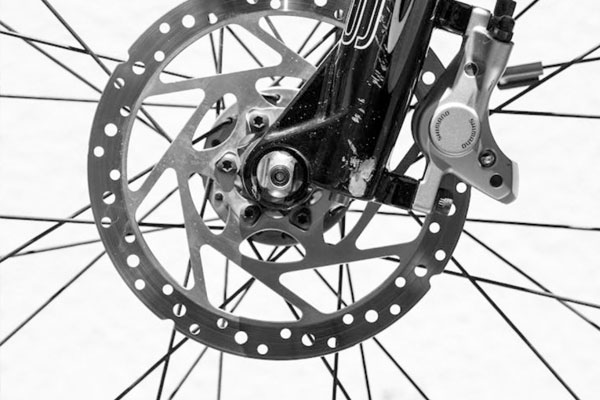
Modern bicycle design is a battle against weight and friction. Every gram removed from rotating parts improves acceleration and climbing. Every micro-meter of play in a pivot degrades suspension performance. Every burr on a brake piston leads to sticky actuation. Thus, CNC machined bike parts are held to standards that rival aerospace components.
Weight reduction – Components are sculpted to remove material from non-stressed areas while maintaining stiffness. Thin-wall sections (1.5-2mm) are common in stems and seatposts. Machining from 7075-T6 aluminum or 6Al-4V titanium allows complex lightening pockets.
Zero-play interfaces – Bottom brackets, headset bearings, and pivot axles require press-fit or threaded fits with<0.01mm clearance. Misalignment causes creaking, accelerated wear, and vague handling.
Wear resistance under high loads – Drivetrain parts (chainrings, cassette sprockets) experience abrasive wear from chains. Hard anodizing (Type III) or DLC coatings extend life.
Corrosion and sweat resistance – Bicycles face rain, road salts, and acidic sweat. Anodizing, passivation, and ceramic coatings are essential.
High aesthetic expectations – Visible parts (crankarms, stems) must have flawless finishes, often anodized in custom colors with consistent gloss.
Chinese CNC shops catering to the cycling industry typically operate 4- and 5-axis machining centers, Swiss-type lathes for small hardware, and in-house anodizing lines. Clusters in Guangdong (Dongguan, Shenzhen), Zhejiang (Ningbo, Hangzhou), and Jiangsu (Suzhou) specialize in bicycle components, from high-volume OEM parts to limited-edition aftermarket bling.
The drivetrain converts rider power into forward motion. Bicycle drivetrain components are subjected to continuous cyclic loading and abrasive chain contact.
Modern chainrings are not simple circles with teeth. They feature shifting ramps, pins, and variable tooth profiles to enhance front derailleur performance. CNC machining from 7075-T6 aluminum plate allows precise shaping of each tooth (tolerance ±0.02mm) and asymmetric ramps. After milling, chainrings are Type II or Type III anodized (black, silver, or custom) to reduce wear. Chinese chainring manufacturers (e.g., ZTTO, Passak, Sunshine) produce 1x and 2x rings compatible with Shimano, SRAM, and Campagnolo.
Key tolerances: Tooth profile – ±0.02mm; bolt hole pattern (110mm BCD, 104mm BCD, etc.) – ±0.05mm; thickness variation – ±0.03mm.
Cassette sprockets are stamped or machined from steel or aluminum. High-end cassettes use CNC machined aluminum for the largest cogs and steel for smaller ones. CNC milling allows weight reduction through cutouts and internal spiders. Spline interfaces (Shimano HG, SRAM XD, or Micro Spline) require precise machining of spline profile to ensure smooth shifting. Chinese cassette manufacturers (e.g., Sunshine, LTWOO, ZTTO) offer wide-range cassettes up to 10-52T.
Key tolerances: Spline width – ±0.02mm; tooth profile – ±0.03mm; concentricity to center bore –<0.05mm.
Rear derailleur cages (both inner and outer plates) are often CNC machined from aluminum or carbon-reinforced composites. Pivot bores require H7 tolerances for smooth rotation. Pulley wheels are turned from aluminum or acetal, with ceramic hybrid bearings. Chinese derailleur manufacturers (e.g., LTWOO, Sensah) produce complete groupsets with CNC-machined cages and links.
Key tolerances: Pivot bore – H7 (e.g., 6mm +0.012/+0.000); cage alignment – ±0.1mm over length; pulley groove radius – ±0.03mm.
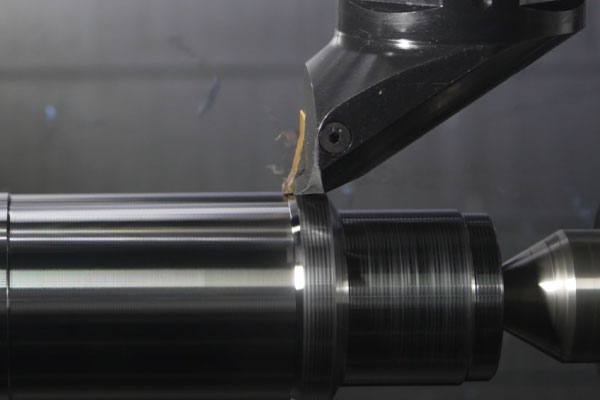
Hydraulic disc brakes are now universal on mountain and gravel bikes, and increasingly on road bikes. Bicycle brake calipers are machined from forged or billet aluminum (6061 or 7075) to reduce weight while maintaining stiffness.
Caliper body – Two halves (left and right) or monoblock design. CNC machining creates piston bores (H7 tolerance), fluid passages (cross-drilled, deburred), banjo bolt threads (M10x1.0), and pad retention slots.
Pistons – Ceramic or aluminum with O-ring grooves. Bore surface finish Ra 0.4μm to ensure seal integrity.
Master cylinder (for lever) – Body machined from aluminum with precision bore for the piston and reservoir threads.
After machining, calipers are Type III hard anodized (thickness 25-50μm) to resist wear from pad friction and corrosion. Chinese brake suppliers (e.g., Zoom, Kuke, Runtz) produce calipers for OEM and aftermarket, many with 4-piston designs for enduro and e-bikes.
Key tolerances: Piston bore – H7 (e.g., 22mm +0.021/+0.000) with roundness<0.005mm; banjo thread – class 6H; sealing face flatness – 0.02mm.
While frame tubes are often welded or bonded, critical interfaces are CNC machined for precision. Bike frame finishing includes post-weld machining of bottom bracket shells, head tubes, and dropouts.
Dropouts — the fork ends and rear dropouts — hold the wheel axle. They are machined from 6061 or 7075 aluminum, or stainless steel. Features: axle slot (10mm or 12mm) with flat faces for thru-axle alignment, and disc brake mount (post-mount or flat-mount) with precisely tapped holes. CNC milling ensures slot width ±0.05mm and brake mount position ±0.1mm to prevent disc rub.
BB shells are threaded (BSA/Italian) or press-fit (PF30, BB86, BB92). Threaded shells require class 2B threads; press-fit bores require H7 with roundness<0.005mm. Chinese frame manufacturers often machine these after welding and heat treatment.
Head tubes are machined to accept headset bearings (41mm, 44mm, 52mm). Bearing seats are faced to 0.01mm flatness and concentricity to the tube axis.
These parts are visible and frequently adjusted; they demand precision and aesthetics.
Stems clamp the handlebar (31.8mm or 35mm) and steerer (1 1/8" or 1.5"). CNC machined from billet 6061 or 7075, with clamp bores machined to +0.05/-0.00mm to ensure secure clamping without damaging carbon bars. Stem bodies often feature lightening pockets and are anodized in black, silver, or custom colors.
While most handlebars are carbon, aluminum bars are CNC machined from tube for internal cable routing and clamp areas. Key machining includes the clamp surface for stems and lever mount grooves.
Seatposts have a head (clamp for saddle rails) that is CNC machined from billet, with threaded holes for clamping bolts (often M4 or M5). Rail slot tolerances ±0.05mm to ensure secure saddle grip.
Mountain bike forks contain CNC machined aluminum lowers (the outer tubes) and damper bodies. Suspension fork machining involves turning and milling of complex shapes with internal oil passages and bushing seats.
Lower tubes are often cast aluminum then CNC machined for brake mounts, axle slots, and bushing bores. Damper bodies are machined from 6061 or 7075 with precision bores for cartridge components. Chinese suspension manufacturers (e.g., Suntour, DNM) have extensive CNC capabilities.
Key tolerances: Bushing bore – H7; axle slot alignment – ±0.05mm; brake mount position – ±0.1mm.
7075-T6 aluminum – Highest strength for weight, used for chainrings, cranks, stems, calipers. Excellent machinability, anodizable.
6061-T6 aluminum – General-purpose, lower cost, used for frames, dropouts, and some stems.
Ti-6Al-4V (Grade 5 titanium) – Used for high-end bolts, axles, and springs. Corrosion-resistant, very strong, but expensive and difficult to machine.
Stainless steel (303, 304, 316) – Brake rotors, bolts, bearing races. 303 for machined fittings.
Engineering plastics (POM, Nylon, UHMWPE) – Pulleys, cable guides, and wear pads.
Surface finishes:
Anodizing (Type II and Type III) – Type II for cosmetic (10-15μm), Type III hard for wear (25-50μm). Colors: black, red, gold, blue, green.
Micro-arc oxidation (MAO) – Ceramic-like coating for aluminum, offering extreme hardness and unique matte finish, used on some high-end components.
Electropolishing – For stainless steel parts (bolts, rotors) to achieve mirror finish and improve corrosion resistance.
Powder coating – For frames and large aluminum parts.
Passivation – For stainless steel to remove free iron.
Specify: "Chainring: 7075-T6, Type II black anodized 12μm, bead-blasted finish. Tooth profile per Shimano HG."
Bicycle parts require consistent quality for safety and performance. QC includes:
CMM or vision systems for complex profiles (chainrings, cassettes, calipers).
Thread gauges for pedal and bottom bracket threads.
Surface profilometers for piston bores and sealing surfaces.
Hardness testers (Rockwell) for aluminum and steel.
Anodizing thickness measurement (eddy current) and color verification (spectrophotometer).
Torque test for stem clamp bolts and seatpost bolts.
Chinese suppliers provide FAIR with dimensional results, material certificates, and anodizing reports.
Step 1: Verify cycling industry experience – ask for references from brands or aftermarket customers.
Step 2: Assess material capability – 7075 aluminum, titanium, stainless, and engineering plastics.
Step 3: Evaluate precision – can they hold ±0.01mm on critical bores? Do they have CMM and roundness testers?
Step 4: Check surface finishing – in-house anodizing with color matching? Electropolishing?
Step 5: Request a trial part – e.g., a chainring or a stem. Inspect dimensions, finish, and thread quality.
Key regions: Guangdong (Dongguan, Shenzhen) – high-volume and high-mix production; Zhejiang (Ningbo, Hangzhou) – high-end finishing; Jiangsu (Suzhou) – advanced 5-axis work.
Bicycle components are produced in batches from 50 to 50,000 units. Pricing benchmarks (OEM quantities):
Chainring (7075, 44T, machined, anodized): $2-5
Crankset (7075 forged and machined): $8-15
Disc brake caliper (billet, 4-piston, anodized, assembled): $6-12
Stem (6061, machined, anodized): $2-4
Cassette (steel/aluminum, CNC machined): $5-12
Lead times: First article 3-5 weeks, production 2-4 weeks. Anodizing adds 5-7 days. Air shipping 3-7 days, sea 30-45 days.
MOQ: For custom components, 200-1,000 pieces typical; prototypes (10-50 pieces) accepted at higher per-unit cost.
Anodizing color inconsistency – Provide a physical color sample and require batch consistency report. Use same tank for matching sets.
Thread galling on aluminum pedals – Specify anti-seize coating or use steel inserts. For cranks, specify steel pedal thread inserts.
Brake caliper piston bore leakage – Specify roundness<0.005mm, surface finish Ra 0.4μm, and 100% pressure testing.
Chainring shifting performance poor – Use standard tooth profiles (e.g., Shimano HG, SRAM X-SYNC) and inspect profile with optical comparator.
Bottom bracket thread mismatch – Specify class 2B for BSA and use GO/NOGO gauges. For press-fit, measure bore diameter with air gauge.
E-bike components – Heavy-duty chainrings, motor mounts, and battery housings require thicker sections and more rigid machining.
Wireless shifting integration – Machined recesses for batteries and circuit boards in derailleurs and shifters.
Additive manufacturing – 3D printed titanium or aluminum lattice components (e.g., saddle rails) with CNC finishing of mating surfaces.
Sustainable coatings – Non-hexavalent anodizing and water-based paints becoming standard.
Automated inspection – In-line CT scanning for internal features of cast-machined parts.
High-performance bicycles rely on precision-machined components that balance weight, stiffness, and durability. China's CNC machining ecosystem produces a vast range of bicycle components – from chainrings and brake calipers to stems and suspension parts – that serve global brands and aftermarket enthusiasts. By partnering with suppliers skilled in 7075 aluminum, titanium, and advanced anodizing, brands can achieve the performance and aesthetics that riders demand. Start with a trial component, verify tolerances and finish, and scale to full production.
Ready to bring your bicycle project to life with precision CNC machined parts from China? Share your CAD files and material preferences. We will connect you with manufacturers who have proven experience in cycling components, offering full quality documentation and surface finishing. Free DFM analysis and quoting available.
A: 7075-T6 offers the highest strength-to-weight ratio among common aluminum alloys. It is used by premium brands. For lower budgets, 6061-T6 is acceptable but heavier.
A: Yes, many specialize in 6Al-4V titanium. It requires carbide tooling, low speeds, and rigid setups. Expect longer lead times and higher costs.
A: Ra 0.4μm or better, with roundness<0.005mm. This ensures seal longevity and leak-free operation.
A: Some suppliers, especially those also serving automotive, hold IATF. Many are ISO 9001 certified, which is sufficient for bicycle parts.
A: For a new design, tooling (programming, fixtures) takes 2-3 weeks, machining and anodizing 3-4 weeks, total ~6-8 weeks.
A: Yes, companies like LTWOO and Sensah produce complete groupsets. Others offer component-level supply.
A: BB86 bore is typically 41mm H7 (+0.025/+0.000) with roundness<0.005mm. Chinese frame machinists routinely achieve these.
A: Provide a physical color sample and request batch consistency reports. Use the same anodizing tank and dye lot for related parts.
Ready to elevate your bicycle brand with precision CNC machined components? Contact our engineering team with your part specifications. We'll match you with qualified Chinese manufacturers that specialize in lightweight, high-strength bike parts. Free consultation and sample support offered.

Phone&WhatsApp:+86 13410452313
Email:gavinlee@zhuoguanmetal.com
Address: Room 805-1, Building A, Block 1, Xingzhan Plaza, No. 446, Shajing Nanhuan Road, Shatou Community, Shajing Street, Bao'an District, Shenzhen, Guangdong, China 518104