In racing, victory is measured in hundredths of a second. Every component on a superbike or motocross machine must deliver flawless performance under extreme conditions: high G-forces, intense vibration, and rapid temperature swings. The difference between a podium finish and a mechanical failure often comes down to the precision of the parts. China has emerged as a major global supplier of racing motorcycle parts, with specialized CNC machining hubs in Guangdong and Jiangsu producing components for both OEMs and aftermarket performance brands. This guide explores the critical CNC machined components that define modern racing motorcycle performance, the materials and tolerances that make them race-ready, and how to source them from Chinese manufacturers.
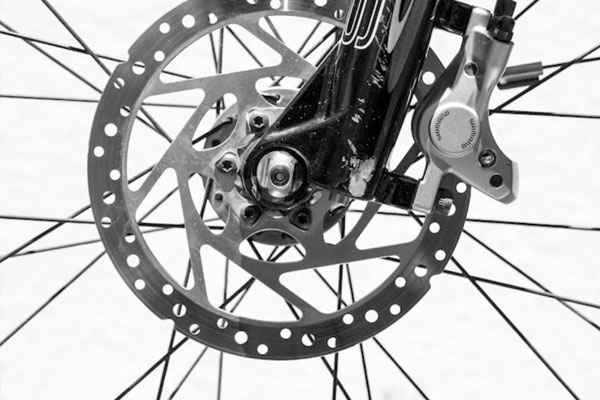
Racing motorcycles are subjected to forces that would destroy standard components. A superbike leaned into a corner at 200 km/h places immense stress on triple clamps, swingarm pivots, and brake calipers. Motorcycle performance parts must be lightweight, incredibly strong, and dimensionally stable under heat and vibration. CNC machining delivers these qualities through:
Micron-level tolerances: Racing components typically require ±0.01 to ±0.02mm accuracy, ensuring perfect fitment and zero play in critical interfaces.
Complex geometries: CNC enables lightweighting through intricate internal pockets and organic shapes that are impossible with casting or manual machining.
Material optimization: High-performance alloys like 7075-T6 aluminum, 6Al-4V titanium, and 4130 chromoly steel are machined with precision to balance strength and weight.
Repeatability: Racing teams need consistent performance from part to part, which CNC mass production ensures.
China's manufacturing clusters, particularly the Pearl River Delta (Dongguan, Shenzhen) and Yangtze River Delta (Jiangsu, Zhejiang), host advanced CNC facilities with 4- and 5-axis machining centers capable of producing these high-stakes components.
Triple clamps connect the fork tubes to the steering stem. They must be extremely rigid to maintain front-end alignment under heavy braking and cornering forces. Premium aftermarket clamps are machined from 7075-T6 aerospace-grade aluminum and feature lightening pockets to reduce unsprung weight. Tolerances: fork bore diameter ±0.01mm, concentricity between bores<0.02mm.
Chinese suppliers like Dongguan Minghao Precision deliver complex 5-axis machined triple clamps with tight dimensional control, often at lower MOQs (20-50 units) than traditional forging-based production.
Rearsets are rider control interfaces that must be lightweight, adjustable, and durable. CNC machined from 6061-T6 or 7075-T6 aluminum, rearsets feature precision bearing bores for smooth pivot action and anodized finishes for corrosion resistance. Tolerances: pivot bore H7, thread class 2B for mounting bolts.
Dongguan Bie Hardware specializes in rearsets with rapid prototyping capability, achieving a 100% on-time delivery rate and sub-one-hour customer response time for urgent orders.
High-performance braking demands calipers with exceptional stiffness and precise piston bore geometry. Racing calipers are machined from 6061 or 7075 billet aluminum to eliminate porosity found in castings. Piston bores require H7 tolerance with surface finish Ra 0.4μm or better for reliable seal performance. After machining, calipers are often Type III hard anodized for wear resistance.
Chinese brake component manufacturers supply both OEM and aftermarket racing calipers, with many offering assemblies complete with pistons, seals, and pads.
Engine covers protect critical internals and contribute to overall engine aesthetics. Racing covers are machined from aluminum with integrated oil passage channels and cooling fins. Tolerances: gasket surface flatness<0.05mm, threaded holes class 6H. Surface finishes include bead blasting, polishing, or anodizing in custom colors.
These small but critical components must be precisely machined to maintain wheel alignment. Spacers are typically turned from 6061 aluminum with tight OD/ID concentricity (<0.02mm). Axle blocks are milled from aluminum or steel with accurate slot dimensions for axle positioning.
Selection of the right material is paramount for racing applications. Chinese CNC shops are equipped to handle a broad spectrum of high-performance materials.
7075-T6 Aluminum: The standard for high-stress components (triple clamps, rearsets, brake calipers). Highest strength-to-weight ratio among common aluminum alloys. Excellent machinability, anodizable.
6061-T6 Aluminum: General-purpose, used for less critical components and some structural parts. Lower cost than 7075 but still strong.
6Al-4V Titanium: Used for bolts, axles, and lightweight suspension components. High strength, corrosion-resistant, but expensive and difficult to machine.
4130 Chromoly Steel: For steering stems, sprocket hubs, and drivetrain components requiring high tensile strength and fatigue resistance.
Stainless Steel (303, 304, 316): For brake rotors, fasteners, and hardware requiring corrosion resistance.
Engineering Plastics (POM, PEEK, Nylon): For chain guides, sliders, and vibration-damping components.
Racing components require finishes that withstand abrasion, corrosion, and heat. Chinese suppliers offer a comprehensive range of post-machining treatments:
Anodizing (Type II and Type III): Type II for cosmetic (10-15μm) in black, silver, or custom colors. Type III hard anodizing (25-50μm) for wear surfaces like brake calipers and rearset pivots.
Electroplating: Zinc, nickel, or chrome plating for steel components (fasteners, axle pins) to prevent corrosion.
Powder Coating: Thick, durable finish for large components like engine covers and brackets.
Polishing and Bead Blasting: Cosmetic finishes for visible parts like covers and rearsets.
DLC and TiN Coatings: Diamond-like carbon and titanium nitride coatings reduce friction on sliding and pivoting surfaces (suspension links, pivot pins).
Specify: "Triple clamp: 7075-T6 aluminum, Type III hard anodized 25μm, black, with masked fork bores."
Racing components demand exceptional consistency. Chinese suppliers serving this market typically hold ISO 9001 and often IATF 16949 certifications for automotive-grade quality systems. QC measures include:
CMM inspection: Coordinate measuring machines verify critical dimensions (bore diameters, hole positions) to ±0.005mm.
Surface finish measurement: Profilometers ensure Ra values meet specifications.
Hardness testing: Rockwell or Brinell tests confirm material heat treatment.
Thread gauges: GO/NOGO gauges verify threads for bolts and fittings.
Statistical Process Control (SPC): Suppliers with CpK >1.33 demonstrate process stability.
Top suppliers like Kunshan Hopeful Metal Products and Dongguan Mingyi Hardware achieve 100% on-time delivery and sub-2-hour response times, with reorder rates exceeding 50% from satisfied customers.
Step 1: Verify industry experience – ask for references from racing teams or performance brands. Suppliers with proven track records in motorsports parts are preferred.
Step 2: Assess material and precision capability – can they machine 7075 aluminum, titanium, and chromoly? What is their best achievable tolerance (±0.01mm or better)?
Step 3: Evaluate finishing capabilities – in-house anodizing, plating, or coating? For racing components, in-house finishing ensures consistent quality and reduced lead times.
Step 4: Request a sample part – e.g., a rearset or a triple clamp. Inspect dimensions, surface finish, and fitment. Many suppliers offer prototyping with lead times of 7-15 days.
Key clusters: Guangdong (Dongguan, Shenzhen) – rapid prototyping and agile production; Jiangsu (Kunshan, Zhangjiagang) – precision and high-volume efficiency.
Racing motorcycle components are produced in batches from 20 to 5,000 units. Pricing benchmarks (OEM/aftermarket quantities):
Rearsets (6061, machined, anodized): $15-25 (100+ pcs)
Triple clamp (7075, 5-axis machined, hard anodized): $60-80 (20-50 pcs)
Brake caliper (billet, 4-piston, assembled): $10-20 (500+ pcs)
Engine cover (aluminum, machined, powder coated): $20-40 (200+ pcs)
Lead times: Prototyping 7-15 days; production 15-30 days. Anodizing adds 5-7 days. Air shipping 3-7 days, sea 30-45 days.
MOQ: For custom racing parts, 50-100 units typical; prototypes (5-20 units) accepted at higher per-unit cost.
Anodizing color inconsistency – Provide a physical color sample and require batch consistency reports. Use same tank and dye lot for matching parts.
Thread galling on aluminum fasteners – Specify anti-seize coating or use steel thread inserts in critical mounting points.
Brake caliper piston bore leakage – Specify roundness<0.005mm and surface finish Ra 0.4μm. Require 100% pressure testing.
Incorrect triple clamp fork bore alignment – Specify concentricity tolerance and use CMM inspection for each batch. A misalignment of 0.02mm can cause stiction in fork action.
Electric racing motorcycles – Machined battery housings, motor mounts, and cooling plates for high-voltage EV race bikes require specialized materials and precision.
Additive manufacturing for custom components – 3D printed titanium brackets and lattice-structure parts, with CNC finishing of critical interfaces.
Integrated sensor mounting – Machined recesses for telemetry sensors (temperature, strain, acceleration) embedded directly into components.
Sustainable coatings – Non-hexavalent anodizing and water-based paints becoming standard in response to environmental regulations.
In-line inspection – Automated CMM and vision systems integrated into CNC production lines for real-time quality feedback.
The pursuit of speed and reliability in motorcycle racing drives demand for precision-machined components that push the limits of manufacturing. China's CNC machining ecosystem, centered in Guangdong and Jiangsu, produces racing motorcycle parts that meet the stringent requirements of professional racing teams and performance enthusiasts worldwide. By partnering with suppliers who specialize in high-performance materials, tight tolerances, and comprehensive surface finishing, you can source components that deliver podium-worthy performance. Start with a trial part, verify quality and fitment, and scale to full production.
Ready to source precision CNC machined racing motorcycle components from China? Share your CAD drawings and performance requirements. We'll connect you with manufacturers experienced in racing parts, offering full quality documentation and finishing services. Free DFM analysis and quoting available.
A: 7075-T6 aluminum offers the highest strength-to-weight ratio for triple clamps. It is standard for aftermarket racing applications. For budget builds, 6061-T6 is acceptable but heavier.
A: Yes, many specialize in 6Al-4V titanium for bolts, axles, and lightweight structural parts. Titanium machining requires rigid machines, carbide tooling, and controlled speeds. Expect longer lead times and higher costs.
A: Ra 0.4μm or better, with roundness<0.005mm, to ensure seal longevity and leak-free operation under racing conditions.
A: Some suppliers who also serve automotive markets hold IATF 16949. Many are ISO 9001 certified, which is adequate for motorcycle aftermarket parts.
A: For a new design, programming and fixture setup takes 1-2 weeks, machining 2-3 weeks, and anodizing 1 week. Total ~4-6 weeks.
A: Some specialized suppliers produce complete caliper + master cylinder + line kits. Others focus on component-level supply. Ask for assembly capability.
A: Slot width tolerance is typically ±0.03mm to ensure consistent axle alignment. Chinese CNC shops routinely achieve this with 4-axis machining.
A: Request eddy current thickness measurement (25-50μm for Type III) and salt spray test results. Visual inspection under good lighting for color consistency and uniform coverage.
Ready to dominate the track with precision CNC machined racing components from China? Contact our engineering team with your part specifications. We'll match you with manufacturers experienced in high-performance motorcycle parts. Free consultation and prototyping support offered.

Phone&WhatsApp:+86 13410452313
Email:gavinlee@zhuoguanmetal.com
Address: Room 805-1, Building A, Block 1, Xingzhan Plaza, No. 446, Shajing Nanhuan Road, Shatou Community, Shajing Street, Bao'an District, Shenzhen, Guangdong, China 518104