High-speed rail has transformed travel. Trains now cruise at 350 km/h, carrying millions of passengers daily. Urban transit systems (metros, light rail, trams) move billions more. Behind the sleek exteriors and comfortable interiors are thousands of precision-machined components. A train's body must be light yet strong; its bogies must withstand fatigue for millions of kilometers; its interior must be fire-safe and durable. China operates the world's longest high-speed rail network and is a leading manufacturer of rolling stock, producing trains for domestic use and export to Europe, Asia, and the Americas. Major OEMs like CRRC, Bombardier (Alstom), Siemens, and Stadler source high-speed rail components and transit parts manufacturing from Chinese suppliers. This guide explores the critical CNC machined parts for railway vehicles: body structural inserts, bogie components (axle boxes, yokes, brake hangers), brake system parts (discs, calipers, pipes), interior trim (seat frames, armrests, luggage racks, handrails), pantograph hardware, and door mechanisms. It covers material selection for lightweighting (aluminum 6005A, 6082, stainless steel 301L, composites), fire safety standards (EN 45545), fatigue-critical tolerances (EN 12663), surface finishing (powder coating, anodizing, zinc plating), and sourcing from Chinese manufacturers certified to ISO/TS 22163 (IRIS) and EN 15085 (welding).
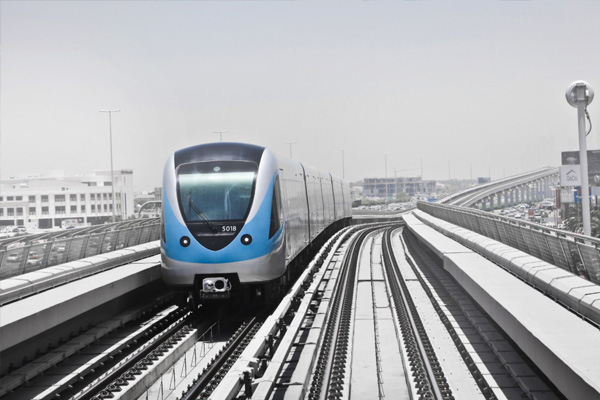
Railway components operate under continuous dynamic loading, vibration, and extreme temperature ranges (-40°C to +50°C). Safety standards are exceptionally high.
Structural integrity under fatigue. Bogie and body components must withstand up to 30 years of service (10 million stress cycles). Machined parts must have smooth transitions (no sharp corners), and surfaces must be free of tool marks that could initiate cracks. Materials like aluminum 6xxx series (6005A, 6082) and stainless steel 301L are common.
Fire safety. Interior components (seats, luggage racks, panels) must meet EN 45545 hazard levels (HL1-HL3). Machined parts are often aluminum or stainless steel (non-flammable), while plastic parts use flame-retardant grades.
Precision for noise and vibration control. Bogie axle boxes and gearbox housings require tight tolerances (H6/h6) for bearings. Misalignment causes noise and wear.
Corrosion resistance. Trains operate outdoors, in tunnels, and in coastal areas. Aluminum parts are anodized; steel parts are zinc-plated or painted with high-durability coatings.
Traceability and certification. ISO/TS 22163 (IRIS) is the railway quality standard. EN 15085 covers welding of railway vehicles. Chinese suppliers must provide full material traceability, NDT reports (ultrasonic, MPI), and welding logs.
Chinese CNC shops serving the rail industry typically hold IRIS certification, have large 5-axis machining centers (for long extrusions up to 25m), welding shops with EN 15085 approval, and in-house NDT. Clusters: Changchun (Jilin) – CRRC Changchun; Qingdao (Shandong) – CRRC Sifang; Zhuzhou (Hunan) – CRRC Zhuzhou; Nanjing (Jiangsu) – rolling stock components.
Modern train bodies are made from large aluminum extrusions (6xxx series). Structural inserts and brackets are machined from these extrusions or from plate to provide mounting points for seats, windows, doors, and interior panels.
Typical machined features:
T-slots for fixing interior panels – milled along extrusions, tolerance ±0.2mm.
Drilled and tapped holes for seat and luggage rack mounting (M8-M12 threads).
Cutouts for windows and doors – milled to precise dimensions (±0.5mm).
Recesses for panel clips and fasteners.
Materials: Aluminum 6005A, 6082 (T6 temper). These offer good corrosion resistance and weldability.
Tolerances for body structural parts:
Overall length: ±1mm over 20m.
Hole positions: ±0.3mm for fastener holes.
Flatness of mounting surfaces: 0.5mm per meter.
Surface finish: as-extruded or milled (Ra 3.2-6.3μm).
Chinese rail suppliers use long-bed CNC milling centers (up to 30m travel) with multiple spindles to machine both ends of extrusions simultaneously. After machining, parts are cleaned and often anodized (clear or black) or powder coated.
The bogie (or truck) is the undercarriage that holds wheels and suspension. Bogie parts are critical for safety and are often cast or forged then machined.
Common machined bogie components:
Axle boxes – house bearings; machined from steel castings (GS20Mn5) or aluminum forgings. Features: bearing bore H6 or H7, sealing surfaces, mounting holes for sensors.
Yokes (transoms) – structural beams connecting side frames; welded fabrication or cast, then machined on large milling centers.
Brake hangers – brackets for brake calipers; machined from steel plate or castings.
Primary and secondary suspension mounts – with precision bores for rubber springs.
Tolerances for axle box bearing bore (e.g., 150mm diameter):
Diameter: H6 (e.g., 150mm +0.025/+0.000)
Roundness: 0.005mm
Surface finish: Ra 0.8μm
Runout to reference faces: 0.02mm
Chinese suppliers with large horizontal boring mills (spindle diameter 130-200mm) and CMMs can achieve these tolerances. Many also offer magnetic particle inspection (MPI) and ultrasonic testing (UT) for castings.
Brake discs (rotors) are machined from heat-resistant steel (e.g., 24CrMoV). The friction surface is ground and hardened. Tolerances: thickness ±0.05mm, parallelism 0.02mm, runout 0.03mm.
Train interiors must be durable, fire-safe, and comfortable. Many interior components are CNC-machined from aluminum or stainless steel and then powder coated or wrapped in upholstery.
Common interior parts:
Seat frames – aluminum extrusions or tube, machined for pivot points, adjustment mechanisms, and mounting brackets. Tolerances: pivot holes ±0.1mm, frame squareness 0.5mm.
Armrests – aluminum castings or machined from billet, with smooth contours (5-axis milling).
Luggage rack shelves and supports – extruded aluminum, machined for mounting brackets and safety rails.
Handrails and stanchions – stainless steel tubes with machined end caps and mounting flanges.
Table brackets and cup holder inserts – small machined aluminum or plastic parts.
Materials: Aluminum 6061, 6063, 6005A; Stainless steel 304, 301L. Plastic components use flame-retardant PC/ABS or nylon.
Surface finish: powder coating (textured or smooth) in RAL colors, or anodizing for aluminum.
Fire safety compliance: EN 45545-2 (HL2 or HL3). Suppliers must provide test reports for materials used.
Pantographs collect electric power from overhead wires. Pantograph components must be lightweight, electrically conductive, and wear-resistant.
Machined parts include:
Carbon contact strip holders – aluminum extrusions, machined with T-slots for carbon strips.
Pivot links and bearings – steel or stainless, with precision bores for bushings.
Air cylinder mounting brackets – for raising/lowering pantograph.
Insulator mounting plates – machined from G10 or fiberglass-reinforced plastic.
Tolerances for pantograph links: bore positions ±0.05mm, parallelism 0.1mm, surface finish Ra 0.8μm. Chinese suppliers often assemble the entire pantograph.
Train doors open and close thousands of times. Door mechanism components are machined to high precision and often made from stainless steel for wear resistance.
Examples:
Door guide rails – stainless steel, milled with precision slots (tolerance ±0.05mm).
Drive linkages and crank arms – steel, with bored holes for shafts and bearings.
Locking cam plates – hardened steel, wire EDM or milled with complex profiles.
Roller brackets – aluminum or steel, with bearing seats (H7).
These parts must pass cycle testing (e.g., 1 million cycles). Chinese rail door component suppliers often hold ISO/TS 22163 certification and provide endurance test reports.
Aluminum 6005A, 6082, 6061: Body structures, interior frames, luggage racks. Good machinability, corrosion resistance, weldability. Typically anodized (10-20μm) or powder coated.
Aluminum 7075: High-stress brackets and small components (not for large extrusions).
Stainless steel 301L (1.4318): Train body skins, structural parts. High strength, good formability. Machined with sharp carbide tools.
Stainless steel 304, 316L: Interior handrails, door components, wet-area fittings. 316L for coastal trains.
Carbon steel (S355J2, 20MnCr5): Bogie components, brake discs. Heat-treated, zinc-plated or painted.
Cast steel GS20Mn5: Axle boxes, yokes. Normalized and machined.
Surface treatments:
Anodizing (Type II, clear or hard): For aluminum parts that require corrosion protection and wear resistance.
Powder coating: For interior and exterior aluminum and steel parts (thickness 60-120μm). RAL colors.
Zinc plating (yellow or clear): For steel brackets, bolts (salt spray 120-240 hours).
Electroless nickel plating: For corrosion resistance and uniform hardness on steel or aluminum.
Painting (wet spray): For large steel structures (bogie frames) with anti-corrosion primers.
Specify: "Aluminum seat frame: powder coated RAL 7035 (light gray), thickness 80μm min, adhesion test per ISO 2409."
Railway components require the highest level of quality documentation:
ISO/TS 22163 (IRIS) – management system for rail industry (replaces ISO/TS 16949?). Must have KPIs for product safety.
EN 15085-2 – welding certification for railway vehicles (levels CL1-CL4).
EN 12663-1 – structural requirements for railway vehicle bodies.
EN 45545-2 – fire safety of materials and components.
NDT: Ultrasonic (UT) for axle boxes, magnetic particle (MT) for steel parts, dye penetrant (PT) for aluminum.
Dimensional inspection: CMM with temperature control; laser trackers for large assemblies.
Material traceability: Each part must be traceable to heat number, with MTRs.
Chinese rail component suppliers provide a complete documentation package (FAIR, welding records, NDT reports, coating certificates).
Step 1: Verify IRIS and welding certifications. ISO/TS 22163 is essential. EN 15085 for welded parts (most structural components). Ask for certificates.
Step 2: Check large-part capacity. For body extrusions: long-bed milling (20-30m). For bogie components: large HBM (>2m travel).
Step 3: Evaluate NDT capabilities. In-house UT, MT, PT? Do they have certified NDT technicians (Level II/III)? For critical parts, third-party inspection (e.g., TÜV, Bureau Veritas) may be required.
Step 4: Assess coating and finishing. In-house anodizing or powder coating lines that can handle large parts? For interior parts, color matching is critical.
Step 5: Order a trial part – e.g., a simple mounting bracket or a small bogie component. Verify material certs, dimensions, and NDT report. Then move to complex welded assemblies.
Major railway component suppliers in China are located in Changchun, Qingdao, Zhuzhou, Nanjing, and Tangshan. Many are subsidiaries or suppliers to CRRC.
Railway parts are produced in low to medium volumes (50-5,000 pieces/year) due to high unit cost and long service life. Pricing benchmarks:
Aluminum body bracket (500x200x30mm, machined, anodized): $30-80
Axle box (cast steel, machined, MPI tested): $200-500
Seat frame (complete, welded and machined aluminum): $50-150 per seat
Pantograph carbon holder extrusion (2m length, machined): $100-200
Brake hanger (steel, fabricated, machined, zinc plated): $50-120
Lead times: For first article (including NDT and certification), 8-12 weeks. Production batches after approval: 6-8 weeks. Welding and coating add 2-3 weeks. Shipping: sea 30-45 days, air 3-7 days.
MOQ: Often 10-100 pieces for large structural parts; 500-2,000 for small brackets. Prototype quantities (1-5 pieces) are common for new train models.
Inadequate fatigue performance – cracks in service. Prevention: specify smooth radii (minimum R3mm) in design; require 100% MT or UT of critical zones after machining. Use stress-relieved materials.
Welding distortion after machining. Prevention: specify weld sequence and clamping during welding; finish machine after welding and stress relief.
Incomplete material traceability. Prevention: require each part to be marked with a unique ID (dot peen or laser) linked to MTR and NDT records. Audit the supplier's traceability system.
Paint or powder coating peeling in tunnels (humidity). Prevention: require salt spray test (e.g., 500-1000 hours) and adhesion test (cross-cut). Use high-durability polyester powder.
Anodizing color mismatch on interior parts. Prevention: provide a color sample; require batch consistency report; specify same batch for visible sets.
Lightweight composites and aluminum-lithium alloys. New trains use aluminum-lithium (Al-Li) for body shells; these require different machining parameters (lower speeds, special coolants).
Digital twin and in-line measurement. Large machining centers now integrate laser scanners to measure parts while cutting, adjusting tool paths in real time for large extrusions.
Additive manufacturing for brake parts. Some brake calipers and pipe fittings are being 3D printed in Inconel or stainless steel, then finish-machined.
Autonomous train components. Sensor housings and camera mounts for driverless metro systems require high-precision machined pockets and sealing surfaces.
High-speed rail and urban transit systems depend on precision-machined high-speed rail components and transit parts manufacturing from certified suppliers. China's railway supply chain, with IRIS-certified CNC shops, large-scale 5-axis machining, EN 15085 welding, and full NDT capabilities, produces bogie parts, body inserts, interior trim, and door mechanisms that meet the world's most stringent safety standards. By partnering with a supplier that holds the necessary certifications and has experience with fatigue-critical and fire-safe designs, global rolling stock OEMs can source reliable components for the world's fastest trains.
Ready to source precision CNC machined railway components from China? Send us your drawings and certification requirements. We'll match you with IRIS-certified manufacturers that have proven experience in high-speed rail, metro, and tram components. Free DFM feedback and supplier audit support available.
A: EN 15085-2 is mandatory for welded parts. Chinese suppliers should have a certificate with the appropriate execution level (CL1 for critical structural parts, CL2 for less critical). Ask for their welding procedures (WPQR) and welder qualifications.
A: EN AW-6005A (AlSiMg) and 6082 are widely used. They offer good extrudability, weldability, and corrosion resistance. For high-strength applications, 7005 or 7020 may be used but are less common.
A: They perform ultrasonic testing (UT) on raw castings and forgings to detect internal flaws. After machining, magnetic particle (MT) is used for surface cracks. Some also do resonance fatigue testing of complete assemblies. Ask for NDT reports and (if available) fatigue test certification from third-party labs.
A: EN 45545-2 is the European standard. It defines hazard levels (HL1, HL2, HL3). Most high-speed trains require HL2 or HL3 for interior components. Chinese suppliers must provide test reports from accredited labs for the base material and coatings.
A: Yes, many have gantry-type CNC milling centers with travels over 25 meters. These machines can mill pockets, drill holes, and cut windows in a single setup. Inquire about maximum workpiece length and straightness capability.
A: Ra 0.8-1.6μm (ground). The disc should have a directional grind pattern (parallel to rotation) or be left as-ground with no cross-hatch that could cause uneven wear. Hardness is typically 200-250 HB for steel discs.
A: Specify compliance with EN 12663-1 (category P-II or P-III for seats). The supplier should perform FEA simulation and provide a structural test report (static and dynamic). For production parts, random sample destructive testing may be required.
A: Pattern making 6-8 weeks, casting 4-6 weeks, then machining 3-4 weeks, NDT 1-2 weeks. Total 15-20 weeks for first article. Production batches after approval 8-12 weeks.
Looking for certified railway component manufacturers in China? Contact our engineering team with your part drawings and required standards (IRIS, EN 15085, EN 45545). We will connect you with specialized suppliers that have proven track records with high-speed rail and metro systems. Free qualification audit and quoting service.

Phone&WhatsApp:+86 13410452313
Email:gavinlee@zhuoguanmetal.com
Address: Room 805-1, Building A, Block 1, Xingzhan Plaza, No. 446, Shajing Nanhuan Road, Shatou Community, Shajing Street, Bao'an District, Shenzhen, Guangdong, China 518104