Wind energy is one of the fastest-growing sources of electricity worldwide. A single modern wind turbine can generate enough power for thousands of homes. But behind the graceful blades is a massive engineering challenge. Turbine components must survive decades of fatigue, extreme weather, and corrosive salt spray (for offshore units). The wind turbine components that make up the nacelle, tower, and rotor are among the largest and most demanding precision CNC machined parts OEM in renewable energy. China is the world's largest manufacturer of wind turbines, producing brands like Goldwind, Envision, Mingyang, and Windey, as well as supplying components to global OEMs such as Vestas, Siemens Gamesa, and GE Renewables. This guide explores the critical CNC machined parts for wind turbines: nacelle frames and bedplates, rotor hubs, gearbox housings, pitch and yaw bearings (raceways), tower flanges, and brake discs. It covers material selection for high-strength, fatigue-resistant alloys (EN-GJS-400-18U-LT nodular cast iron, S355NL structural steel, 42CrMo4), large-part machining (vertical lathes up to 6m diameter, floor-type boring mills), tolerance strategies for load distribution (flatness, parallelism, runout), surface protection for offshore environments (zinc-rich primers, thermal spray aluminum (TSA), heavy-duty coatings), and sourcing from Chinese manufacturers certified to ISO 3834 (welding) and EN 1090 (steel structures).
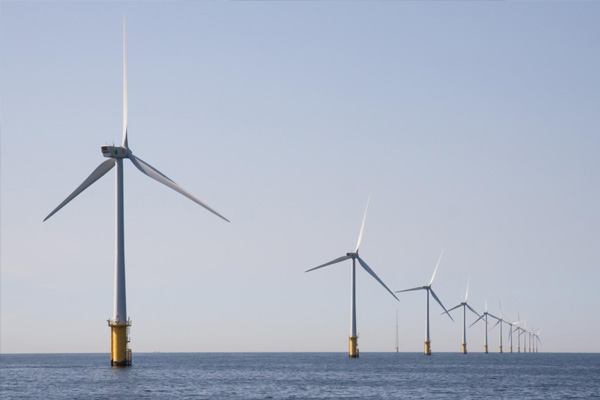
Wind turbine components are enormous. A single tower section can be 4-6 meters in diameter. A hub casting may weigh 30 tons. Machining these parts requires massive machine tools and extreme precision.
Extreme fatigue life. A wind turbine is designed for 20-25 years of operation, with hundreds of millions of load cycles. Machined surfaces must be free of stress risers (sharp corners, tool marks). Nodular cast iron (EN-GJS-400-18U-LT) is commonly used for its good fatigue properties and ductility at low temperatures.
Corrosion protection for offshore. Offshore turbines face saltwater, humidity, and waves. Critical bolted flanges and bearing surfaces require coatings like thermal spray aluminum (TSA) or zinc-rich primers. Stainless steel cladding is also used for fasteners.
Ultra-tight tolerances for bearings. Pitch and yaw bearings have raceway diameters up to 3-5 meters. Roundness and flatness tolerances are measured in hundredths of a millimeter (0.02mm). These are achieved on large vertical lathes with grinding or milling heads.
High-strength bolted joints. Tower flanges are connected by hundreds of high-strength bolts. Flange face flatness and perpendicularity must be within 0.2mm to ensure even bolt loading. Hole patterns are drilled on large CNC machining centers with position tolerances ±0.5mm.
Non-destructive testing (NDT). Castings and weldments are 100% inspected by ultrasonic (UT) and magnetic particle (MT) to detect internal defects. This is mandatory for safety-critical components.
Chinese wind power machine shops typically have large vertical lathes (VTL) up to 8m swing, floor-type boring mills with 15m travel, CNC machining centers for drilling flanges, and in-house heat treatment and NDT. Major clusters: Shanghai, Jiangsu (Nantong, Wuxi), Tianjin, Shandong (Dezhou), Inner Mongolia (Baotou).
The nacelle sits atop the tower and contains the gearbox, generator, brakes, and controls. The nacelle bedplate (or mainframe) is a large welded steel structure or single casting that supports all components. Machined features include:
Main bearing housing bore (often 1-2m diameter) – machined to H7 tolerance.
Gearbox mounting pads – milled flat and parallel (0.1mm/m).
Generator mountings and cooling system brackets.
Yaw bearing mounting flange – drilled with hundreds of bolt holes.
Materials: EN-GJS-400-18U-LT (nodular cast iron) for cast bedplates, or S355NL structural steel for welded designs. Cast iron is preferred for vibration damping.
Tolerances for main bearing housing bore (e.g., 1,500mm diameter):
Diameter: H7 (e.g., 1,500mm +0.063/+0.000)
Roundness: 0.05mm
Cylindricity: 0.08mm over length
Surface finish: Ra 1.6μm (as-bored or ground).
Chinese manufacturers use large horizontal boring mills (spindle diameter 150-200mm) and vertical lathes to machine bedplates. After machining, the part is cleaned and painted with an offshore-grade coating system (e.g., zinc-rich epoxy + polyurethane topcoat).
The rotor hub connects the blades to the main shaft. It is a large spherical or semi-spherical casting (EN-GJS-400-18U-LT). Hub machining is done on large VTLs and 5-axis milling centers.
Critical machined features:
Pitch bearing mounting flanges – large circular faces (diameter 2-4m) with many bolt holes. Flatness: 0.1mm over the face, hole position tolerance ±0.3mm.
Spherical bearing seat – for main bearing; machined to H7, with an oil groove.
Access openings for maintenance – milled and drilled for covers.
Pitch bearings (which allow blades to rotate) have inner and outer raceway rings. These are forged or cast from 42CrMo4 (steel), then heat-treated (induction hardening of raceways to 55-60 HRC) and ground. Raceway roundness tolerance: 0.02mm. Chinese bearing specialists produce complete pitch bearings up to 5m diameter.
After machining, hubs are shot-blasted and painted. Offshore hubs require thermal spray aluminum (TSA) or high-build epoxy coatings.
Most wind turbines use a gearbox to increase the low rotor speed (10-20 RPM) to generator speed (1,000-1,800 RPM). Gearbox housings are complex cast iron or steel weldments with multiple precision bores for bearings and shafts.
Typical machined components:
Main housing – with bearing bores for input shaft, intermediate shafts, and output shaft. Bore alignment (coaxiality) is critical: 0.05mm over 1m.
Planetary carriers – large steel forgings or castings with multiple bearing bores for planet gears. Holes must be equally spaced (angular tolerance ±0.01°).
Ring gear mounts – precise flange faces.
Materials: EN-GJS-700-2 (nodular iron) for housings, 42CrMo4 for planet carriers. Heat treatment: normalizing or quenching and tempering.
Tolerances for bearing bores (e.g., 500mm diameter):
Diameter: H6 or H7 (e.g., 500mm +0.032/+0.000 for H7)
Roundness: 0.01mm
Surface finish: Ra 0.8μm (ground).
Chinese gearbox component suppliers use 5-axis machining centers and gear hobbing/grinding machines for internal ring gears. Many supply complete gearboxes to turbine OEMs.
Wind turbine towers are built from steel tube sections (3-5m diameter) joined by tower flanges. These are forged rings (often from S355NL or Q345E steel). Tower flange machining involves:
Face turning both sides (flatness 0.2mm overall).
OD/ID turning.
Drilling hundreds of bolt holes (usually 30-60mm diameter) with a CNC drilling machine or radial drill with template. Position tolerance: ±0.5mm.
After machining, flanges are painted or hot-dip galvanized. For offshore, thermal spray aluminum (TSA) is specified. Bolt holes are often tapped for studs or left plain for bolts with nuts.
Lead time for a large flange (4m diameter) from forging to finished machining: 8-12 weeks.
Yaw drives rotate the nacelle to face the wind. Yaw drive components include gearboxes (similar to pitch drives) and brake discs. Yaw brake discs are large steel rings (often 2-3m diameter) machined from 42CrMo4 or S355NL. The friction surface is ground (Ra 0.8-1.6μm) and often flame-hardened.
Service crane rails and lifting points are machined from steel plate and welded to the nacelle structure, then drilled for attachment.
Nodular cast iron EN-GJS-400-18U-LT: Nacelle bedplates, hub castings, gearbox housings. Low-temperature grade (-20°C or -40°C) for cold climates. Good machinability and damping.
High-strength cast iron EN-GJS-700-2: Gearbox housings, planet carriers. Higher strength but lower ductility.
Structural steel S355NL, S355ML: Tower sections, welded frames. Normalized for low temperature.
Alloy steel 42CrMo4 (AISI 4140): Shafts, bearing rings, brake discs. Quenched and tempered (30-40 HRC), induction hardened on wear surfaces.
Stainless steel 316L: Offshore fasteners, small brackets, sensor housings. Very corrosion resistant.
Surface protection systems:
Thermal spray aluminum (TSA): For offshore towers and nacelle components. Aluminum coating (150-300μm) applied by arc spray, then sealed. Provides galvanic protection.
Zinc-rich epoxy primer + polyurethane topcoat: Standard offshore paint system (thickness 300-500μm).
Hot-dip galvanizing: For tower flanges and small steel parts (corrosion protection but not as durable as TSA in splash zones).
Hard chrome or electroless nickel: For hydraulic cylinder rods and bearing journals.
Specify: "Tower flange: hot-dip galvanized to ISO 1461, minimum coating thickness 100μm. Threaded holes to be tapped after galvanizing or protected with high-temperature grease."
Wind turbine components are subject to rigorous inspection:
Ultrasonic testing (UT) – 100% of castings and forgings for internal defects (porosity, cracks).
Magnetic particle testing (MT) – for surface cracks on steel parts after machining.
Dimensional inspection – CMM for bearing bores; large-scale measuring arms (laser trackers) for flange patterns.
Flatness and parallelism – measured with dial indicators on granite surface plate or using laser alignment tools.
Coating thickness and adhesion – magnetic thickness gauge; cross-hatch tape test.
Material certifications – MTRs with chemical and mechanical properties, impact testing at low temperature (-20°C or -40°C).
Chinese suppliers for wind turbine components are often certified to ISO 3834-2 (welding quality) and EN 1090 EXC3 (steel structures).
Step 1: Verify large machining capacity. Do they have VTLs with swing >4m? Floor-type boring mills with long travel? Deep-hole drilling for shafts? Ask for machine list and photos.
Step 2: Check material and heat treatment capabilities. Can they handle nodular cast iron and 42CrMo4? In-house heat treatment (normalizing, quenching & tempering, induction hardening)?
Step 3: Evaluate NDT and corrosion protection. In-house UT, MT? Do they have a certified NDT team? Can they apply TSA or offshore-grade paint systems? (Often outsourced).
Step 4: Assess quality system. ISO 9001 is baseline; ISO 3834 (welding) and EN 1090 (steel structures) are important for towers and frames.
Step 5: Order a trial part – e.g., a small flange or a bearing housing. Verify dimensions, material certs, NDT reports, and coating adhesion. Then proceed to large hub or bedplate.
Major Chinese wind power machining centers: Shanghai (Shanghai Electric), Nantong (Jiangsu) – heavy equipment cluster; Tianjin (Vestas, GE factories); Inner Mongolia (Baotou) – large castings; Zhejiang (Hangzhou) – gearbox and bearing specialists.
Wind turbine components are high-value, low-volume (10-500 units per year). Pricing benchmarks:
Nacelle bedplate (cast iron, 4m x 2m, machined, painted): $15,000-30,000
Rotor hub (5m diameter, cast, machined): $40,000-80,000
Gearbox housing (2m, machined): $5,000-10,000
Tower flange (4m diameter, forged, machined, galvanized): $3,000-6,000
Pitch bearing raceway (3m diameter, steel, machined, ground): $8,000-15,000
Lead times: For castings, pattern making 8-12 weeks, casting 4-6 weeks, then machining 4-8 weeks, NDT and painting 2-3 weeks. Total 18-30 weeks. For welded steel structures (nacelle frames), 12-16 weeks.
MOQ: Typically 1-20 pieces per order (each turbine uses one of each major component). Suppliers are accustomed to low-volume, high-value production.
Casting porosity detected after machining – scrap. Prevention: require 100% UT before machining; use a casting supplier with proven quality. For critical areas, specify radiography (RT).
Bolt hole pattern mismatch on tower flanges – impossible assembly. Prevention: require CNC drilling with template or coordinate system; inspect hole positions with laser tracker. Match-mark flanges for field alignment.
Corrosion under paint (especially offshore). Prevention: specify surface preparation (Sa 2.5) and coating system with proven salt spray test (e.g., 4,000 hours). Use TSA for highest protection. Require coating inspection records (dry film thickness, adhesion).
Main bearing bore out-of-round after welding stress relief. Prevention: rough machine, stress relieve, then finish machine. Use welded design with sufficient wall thickness to maintain roundness.
Low impact toughness at cold temperatures (-40°C). Prevention: specify low-temperature material grade (e.g., EN-GJS-400-18U-LT, S355NL). Require Charpy V-notch test results at operating temperature.
Larger turbines (10-20 MW). Hubs and bedplates are growing beyond 6m diameter. Chinese shops are investing in even larger VTLs (up to 10m) and gantry mills.
Floating offshore turbines. New dynamic components require even more precise machining for articulating joints and dampers.
Additive manufacturing for spare parts. 3D printing of small brackets and cooling channels is being adopted for rapid replacement of obsolete parts.
Digital twins and in-process measurement. CNC machines equipped with laser scanners to verify large parts during machining, reducing rework.
Sustainable coatings. Water-based paints and non-hexavalent zinc flake coatings (e.g., zinc-aluminum) are replacing traditional systems.
Wind energy's growth depends on reliable, long-lasting components. China's heavy machining industry has developed world-class capabilities in producing wind turbine components – from massive hub castings and nacelle bedplates to precision bearing raceways and tower flanges. By selecting suppliers with large VTLs, HBM, in-house NDT, and robust coating systems, global turbine OEMs can source high-quality renewable energy machining parts that withstand decades of service. Start with a trial of a tower flange or bearing housing, verify material properties and machining accuracy, then scale up to the largest castings.
Ready to source precision CNC machined wind turbine components from China? Send us your part drawings and certification requirements. We'll match you with manufacturers experienced in onshore and offshore wind, with ISO 3834, EN 1090, and TSA coating capabilities. Free DFM feedback and supplier audit support available.
A: EN-GJS-400-18U-LT (nodular cast iron). It provides good ductility, fatigue strength, and low-temperature impact resistance (-20°C or -40°C). Higher-strength grades (EN-GJS-500-14) are used for some applications.
A: Yes, several specialized bearing manufacturers (e.g., in Luoyang, Wafangdian) have ring mills and vertical grinding machines up to 8m diameter. They can produce raceways with roundness<0.05mm and hardness 55-60 HRC on induction-hardened surfaces.
A: 0.2mm over the entire face (measuring with feeler gauge or laser). Tighter flatness (0.1mm) is required for flanges using preloaded bolts. Chinese flange suppliers achieve this with precision turning on large VTLs.
A: Specify coaxiality tolerance (e.g., 0.05mm over distance between bores). The supplier must use a boring bar with supports or a horizontal boring mill with rotary table and measure with CMM or telescoping gauges. For large housings, laser alignment is used.
A: Some large fabricators have TSA lines (arc spray). Others outsource to specialized coating shops. Ask for sample coating reports and salt spray test data (e.g., 4,000+ hours to red rust). TSA is standard for offshore towers.
A: 100% ultrasonic testing (UT) of the casting, plus magnetic particle (MT) of all machined surfaces. For critical locations (e.g., blade mounting flanges), radiographic testing (RT) may be required. Chinese NDT reports must show acceptance criteria (e.g., EN 12680-3).
A: Pattern making 12-16 weeks, casting 6-8 weeks, then heat treatment (2 weeks), machining 6-8 weeks, NDT and painting 2-3 weeks. Total 28-37 weeks. Plan well ahead of turbine assembly.
A: Many are certified by DNV, Bureau Veritas, or TÜV. Suppliers can provide design assessment and manufacturing surveys for a fee. For export, specify the required certification body in your purchase order.
Ready to power the renewable energy transition with precision-machined wind turbine components from China? Contact our engineering team with your drawings and project specifications. We'll connect you with ISO 3834 and EN 1090-certified heavy machinists that produce high-quality hubs, bedplates, flanges, and bearings. Free consultation and supplier qualification support.

Phone&WhatsApp:+86 13410452313
Email:gavinlee@zhuoguanmetal.com
Address: Room 805-1, Building A, Block 1, Xingzhan Plaza, No. 446, Shajing Nanhuan Road, Shatou Community, Shajing Street, Bao'an District, Shenzhen, Guangdong, China 518104