The global fitness industry has exploded over the past decade. From high-end commercial gyms to home workout setups, exercise equipment is in high demand. A treadmill must run smoothly for thousands of hours; a weight stack must glide without binding; an elliptical trainer must maintain perfect alignment. These machines rely on precision-machined fitness equipment components that combine strength, durability, and quiet operation. China has become the world's largest manufacturer of fitness equipment, producing treadmills, exercise bikes, ellipticals, rowers, and strength machines for brands like Life Fitness, Precor, Technogym, Peloton, NordicTrack, and countless OEMs. The country has built a deep supply chain of precision CNC machined parts OEM for the sports and fitness industry. This guide explores the critical CNC machined components for fitness equipment: weight stack guide rods, cable pulley wheels and bushings, treadmill rollers and drive shafts, elliptical drive shafts and linkage arms, exercise bike bottom brackets and crank arms, frame pivot pins, and adjustment mechanisms. It covers material selection for wear and corrosion (hardened steel, stainless steel, aluminum, acetal, nylon), surface finishing (zinc plating, black oxide, hard chrome, anodizing, powder coating), tolerance strategies for smooth sliding, low friction, and noise reduction, and practical sourcing advice from Chinese fitness equipment manufacturers.
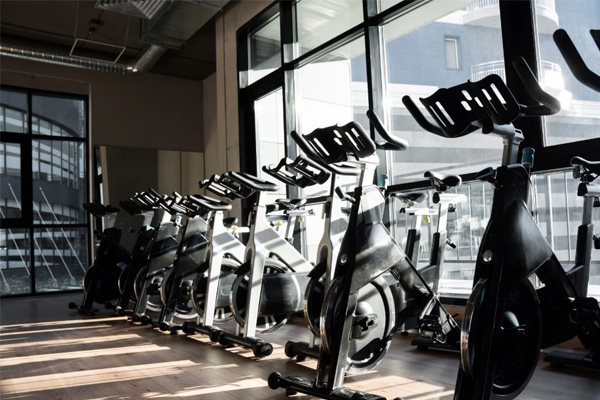
Fitness equipment operates in high-use environments (commercial gyms 12+ hours/day, home use 1-2 hours/day). Components must move smoothly without squeaks, jams, or play. Users expect silent operation and consistent resistance.
Smooth linear motion. Weight stack guide rods must be straight and polished. The weight plates slide on bushings or linear bearings. Any surface imperfection causes sticking or noise. Guide rods are typically centerless ground and hard chrome plated (Ra 0.2μm).
Low rotational friction. Cable pulley wheels need precise bores for bearings (H7 tolerance). Idler pulleys for belts require a smooth, concentric outer diameter. Misalignment causes belt noise and wear.
High cycle fatigue resistance. Treadmill drive shafts and elliptical cranks see millions of cycles. They are often machined from 4140 or 4340 steel, heat-treated to 28-35 HRC, and have keyways or splines for torque transmission.
Corrosion resistance from sweat. Users sweat on equipment; salty sweat corrodes unprotected steel. Critical parts are zinc plated, chrome plated, or made from stainless steel. Nylon and acetal bushings are also used for their corrosion resistance and low friction.
Adjustment and locking mechanisms. Seat posts, handlebars, and backrests require quick-adjust pins and knobs. These are turned and milled from stainless or plated steel, with threads (often M10-M16) and spring-loaded detents.
Chinese CNC shops serving the fitness industry typically have ISO 9001, large-capacity centerless grinding, hard chrome plating lines, CNC turning and milling, and assembly areas. Major clusters: Zhejiang (Yongkang, Jinhua) – hardware capital, huge fitness equipment base; Jiangsu (Suzhou, Kunshan) – commercial gym equipment; Guangdong (Shenzhen, Dongguan) – home fitness and electronics integration; Shandong (Dezhou) – strength equipment.
The weight stack is the heart of cable-based strength machines. Guide rods are vertical steel bars that guide the weight plates. They are typically hardened and chrome-plated steel (45-50 HRC surface). Machining steps:
Cut steel bar (often 1045 or 4140) to length.
Centerless grinding to achieve precise diameter (h7 or h8) and surface finish (Ra 0.2-0.4μm).
Induction hardening of surface (optional, for high-use commercial equipment).
Hard chrome plating (thickness 0.02-0.05mm) for corrosion resistance and low friction.
Final polishing and cut to final length.
Drill and tap mounting holes at the ends.
Tolerances for guide rods (e.g., 25mm diameter x 1,500mm length):
Diameter tolerance: h7 (e.g., 25mm -0.013/-0.022)
Straightness: 0.05mm over full length
Surface finish: Ra 0.2μm (after grinding and chrome plating)
Hardness (chrome): 800-900 HV
Case hardness (if induction hardened): 50-55 HRC
Chinese suppliers with centerless grinding machines (capable of 2m length) and hard chrome plating lines produce these rods in high volume.
Guide rod bushings are nylon (PA66) or acetal (POM), often with brass or steel outer shells. CNC turning produces the bushing OD and ID with clearance 0.1-0.2mm over rod diameter. Some bushings have grease grooves.
Fitness machines use steel or aluminum pulleys to route cables. Pulley wheels are typically machined from aluminum (6061) or cast iron, then anodized or painted. The critical feature is the bearing bore (H7) and the groove profile (U or V).
Machining steps for an aluminum pulley:
CNC turning of OD, face, and bore.
Groove cutting with a form tool (for cable seat).
Drilling and tapping for bearing retention (snap ring groove).
Deburring and anodizing (clear or black).
Press in bearings (often 6202ZZ or similar).
Tolerances:
Bore: H7 (e.g., 15mm +0.018/+0.000)
Groove profile: ±0.1mm
Runout of groove to bore: 0.1mm TIR
Surface finish: Ra 1.6μm (as-turned).
For poly-V belt pulleys (used in treadmills and ellipticals), grooves are precision-machined to match belt profile (e.g., PJ, PL). Chinese pulley manufacturers have specialized grooving lathes.
Timing pulleys for synchronized drives are machined from aluminum or steel, with teeth cut by hobbing or milling. Tolerances: tooth profile ±0.05mm, bore H7.
Treadmills have front and rear rollers that support the running belt. Treadmill rollers are steel tubes (often 1.5-2.5 inch diameter) with machined ends for bearings and a rubber or urethane coating on the OD. Machining steps:
Cut steel tube to length.
Turn the ends to accept bearings (often with snap ring grooves).
Centerless grind the OD for smooth running surface.
Bead blast and apply rubber coating (molded or injection overmolded).
Dynamic balancing (G6.3 grade).
Tolerances for a treadmill front roller (50mm diameter x 600mm length):
Bearing journals: h6 (e.g., 20mm -0.007/-0.013)
OD coating thickness: ±0.1mm
Straightness: 0.1mm over length
Balance: G6.3 at 2000 RPM
Chinese treadmill roller manufacturers produce millions annually. Many also supply the drive motor shafts and flywheels.
Treadmill drive shafts (connecting motor to front roller) are turned from 4140 steel, with keyways and threads. They are heat-treated and sometimes induction hardened at bearing journals.
Elliptical trainers have complex drivetrains with crank arms, pivot shafts, and linkage bars. Elliptical components require precise alignment for smooth pedal motion.
Typical machined parts:
Crank arms – cast or machined aluminum, with bearing bores for pedal axles and main shaft.
Main axle (drive shaft) – steel, turned to h6/h7, with keyways or splines for pulleys.
Linkage rods – steel or aluminum tubes with machined ends (threaded or with spherical bearings).
Pivot pins – stainless steel or zinc-plated steel, with grease grooves and snap ring grooves.
Tolerances for pivot pins (20mm diameter x 80mm long):
OD: h7 (e.g., 20mm -0.013/-0.022)
Surface finish: Ra 0.8μm (for bearing fit)
Case depth: if carburized, 0.5-1.0mm at 55-60 HRC
Chinese fitness OEMs supply complete elliptical drive assemblies, including CNC-machined crank arms (5-axis milled for complex shapes).
Stationary bikes (spin bikes, upright, recumbent) use bottom bracket assemblies similar to bicycles but heavier-duty. Machined components:
Bottom bracket shell – steel or aluminum, with threaded cups (BSA or Italian thread).
Spindle (crank axle) – steel, turned and ground, with taper or square ends.
Crank arms – forged or billet aluminum, machined for pedal threads (9/16-20) and square taper bore.
Pedal adapters – small steel parts with threads.
Tolerances for bottom bracket threading: class 2A/2B (UNF) or 6H/6g (metric). The spindle must be straight to 0.05mm over 200mm.
Many Chinese fitness machine manufacturers have in-house CNC turning centers for these high-volume parts.
Almost every piece of fitness equipment has adjustable parts: seat height, handlebar position, backrest angle. The locking mechanisms use spring-loaded pop pins and adjustment knobs.
Pop pin machining: stainless steel or zinc-plated steel pin, turned to precise diameter, with a groove for a snap ring and a cross-hole for the pull ring. The pin tip is often tapered for easy insertion. Tolerance on OD: h7 or g6 for sliding fit in the receiving hole.
Adjustment knobs: plastic or aluminum. Aluminum knobs are CNC turned with knurling, then anodized. They often have an inset brass threaded insert (molded or pressed).
Indexing plates (with multiple detent holes) are machined from steel or aluminum, with holes drilled to ±0.05mm position. These are often laser-cut or CNC milled.
Steel 1045, 4140, 4340: Guide rods, shafts, crank axles. Heat-treated to 28-35 HRC (through) or induction hardened on surfaces.
Stainless steel 303, 304: Pop pins, pivot pins for wet environments (swimming pool gyms, outdoor fitness). 303 easier to machine.
Aluminum 6061, 6063, 7075: Pulley wheels, crank arms, adjustment levers, frames. 7075 for high-stress arms.
Nylon 6/6, Acetal (POM): Bushings, slider pads, pulley inserts. Self-lubricating, quiet.
Cast iron: Weight plates (not machined much) and some pulleys.
Surface finishes:
Hard chrome plating: For guide rods, shafts (wear and corrosion). Thickness 0.02-0.05mm, hardness 800-900 HV.
Zinc plating (yellow or clear): For steel brackets, pins, adjustment parts. Salt spray 72-240 hours.
Black oxide: For pulleys, mild steel parts (low corrosion protection).
Powder coating: For frames, large brackets (thick, durable, color options).
Anodizing (Type II, clear or black): For aluminum parts (pulleys, crank arms).
Specify: "Guide rod: 4140 steel, centerless ground to h7, induction hardened 50-55 HRC, hard chrome plated 0.025mm min, polished to Ra 0.2μm."
Fitness equipment must operate safely and quietly. QC includes:
Dimensional inspection: CMM for complex parts (crank arms), micrometers for shafts and pins.
Straightness and roundness: For guide rods and shafts (measured on roundness tester).
Surface finish: Profilometer for Ra on ground and polished surfaces.
Hardness testing: Rockwell for steels, microhardness for case depth.
Plating thickness and adhesion: XRF for chrome and zinc; cross-hatch test.
Balance: For treadmill rollers and flywheels (dynamic balancing).
Assembly test: For pop pins, check spring force and smooth sliding.
Chinese suppliers often provide FAIR (First Article Inspection Report) with dimensional data and material certs.
Step 1: Look for fitness equipment experience. Ask for references from known brands (Life Fitness, Precor, Peloton, etc.) or large OEMs. Photos of similar parts.
Step 2: Check centerless grinding and chrome plating capability. For guide rods and shafts, these are essential. In-house chrome plating is preferred for quality control.
Step 3: Evaluate precision turning and milling. For pulleys and crank arms, 4-5 axis mills. Tolerances to ±0.01mm needed for bearing fits.
Step 4: Assess assembly capabilities. Many fitness component suppliers also assemble sub-systems (e.g., pulley with bearings, guide rod with mounting brackets). This saves time.
Step 5: Order a trial part – e.g., a guide rod or a pulley. Measure straightness, surface finish, and fit with bearings. Then move to complex machined parts like crank arms.
Major Chinese fitness manufacturing hubs: Yongkang (Zhejiang) – known as "Hardware Capital", huge fitness cluster; Jinhua, Hangzhou; Suzhou (Jiangsu) – commercial gym equipment; Xiamen (Fujian) – home fitness and connected fitness (Peloton-like brands).
Fitness parts are produced in medium to high volumes (10,000-1,000,000 units/year for popular models). Pricing benchmarks:
Weight stack guide rod (25mm x 1500mm, hard chrome plated): $5-10
Aluminum pulley (150mm dia, with bearing): $2-4
Treadmill front roller (50mm x 600mm, with rubber coating): $8-15
Elliptical crank arm (machined aluminum, anodized): $4-8
Pop pin (stainless, with ring): $0.50-1.00
Lead times: For existing designs, 4-5 weeks for first article, 3-4 weeks for production. For new custom parts (e.g., forging die for crank arms), add 8-10 weeks. Surface finishing adds 1-2 weeks. Shipping: sea 30-45 days, air 3-7 days.
MOQ: For guide rods, 5,000-10,000 pieces; for pulleys, 2,000-5,000 pieces; for pop pins, 10,000+ pieces. For prototype quantities (10-100 pieces), expect higher unit cost (3-5x).
Guide rod not straight – causes weight stack binding. Prevention: specify straightness tolerance (e.g., 0.05mm/m) and require straightness measurement report. Use centerless grinding with straightening step.
Chrome plating peeling on guide rod. Prevention: specify adhesion test (cross-hatch) and require plating thickness uniformity (e.g., ±20%). Use a reputable plater with pre-plate activation.
Pulley bore too large – bearing spins and wears. Prevention: specify H7 tolerance and use air gauge or CMM to inspect. For high-volume, use go/no-go plug gauges.
Pop pin slips under load – adjustment fails. Prevention: specify spring force (e.g., 20-30N) and pull-out test. Use hardened steel pin tip.
Corrosion on zinc-plated parts after a few months in gym. Prevention: specify thicker plating (8-12μm) and yellow chromate for better salt spray resistance (120-240 hours). For high-sweat areas, use stainless steel.
Smart connected fitness. Integrated sensors require machined pockets for PCB and wiring channels. More complex machining with tighter tolerances for electronics.
Magnetic resistance systems. Instead of weight stacks, magnetic brakes use precision-machined aluminum eddy current rotors. These require dynamic balancing and smooth surfaces.
Lightweight materials (carbon fiber, magnesium). High-end home fitness equipment (e.g., Peloton Bike+) uses machined aluminum and carbon fiber composite frames. Chinese shops are adapting.
Automated welding and polishing. Robot welding of steel frames followed by CNC machining of critical interfaces (brackets, bearing bores).
Eco-friendly coatings. Water-based powder coating and trivalent chromium (instead of hexavalent) for zinc plating are becoming standard.
Fitness equipment depends on precision-machined fitness equipment components to deliver smooth, quiet, and durable operation. China's CNC machining industry has developed specialized capabilities for guide rods, pulleys, rollers, shafts, crank arms, and adjustment mechanisms. By selecting suppliers with centerless grinding, hard chrome plating, precision turning/milling, and robust quality control, global fitness brands can source high-quality gym machine machining components at competitive costs. Start with a trial of a guide rod or pulley, verify straightness and finish, and then scale up to complex drivetrain parts.
Ready to source precision CNC machined fitness equipment components from China? Send us your drawings and annual volume estimates. We'll connect you with specialized manufacturers in Yongkang, Suzhou, and Xiamen with proven track records in the fitness industry. Free DFM feedback and quoting available.
A: Ra 0.2μm (polished chrome plate) is ideal. Lower friction, quieter sliding, and corrosion resistant. For economy equipment, hard anodized aluminum rods can be used but wear faster.
A: Yes, many have 4- and 5-axis CNC machining centers. They can machine from solid aluminum billet or finish-forged blanks. Tolerances ±0.05mm on bearing bores are achievable. Ask for sample parts.
A: h6 (e.g., 20mm -0.007/-0.013) is typical for a 6204 bearing. The journal should be ground (not just turned) to achieve roundness of 0.005mm and surface finish Ra 0.4μm.
A: Many large suppliers have their own plating lines. This ensures faster turnaround and quality control. Ask for sample cross-section and thickness measurement.
A: Specify spring force (e.g., 25±5N at full extension). The supplier should test each pin on a force gauge or sample batch with an SPC report. Custom springs can be sourced from spring manufacturers.
A: For high-strength, forged or billet 6061 aluminum is common. For premium bikes, 7075-T6 offers higher strength. Steel crank arms (e.g., 1045) are heavier and used on very heavy-duty bikes.
A: Yes, many do. They will press bearings into the machined pulley, install the shaft (if needed), and test for smooth rotation. Specify torque for spin test (e.g.,<0.1 Nm).
A: For a custom length and coating compound, MOQ is often 1,000-5,000 pieces. For standard sizes, MOQ may be lower (500 pieces). Prototypes (5-50 pieces) can be made with machined polyurethane instead of molded rubber.
Ready to take your fitness equipment to the next level with precision CNC machined components from China? Contact our engineering team with your part drawings and performance requirements. We'll match you with ISO 9001-certified manufacturers specializing in guide rods, pulleys, rollers, and drive shafts. Free quotation and DFM consultation.

Phone&WhatsApp:+86 13410452313
Email:gavinlee@zhuoguanmetal.com
Address: Room 805-1, Building A, Block 1, Xingzhan Plaza, No. 446, Shajing Nanhuan Road, Shatou Community, Shajing Street, Bao'an District, Shenzhen, Guangdong, China 518104