If you've ever taken apart a high-end camera lens or a cinema prime lens, you know the feeling of holding a component that fits together with almost no visible gap. The threads turn smoothly, the aperture blades slide without binding, and the barrel extends and retracts with just the right amount of resistance. That level of fit and finish doesn't happen by accident. It comes from decades of refinement in precision CNC machined parts OEM manufacturing, specifically tailored for the optical industry.
China has quietly become a major hub for producing optical & photographic equipment parts. From the aluminum barrels of entry-level kit lenses to the titanium filter rings on professional cinema glass, many components are machined in Chinese factories that specialize in high-precision, low-to-medium volume production. This guide walks through the key parts, materials, tolerances, and practical considerations when sourcing optical components from China.
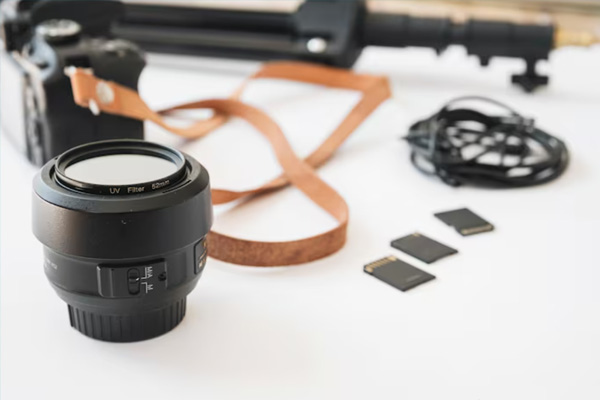
Machining a bracket for a hydraulic cylinder is one thing. Machining a lens barrel that needs to hold multiple glass elements in perfect alignment over a 50-degree temperature range is something else entirely. Optical & photographic equipment parts have three unique demands:
First, fit and feel. A helicoid thread (the spiral that lets you focus a lens) needs to turn smoothly but without play. Too tight, and it feels gritty or sticks. Too loose, and the lens wobbles, ruining image sharpness. Achieving this balance requires thread milling or turning to tolerances that most general machine shops never touch.
Second, surface quality. Internal surfaces of a lens barrel are usually black anodized or painted to kill stray light reflections. But if the anodizing is too thick, it changes the internal diameter. If it's too thin, it wears off and creates reflective spots. Machinists who only do industrial parts rarely think about how a surface finish affects light scatter.
Third, dimensional stability. Aluminum expands about 23 microns per meter per degree Celsius. A 100mm lens barrel that heats up from 20°C to 30°C grows by 0.023mm—enough to shift focus noticeably. That's why high-end lenses use brass or invar for critical components. A good optical machining partner understands these material behaviors and designs accordingly.
The lens barrel is the cylindrical housing that holds the glass elements, the focusing mechanism, and the aperture assembly. In a zoom lens, there are multiple concentric barrels that slide or rotate inside each other. Lens barrel machining is where precision CNC turning really shines.
When you open up a modern autofocus lens, you'll find several machined parts:
Outer barrel (the part you grip and turn for focus or zoom)
Inner barrel (holds the optical groups, moves axially during focusing)
Cam barrel (has slots that guide pins to convert rotation into linear motion for zooming)
Fixed barrel (mounts to the camera body, contains the bayonet mount)
Filter thread ring (on the front, usually standardized at 49mm, 52mm, 55mm, 58mm, 62mm, 67mm, 72mm, 77mm, or 82mm)
Aperture blade carrier and actuator ring
Each of these requires different machining strategies. The outer barrel needs a nice cosmetic finish—often brushed or bead-blasted before anodizing. The inner barrel needs precise bore diameters to hold lens elements with controlled interference or adhesive gaps. The cam barrel needs accurate slots that are typically machined on a 4-axis mill or a mill-turn center with live tooling.
Most consumer lens barrels are aluminum 6061-T6. It machines beautifully, anodizes well, and has good strength-to-weight ratio. For higher-end lenses, you'll see aluminum 7075-T6—stronger and harder, but more expensive and slightly more difficult to anodize evenly. For internal helical threads that see a lot of wear, some manufacturers use brass (C36000 free-cutting brass) because it's self-lubricating and doesn't gall against aluminum. Brass helicoids feel smoother and last longer, but they add weight and cost.
For the most demanding applications—think cine lenses used on film sets where temperature varies wildly—you might see stainless steel 303 or 416 for helicoids, or even invar (a nickel-iron alloy with near-zero thermal expansion) for critical spacers. But those are rare. Most optical machining from China is aluminum and brass.
Standard 60-degree V-threads are used for filter rings and mounting threads. But focusing helicoids use a modified thread form—often Acme or trapezoidal—with much looser engagement to allow smooth sliding. A typical helicoid thread might have a pitch of 0.75mm or 1mm, with a specially ground tool to create a rounded crest and root to prevent binding.
In practice, a good optical machinist will cut the male and female helicoid threads as a matched set, then lap them together with fine abrasive paste to achieve the perfect feel. This is as much art as science. If you're sourcing optical & photographic equipment parts from China, ask your supplier how they handle helicoid lapping. A shop that says "we just cut to print" probably hasn't done much optical work.
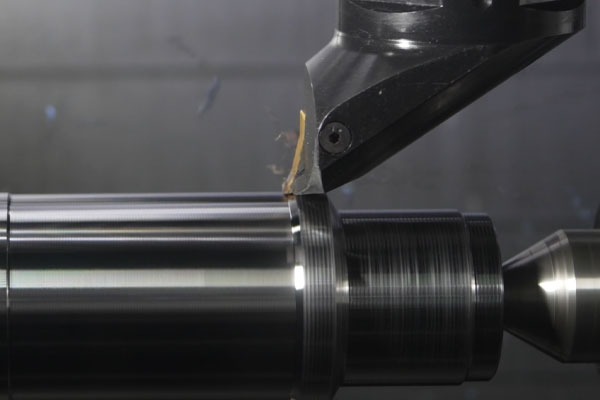
While lens barrels are cylindrical, camera bodies and medium format digital backs are typically machined from solid blocks of aluminum or magnesium alloy. The camera housing machining process involves 3-axis or 4-axis milling to create complex shapes with internal ribs, threaded holes, and precision mounting surfaces for sensors, circuit boards, and viewfinders.
Think of the top deck of a professional DSLR or mirrorless camera. That's usually a single machined part that includes:
Hot shoe mount (precision-machined to accept flashes and accessories)
Dials and buttons (machined pockets with tight position tolerances)
Viewfinder housing
Threaded shutter release button hole
Mounting points for the internal chassis
External grip attachment features
These parts are often machined from magnesium AZ91D or aluminum 6061. Magnesium is lighter and has better vibration damping, which matters for reducing shutter shock. But magnesium is more flammable and requires special coolant and fire suppression during machining. Not every Chinese shop is set up for magnesium. Ask before sending magnesium designs.
The finish on a camera body isn't just cosmetic—it affects grip, durability, and weather sealing. Typical finishes include:
Black anodizing (Type II or III): Most common for aluminum. Type III (hard anodizing) is more wear-resistant but has a darker, slightly rougher appearance.
Powder coating: Thicker, more durable, used for industrial or ruggedized cameras. Can hide fine details.
Electroless nickel plating: Used for magnesium parts because magnesium doesn't anodize well in black. Produces a uniform, conductive surface.
Bead blasting before coating: Creates a uniform matte texture that hides scratches and feels good in hand.
A good Chinese precision CNC machined parts OEM for camera components will have in-house or partnered finishing lines. They should understand masking requirements—certain surfaces (like mounting flanges or electrical contact points) must remain bare metal.
Beyond consumer photography, there's a whole world of scientific, industrial, and medical optics. Think of laser mounts, microscope stages, lens positioners, and goniometric cradles. These optical mount components are machined to even tighter tolerances than camera parts because they're used in interferometers, spectrometers, and other precision instruments.
If you've ever used a translation stage or a mirror mount from Thorlabs or Newport, you've handled precision-machined optical components. Common parts include:
Lens tube assemblies (similar to camera barrels but with standard thread pitches like M30 x 0.75)
Kinematic mirror mounts (spring-loaded, with fine-pitch adjustment screws)
Post holders and pedestals (precision-bored for slip-fit or press-fit of optical posts)
Translation stage bodies (with dovetail or crossed-roller bearing ways)
Rotation stages (with worm gear housings)
Breadboards and base plates (drilled and tapped with 1/4-20 or M6 holes on 25mm or 50mm grids)
These parts are often machined from aluminum 6061 and then black anodized. But for higher stability, stainless steel 303 or 304 is used. For the most demanding applications (cryogenic or high-vacuum environments), 316L stainless or even titanium may be specified.
An optical mount that holds a laser mirror needs to be adjustable in arcseconds. That means the threaded holes for adjustment screws must be positioned accurately, and the pivot points must be precisely aligned. Typical tolerances:
Bore diameters: H7 fit (e.g., 8.000mm to 8.015mm for an 8mm post)
Parallelism of mounting surfaces: 0.01mm over 100mm
Perpendicularity of bores to base: 0.01mm per 50mm
Thread position tolerance: 0.05mm true position for fine adjustment screws
Surface finish on sliding or pivoting surfaces: Ra 0.4μm or better
Many Chinese CNC shops that specialize in optical & photographic equipment parts can hold these tolerances, but they need to know which features are critical. Over-specifying everything drives up cost unnecessarily.
This is where volume meets precision. Filter rings, step-up/step-down adapters, lens hoods, and reversing rings are produced by the hundreds of thousands. They're simple parts—basically threaded rings—but the threads have to be perfect, and the finish has to be consistent.
A 77mm filter ring is machined from aluminum tube stock on a CNC lathe. The operation is straightforward: face, turn OD, bore ID, cut internal thread, cut external thread (if it's a step-up ring), cut a knurl or grip pattern, and part off. Cycle time might be 30-60 seconds per part.
The challenge is maintaining thread concentricity. If the internal thread isn't concentric with the external thread, a stack of filters will appear crooked. Good shops use a single setup to cut both threads, ensuring they're perfectly aligned. They also use thread gauges (GO/NOGO) to check every few parts.
Material for filter rings is almost always aluminum 6061, though brass is used for premium rings (brass is less likely to bind or cross-thread). Black anodizing is standard, but some brands do silver or colored anodizing for customization.
Lens hoods are often injection-molded plastic, but high-end hoods are machined from aluminum. A machined hood can have thinner walls and a more complex petal shape. The critical feature is the bayonet mount or thread that attaches to the lens barrel. That has to be precise to avoid wobbling.
Machining a lens hood is mostly a turning operation, but petal shapes require milling. Some shops do this on a mill-turn center in one setup. Others turn the basic shape, then mill the petals in a second operation on a VMC.
If there's one thing that separates amateur-looking optical parts from professional ones, it's the surface finish. Internal surfaces need to be flat black, non-reflective, and durable. External surfaces need to be smooth, uniform, and resistant to wear from handling.
Black anodizing is the standard for aluminum optical parts. Type II anodizing produces a black surface that's about 0.01-0.02mm thick. It's moderately hard and can be dyed any color, but black is most common. Type III (hard anodizing) produces a thicker, harder surface (0.03-0.05mm) that's more wear-resistant but has a slightly darker, more matte appearance. However, hard anodizing can change critical dimensions, so you need to account for the build-up when specifying pre-anodizing dimensions.
For parts that need to be non-reflective but can't be anodized (like brass helicoids), black oxide coating is used. It's a thin conversion coating that darkens the surface without changing dimensions much. It's not as durable as anodizing, but it's fine for internal threads that see light use.
Some high-end optical components use electroless nickel plating with black chromate over it. This provides excellent corrosion resistance and a uniform black finish, but it's expensive.
Cosmetic requirements matter, but functional surface finish matters more. For bearing surfaces (where two parts slide or rotate), the finish is typically specified as Ra 0.4μm to 0.8μm. For thread flanks, Ra 1.6μm is usually fine. For optical mounting surfaces (where a lens element sits), Ra 0.2μm or better is needed to avoid scratching the glass or adhesive.
Chinese shops doing optical & photographic equipment parts should have profilometers to measure Ra and Rz. Ask to see their surface finish capability data.
Optical parts get inspected differently than general mechanical parts. Yes, dimensions are checked on CMMs or with hand gauges. But there's also a lot of functional testing:
Thread gauging: GO/NOGO gauges for filter threads and helicoids. Helical threads may need custom plug gauges.
Concentricity measurement: A lens barrel's inner bore must be concentric with its outer diameter. This is checked on a roundness tester or by indicating the part while rotating on a lathe.
Surface finish comparison: Many shops use visual comparison blocks to ensure anodizing color and texture match the standard.
Assembly feel testing: For helicoids, a human operator screws the parts together to check for smoothness and lack of play. This is subjective but critical.
Optical alignment testing: In advanced cases, a finished lens assembly is checked on an optical bench to verify that the machined parts hold the elements in proper alignment.
When you're sourcing from China, don't assume the supplier knows these tests. Spell out your acceptance criteria in the drawing or a separate quality plan. For example: "Helicoid male and female threads shall assemble with no detectable radial play and shall rotate with a torque between 0.2 and 0.4 Nm." That gives them something measurable to work toward.

Not every CNC shop can do optical work. Here's what to look for:
Experience with small diameters and fine threads. Optical parts often have thin walls (1-2mm) and fine threads (0.5mm pitch or smaller). Swiss-type lathes are ideal for these, but many shops have them.
In-house anodizing or a trusted partner. Anodizing problems (uneven color, thin spots, dimensional changes) can ruin a batch of lens barrels. Shops that have their own anodizing line have better control. If they outsource, ask who does it and how they verify quality.
Willingness to do assembly and lapping. The best optical shops don't just machine parts—they assemble them, lap helicoids, and check fit. This saves you from receiving parts that technically meet the drawing but don't work well together.
Cleanliness. Optical parts need to be free of chips, cutting oil residue, and dust. A shop that delivers parts in dirty plastic bags isn't suitable. Look for shops that clean parts in ultrasonic tanks and package them in clean, sealed bags or trays.
ISO 9001 is enough. You don't need ISO 13485 or AS9100 for photography parts unless you're making medical or aerospace optics. ISO 9001 with a strong focus on customer-specific requirements is fine.
A practical approach: send a small order for a simple part—maybe a filter ring or a lens cap. See how they communicate, how they handle tolerances, and what the finished part looks and feels like. If that goes well, scale up to more complex components like helicoids or zoom cams.
Pricing for optical & photographic equipment parts from China varies widely:
Simple filter rings: $1-3 each in volumes of 1000+ pieces
Lens barrel (basic, no helicoid): $5-15 in volumes of 500+
Helicoid set (male and female, lapped): $15-40 per set in volumes of 200+
Complex zoom cam barrel: $30-80 in volumes of 100+
Camera top deck (magnesium, machined): $40-100 in volumes of 500+
Lead times: Prototypes 2-4 weeks. Production orders 4-8 weeks, plus shipping (air 3-7 days, sea 30-45 days). Anodizing adds about 3-5 days if done in-house, longer if outsourced.
Typical savings compared to US or European machining: 30-50% for simple parts, 20-35% for complex parts. The gap narrows when you add surface finishing and assembly.
Based on real projects, here are frequent issues when sourcing optical parts from China:
Thread mismatch. You specified M52 x 0.75, but the delivered part doesn't fit your filter. This usually happens because the shop used a worn thread insert or didn't have the right gauge. Solution: supply a sample mating part (like a filter) with your order, and require the shop to test-fit it.
Anodizing color variation. One batch is deep black, the next is dark gray. This is common when anodizing is outsourced. Solution: specify a color standard (e.g., a RAL number or a physical sample) and require approval of a pre-production sample.
Burrs on internal threads. Small burrs on the start or end of a thread can scratch filter threads or make assembly difficult. Solution: specify a deburring requirement and inspect incoming parts under magnification.
Concentricity drift. The inner bore isn't centered in the outer diameter. This happens when parts are machined in multiple setups without proper fixturing. Solution: design the part to be machined complete in one setup, or specify concentricity tolerance and inspect.
Packaging damage. Parts arrive scratched because they were thrown in a bag together. Solution: require individual wrapping or compartmented trays, and specify packaging requirements in your PO.
The optical industry is shifting, and Chinese machine shops are following:
More 5-axis work. Complex cine lenses and anamorphic optics require asymmetric barrels and internal cam paths that demand 5-axis milling. Shops that invest in 5-axis capability will win the high-end work.
Direct optical surfacing. Some advanced shops are combining precision turning with diamond turning for optical surfaces. This blurs the line between mechanical machining and optical fabrication.
Lower volumes, more customization. The market for custom lens adapters, special filter holders, and niche photographic accessories is growing. Shops that can economically produce 50-200 pieces of a design will thrive.
Better finishing. New anodizing processes (like two-step electrolytic coloring) produce more consistent black finishes. Also, electropolishing is becoming more common for stainless steel optical parts.
Sourcing optical & photographic equipment parts from China is absolutely viable—half the camera accessories on Amazon and eBay come from Chinese machine shops. The key is finding a shop that understands the unique requirements: smooth helicoids, non-reflective surfaces, precise concentricity, and proper thread fit. Don't treat optical parts like general industrial components. Spend time on your drawings, communicate the functional intent, and qualify suppliers with small trial orders.
If you're designing a new lens, a camera accessory, or an optical instrument, consider having your precision machining done in China. The cost savings are real, and the quality can be excellent if you partner with the right shop.
Have a project in mind? Send your drawings or concept sketches to our team. We work with a network of Chinese CNC shops that specialize in optical and photographic components—from filter rings to complete lens barrels. We'll help you get competitive quotes and manage quality from prototype to production.
A: Aluminum 6061-T6 is the standard for most consumer lenses. It's lightweight, machines easily, and anodizes well. For premium lenses where smooth focusing feel is critical, brass helicoids with aluminum outer barrels are common. For extreme durability (like cinema lenses), stainless steel or even titanium is used, but that adds significant weight and cost.
A: Yes, many specialty shops can reverse-engineer and machine helicoid threads for vintage lenses. You'll need to provide an original part or precise measurements of the pitch, thread form, major/minor diameters, and lead. Expect higher setup costs for one-off or low-volume runs (5-20 pieces).
A: For standard filter threads (e.g., 52mm x 0.75), use class 6H for internal threads and 6g for external threads. That's the common metric fit. If you want a slightly looser fit for easier mounting (less chance of cross-threading), specify 6G. For critical applications, supply a sample mating part (like a filter) and require a fit check.
A: Anodizing adds about 0.01-0.02mm per surface for Type II, 0.03-0.05mm for Type III. For threads and bores that must hold a tight tolerance, either machine the part undersized to account for the anodizing buildup, or mask those surfaces so they remain uncoated. Specify on your drawing which surfaces must remain uncoated (e.g., "ANODIZE PER MIL-A-8625 TYPE II BLACK, EXCEPT THREAD AREA TO REMAIN BARE").
A: For simple parts like filter rings or lens caps, MOQs of 100-500 pieces are common. For complex parts like helicoid sets or zoom cams, MOQs may be as low as 50-100 pieces, but setup costs (programming, fixturing, custom tooling) will be higher per part. Some shops accept prototype quantities of 10-20 pieces for a fee.
A: Ask the shop to provide the male and female helicoid parts as a matched set, pre-lapped. You can then manually screw them together to feel the resistance. For a quantitative test, use a torque screwdriver to measure rotational torque. Typical acceptable range is 0.2-0.5 Nm for a 50mm diameter helicoid.
A: Some can, but you need to ask specifically. Magnesium is flammable when machined with the wrong coolant or feeds/speeds. Shops that machine magnesium must have fire suppression systems and use oil-based coolants (not water-based). Expect higher machining costs and longer lead times. For most photographic applications, aluminum is safer and cheaper.
A: A filter ring is a simple threaded ring that screws into a lens barrel to hold a filter. A step-up ring has two different thread sizes (e.g., 52mm on one side, 55mm on the other) to adapt a smaller lens thread to a larger filter size. Both are machined similarly, but step-up rings require two accurate threads on the same part.
A: Yes, strongly recommended. STEP files (AP242) are best. For simple turned parts, a detailed 2D drawing with all dimensions may suffice, but for complex parts with helicoids, cams, or undercuts, a 3D model eliminates ambiguity. Provide both: 3D model for geometry and 2D drawing for tolerances, surface finish, and notes.
A: Type II anodizing (0.01-0.02mm thick) on 6061 aluminum will last years of normal use, but it can wear through at contact points (like where a lens hood attaches). Type III hard anodizing (0.03-0.05mm) is much more durable and is used on professional lenses. However, hard anodizing is more expensive and has a darker, less uniform appearance. For most consumer products, Type II is sufficient.
Need precision optical components machined in China? Contact us with your drawings or samples. We'll match you with qualified shops that specialize in lens barrels, helicoids, filter rings, and camera housings. Free DFM feedback and prototype support available.

Phone&WhatsApp:+86 13410452313
Email:gavinlee@zhuoguanmetal.com
Address: Room 805-1, Building A, Block 1, Xingzhan Plaza, No. 446, Shajing Nanhuan Road, Shatou Community, Shajing Street, Bao'an District, Shenzhen, Guangdong, China 518104