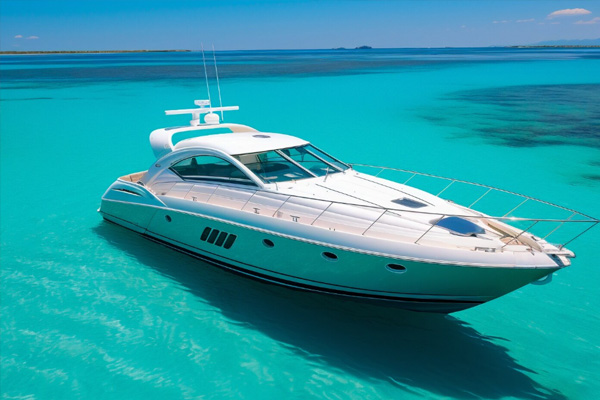
Saltwater is brutal on metal. Leave a standard steel bolt on a boat deck for a few weeks, and you'll come back to a rusted lump. Leave it for a season, and it'll be unrecognizable. That's why yacht & marine precision components have to be made from materials that can withstand constant exposure to salt spray, immersion, UV radiation, and the occasional impact from docking or rough seas. China has become a major supplier of precision CNC machined parts OEM for the marine industry, producing everything from simple cleats to complex steering system components. This guide walks through the key parts, materials, and practical considerations for sourcing marine-grade machined components from Chinese manufacturers.
If you've ever owned a boat, you know that corrosion never sleeps. The combination of salt, oxygen, and moisture creates an electrochemical cell that attacks metals relentlessly. Galvanic corrosion happens when two dissimilar metals touch in the presence of electrolyte (seawater). Crevice corrosion attacks tight spaces like threads or under washers. Pitting corrosion creates small holes that grow deeper over time. Stress corrosion cracking can snap a stainless steel shaft without warning.
So when a machine shop claims they can make yacht & marine precision components, they need to understand more than just tolerances. They need to know which grades of stainless steel actually resist pitting in seawater (hint: 304 is not enough). They need to understand how to finish surfaces to avoid crevice corrosion. And they need to know about galvanic compatibility—what happens when their aluminum part touches someone else's bronze thru-hull fitting.
Chinese CNC shops that specialize in marine work have learned these lessons, often through trial and error. The good ones now specify the right materials, apply proper passivation, and understand the importance of smooth finishes for corrosion resistance.
Walk the deck of any production yacht or center console fishing boat, and you'll see machined stainless steel parts everywhere. Cleats for tying lines, chocks for guiding lines, stanchion bases for railings, pad eyes for attaching fenders, and hinges for hatches and lockers. These deck hardware components are visible, so they need to look good. But they also need to survive years of sun, salt, and mechanical abuse.
Typical machined deck hardware includes:
Cleats (horn cleats, pop-up cleats, cam cleats)
Chocks and fairleads (for guiding dock lines)
Stanchion bases (for railings, often with a 90-degree angle or custom tilt)
Pad eyes and padeyes (welded or bolted-on attachment points)
Hinges (piano hinges, lift-off hinges for hatches)
Latch handles and flush pull rings
Deck fill plates (for fuel, water, waste)
Cup holders and rod holders
Most of these parts are machined from 316L stainless steel. Why 316L? Because it contains molybdenum (2-3%), which dramatically improves resistance to pitting and crevice corrosion in saltwater compared to 304 (which has no molybdenum). The "L" stands for low carbon (0.03% max), which prevents sensitization and intergranular corrosion after welding. For deck hardware that's welded to a base plate or railing, 316L is mandatory.
Some premium builders use 316Ti (titanium-stabilized) or duplex 2205 for even better corrosion resistance, but those are more expensive and harder to machine. For most production boats, 316L is the sweet spot.
Deck hardware is usually electropolished or passivated after machining. Electropolishing removes a thin layer of surface metal, smoothing microscopic peaks and valleys. This does two things: it makes the part look shiny and uniform, and it removes embedded iron particles that could initiate rust. Passivation (using nitric or citric acid) also removes free iron but doesn't change the surface texture as dramatically.
A good Chinese marine machine shop will offer both. For visible deck hardware, electropolishing to a mirror or satin finish is common. For hidden parts (like backing plates), passivation is sufficient. The finish also affects cleanability—smooth surfaces are easier to wash salt off, and salt left on a surface will eventually cause pitting.
A note on "mirror finish": full mirror electropolishing takes time and costs more. Many builders specify a "satin" or "brushed" finish (around Ra 0.4-0.8μm) which hides scratches better during normal use. Specify your finish clearly on the drawing, and ask for a sample plate before production.
Parts that live below the waterline face the harshest conditions: continuous immersion, biofouling, and often sacrificial anodes to protect against galvanic corrosion. Underwater marine components are machined from higher-grade materials than deck hardware, and tolerances are tighter because they affect performance and safety.
Typical underwater components include:
Propeller shafts (long, precision-ground stainless or bronze)
Shaft seals and bearing carriers
Rudder stocks and pintles
Thru-hull fittings (for engine cooling, toilet discharge, etc.)
Seacocks and ball valves
Speedometer paddlewheel housings
Depth transducer fairings
Zinc or aluminum anode mounting hardware
316L stainless works for many underwater applications, but it can still pit in stagnant or low-oxygen conditions (like inside a shaft log or behind a packing gland). For critical rotating components like propeller shafts, builders often use AISI 17-4PH (precipitation-hardened) or duplex 2205. These have higher strength and better pitting resistance. For extreme service (commercial fishing boats, workboats), super duplex 2507 or even Inconel 625 might be specified.
Bronze alloys are also common underwater. Aluminum bronze (C95400, C95500) is strong, corrosion-resistant, and resists biofouling. It's used for propeller nuts, bearing housings, and seacock bodies. Manganese bronze is used for propellers (but those are cast, not machined from bar stock). Silicon bronze is used for fasteners and small fittings.
One trap: mixing metals. If you machine a stainless steel shaft and put it in a bronze bearing, you create a galvanic cell. The less noble metal (usually the bronze or aluminum) will corrode. That's why boats have sacrificial anodes—but the anode has to be electrically connected to both metals. A good marine machinist knows this and will ask about your assembly before recommending materials.
A propeller shaft has to run true to avoid vibration. Typical tolerances:
Diameter tolerance: h6 or h7 (e.g., 50mm -0.016 to -0.025mm for h6)
Straightness: 0.05mm per meter, often less for high-speed craft
Surface finish on bearing journals: Ra 0.4μm or better, often ground after turning
Concentricity of taper (for propeller fit): 0.02mm TIR
Keyway position: ±0.02mm
Chinese shops that do yacht & marine precision components should have cylindrical grinding capability. Turning alone won't achieve the surface finish and roundness required for a shaft seal to work without leaking. Ask about their grinding equipment and typical tolerances.
Marine engines, transmissions, and generators sit in engine rooms that are hot, humid, and often salty from minor leaks or condensation. Marine engine components need to be corrosion-resistant and dimensionally stable under temperature changes.
Engine mounts (brackets that bolt to the stringers, with rubber isolation)
Heat exchanger end caps and tube sheets
Raw water pump housings and impeller covers
Exhaust mixing elbows (where raw water injects into exhaust)
Fuel injection pump components (in high-end diesel marine engines)
Alternator brackets and belt tensioners
Seawater strainer bodies and lids
These parts are often machined from 316L stainless or aluminum bronze. Some smaller parts (like engine mounts) may be zinc-plated steel but that's risky—if the zinc coating gets scratched, rust starts. Better to use stainless from the start.
One specific part worth discussing: the exhaust mixing elbow. Raw water is injected into the exhaust to cool it before it exits the hull. The elbow sees hot exhaust gas (up to 500°C) on one side and cold seawater on the other. Thermal cycling plus saltwater causes rapid corrosion. Many OEMs use cast iron or 316L, but those fail after a few seasons. Better shops machine elbows from super duplex 2507 or Inconel, but that's expensive. For replacement parts, Chinese shops can reverse-engineer and machine elbows from 316L at a fraction of OEM cost—just understand they'll still corrode eventually.
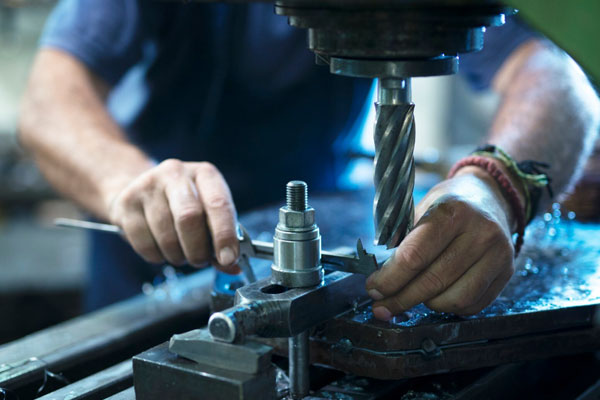
Marine steering systems—whether hydraulic or mechanical cable—rely on precision-machined components. Steering system parts need tight tolerances to avoid play, which translates to sluggish or unpredictable handling.
Helm pump housings and internal gears/vane assemblies
Cylinder bodies and pistons for hydraulic steering
Tie bar ends and ball joints
Steering wheel shafts and keyways
Autopilot drive units (gear housings, clutches)
These parts are typically machined from 303 or 316 stainless for corrosion resistance, with PTFE or bronze bushings at pivot points. The critical features are bore diameters for seals and pistons (typically H7 or H8 fits), thread concentricity for tie bar ends, and surface finish on hydraulic sealing surfaces (Ra 0.2-0.4μm).
Hydraulic steering parts also need to be clean—free of burrs, chips, and residue that could contaminate the hydraulic fluid. A Chinese shop that does automotive or industrial hydraulics can usually handle marine steering, but verify they have experience with stainless (harder to machine than steel) and that they clean parts before shipping.
Boat owners love customizing. A new radar arch, a custom swim platform, a hardtop for a center console—all require custom-machined fittings, brackets, and adapters. The volumes are low (often 1-10 pieces per design), but the precision requirements are high because they need to fit existing structures.
Chinese CNC shops that specialize in yacht & marine precision components are well-suited for this low-volume, high-mix work. They can machine a one-off bracket from a 3D model or even from measurements and photos (if you provide a sketch). Typical custom parts include:
Mounting brackets for electronics (radar, GPS, VHF antennas)
Custom cleats or fairleads (matching vintage hardware or specific aesthetic)
Adaptor plates for engine swaps or repowering
Hinge and latch replacements for older boats
Custom cup holders, rod holders, or tackle storage
T-tops and radar arch fittings
For these jobs, the Chinese shop will typically quote a one-time programming and fixturing fee (often $100-300) plus a per-part price. Turnaround for a simple bracket can be as fast as 1-2 weeks if you pay for expedited machining and air freight.
The key to success with custom parts: provide as much information as possible. A 3D STEP file is best. If you can't provide that, send clear photos with measurements (a ruler in the photo helps). Tell them the material (316L stainless is safest) and the finish (electropolished or brushed). And if possible, send a mating part (like the existing bracket or the tube it needs to fit around) so they can test-fit before shipping.
Choosing the right material for marine precision components is the most important decision you'll make. Here's a practical guide:
316L Stainless Steel is your default choice for most above-water and many underwater parts. It contains 16-18% chromium, 10-14% nickel, and 2-3% molybdenum. The molybdenum provides pitting resistance. 316L has a PREN (Pitting Resistance Equivalent Number) around 25-30. It's machinable with carbide tooling, though it work-hardens. It's readily available worldwide in bar, rod, and plate forms. Cost is moderate.
Duplex 2205 has roughly double the strength of 316L and much better pitting resistance (PREN 35-40). It contains 22% chromium, 5% nickel, 3% molybdenum, and nitrogen. It's more difficult to machine—slower speeds, more tool wear. It's also more expensive (about 2-3x 316L). Use it for propeller shafts, rudder stocks, and any component that will be continuously immersed in seawater.
Super Duplex 2507 (PREN >40) is for extreme conditions: high-speed craft, commercial fishing boats, or any application where failure is not an option. It's very difficult to machine and very expensive (5-10x 316L). Most recreational boats don't need it.
Aluminum Bronze (C954, C955) is excellent for underwater bearings, valve bodies, and seacocks. It resists biofouling, has good strength, and is galvanically compatible with stainless steel when properly sized. It machines reasonably well with sharp carbide tools. It's about the same cost as 316L.
Silicon Bronze is used for fasteners and small fittings where a traditional bronze look is desired. It's softer than aluminum bronze and machines easily. It's expensive but has excellent corrosion resistance.
6061 Aluminum is fine for above-water parts that won't see salt spray—like interior brackets or engine room components that are painted or powder-coated. But bare aluminum in a marine environment will corrode (white powder). If you use aluminum, specify anodizing or powder coating.
Avoid 304 stainless for any marine application. It will rust, usually within months. Also avoid 303 (free-machining stainless) for underwater—the added sulfur for machinability reduces corrosion resistance.
Machining is only half the battle. The finish determines how long the part lasts. Here are the common finishes for yacht & marine precision components:
Electropolishing is the gold standard for stainless marine parts. The part is immersed in an electrolyte bath and an electric current removes a thin layer of metal (typically 0.01-0.05mm). This smooths the surface, removes embedded iron, and creates a passive layer. The result is a shiny, uniform finish that resists corrosion far better than as-machined or mechanically polished surfaces. Electropolishing also reveals any surface defects like cracks or porosity. Most Chinese marine machine shops offer electropolishing, often as a subcontract service.
Passivation is a chemical treatment (nitric or citric acid) that removes free iron and helps form a passive oxide layer. It doesn't change the surface texture. Passivation is cheaper than electropolishing but leaves the surface with the original machined finish. It's acceptable for hidden parts or parts that will be painted.
Mechanical polishing (using abrasive belts or wheels) creates a bright finish but can leave embedded abrasive particles that later initiate corrosion. It's also labor-intensive. For most marine parts, electropolishing is superior to mechanical polishing.
Powder coating is used on aluminum or steel parts that won't see heavy abrasion. It provides a thick, durable color coating but can chip. Once chipped, corrosion starts underneath and spreads. Powder coating is common for engine brackets and interior parts.
Anodizing for aluminum (Type II clear or black) provides a hard, corrosion-resistant surface. Type III hard anodizing is even more durable. Anodizing is standard for aluminum marine parts, but it's not as corrosion-resistant as stainless steel in saltwater—anodized aluminum still needs to be kept above water or regularly washed.
When you send a drawing to a Chinese supplier, specify the finish clearly. For example: "316L stainless steel, electropolished to 0.2μm Ra max, no sharp edges. Exterior surfaces: mirror finish (visual standard to be provided)."
Marine parts need to be inspected differently from general industrial parts. The critical factors are material grade, surface finish, and dimensional accuracy—especially for shafts and seals.
Material verification is crucial. Some less reputable shops might substitute 304 for 316L to save money. The difference is invisible to the naked eye. Insist on material test reports (MTRs) from the mill, and consider having a third party do positive material identification (PMI) using XRF on a sample from each batch.
Passivation verification can be done with a simple water break test or more sophisticated methods like copper sulfate testing. Your supplier should provide a certificate of passivation compliance to ASTM A967 or ISO 16079.
Dimensional inspection for shafts and critical bores should be done with micrometers and bore gauges, not just calipers. For complex parts, a CMM report is useful. Ask for inspection reports for first article and for random samples from production batches.
Surface finish measurement using a profilometer should be specified on the drawing (e.g., "All sealing surfaces: Ra 0.4μm max, measured in accordance with ISO 4287"). The supplier should provide printouts for the first article.
Salt spray testing (ASTM B117) is the ultimate validation of corrosion resistance. For critical parts, you can require that a sample from each batch pass 500-1000 hours of salt spray with no red rust. This adds cost and lead time but provides confidence.
Not every Chinese CNC shop understands the marine environment. Here's how to find a good one:
Look for experience with 316L and duplex. These materials machine differently from 303 or 12L14. Ask what cutting parameters they use for 316L and what tooling they recommend. A shop that says "it's just stainless" probably hasn't done much marine work.
Ask about passivation and electropolishing. Do they have in-house capability or a trusted partner? Can they provide certificates of compliance? If they outsource, ask who does the work and whether they audit that supplier.
Request sample parts. Ask to see photos or physical samples of marine parts they've made. Look for smooth finishes, consistent color (if electropolished), and no visible tool marks or burrs.
Check references. A shop that supplies to boat builders (even small ones) will have references. Contact them and ask about quality, lead times, and whether parts corroded after installation.
Start small. Order a simple part first—maybe a cleat or a backing plate. Inspect it carefully, including material verification. If that goes well, scale up.
Many Chinese marine machine shops are located in coastal cities like Qingdao, Ningbo, Xiamen, and Shenzhen. These cities have a long history of shipbuilding and marine engineering, so there's local expertise.
Pricing for yacht & marine precision components from China is generally 30-50% lower than US or European shops for equivalent quality. Here are rough benchmarks:
Simple cleat (6-inch, 316L, electropolished): $8-15 each in 100-piece quantity
Stanchion base (right-angle, 316L): $12-20 in 50-piece quantity
Propeller shaft (1.5" diameter x 36" long, 316L, ground): $150-250 in 10-piece quantity
Custom bracket (one-off, 316L, from drawing): $100-300 depending on complexity
Thru-hull fitting (3/4" NPT, 316L): $10-18 in 50-piece quantity
Lead times: For simple parts with existing stock material, 3-4 weeks for first article, then 2-3 weeks for production. For custom one-offs, 2-3 weeks total including programming. Add 3-7 days for air freight or 30-45 days for sea freight.
Minimum order quantities vary. Many shops will accept orders of 10-50 pieces for simple parts. For complex parts like shafts, MOQs may be as low as 5 pieces. For one-off customs, there's no MOQ—you just pay a higher per-piece price.
Based on real projects, here are frequent issues when sourcing marine parts from China:
Material substitution. You ordered 316L but the part is 304. It looks the same but will rust. Prevention: require MTRs and consider third-party PMI testing on first batch.
Inadequate passivation. The part was machined but not properly passivated, so free iron on the surface rusts within weeks. Prevention: specify passivation per ASTM A967 and require a certificate of compliance. Ask for a water break test video.
Sharp corners. Machined corners that are left sharp become sites for crevice corrosion and also cut dock lines or skin. Prevention: specify "break all edges 0.2-0.5mm" or "radius all external corners R0.5mm minimum".
Galvanic mismatch. You ordered a stainless part that will be bolted to an aluminum hull. Without isolation, the aluminum corrodes. The machine shop doesn't know your assembly, so they won't warn you. Prevention: understand galvanic compatibility yourself and specify insulating washers or coatings in your assembly drawing.
Packaging damage. Parts arrive scratched because they were thrown in a bag together. Prevention: specify packaging requirements (e.g., "each part individually wrapped in plastic, then packed in foam-lined boxes") and require photos of packed boxes before shipping.
The marine industry is changing, and Chinese machine shops are adapting:
More duplex and super duplex. As boat owners become more demanding about longevity, even production boats are moving from 316L to 2205 for critical underwater parts. Shops that can machine duplex efficiently will have an advantage.
Additive for complex shapes. Some marine fittings (like exhaust elbows) are being 3D printed in superalloys, then finish-machined. This reduces waste and allows geometries that can't be cast or machined from bar stock.
Electropolishing quality improvements. New electropolishing chemistries produce more consistent finishes and better corrosion resistance. Chinese shops are investing in automated electropolishing lines.
Direct-to-builder supply. More Chinese marine machine shops are selling directly to boat builders and aftermarket distributors, bypassing Western intermediaries. This reduces costs but puts more responsibility on the buyer for quality oversight.
Sourcing yacht & marine precision components from China makes practical sense. The material science is well understood, the machining capabilities are widespread, and the cost savings are significant. The key is to choose materials carefully (316L as baseline, duplex for critical underwater), specify proper surface finishing (electropolishing is best), and verify quality with material certs and inspection reports.
If you're a boat owner looking for a replacement part, a marine mechanic needing custom brackets, or an OEM looking to reduce costs, Chinese CNC shops can deliver. Start with a simple part, build a relationship, and scale from there.
Need help sourcing marine-grade machined parts from China? Send us your drawings or sketches. We work with a network of shops that specialize in 316L, duplex, and bronze marine components—from cleats to propeller shafts. Free DFM feedback and prototype support available.
A: 316L is the standard for most marine applications. It contains molybdenum for pitting resistance. For continuous underwater immersion or high-stress components (propeller shafts, rudder stocks), use duplex 2205 or super duplex 2507. Avoid 304 or 303—they will corrode in saltwater.
A: Yes, always passivate as a minimum. Passivation removes free iron from the surface, reducing the chance of rust. Electropolishing is better—it smooths the surface and improves corrosion resistance significantly. For visible deck hardware, electropolishing also gives a consistent, attractive finish.
A: Yes, many shops accept hand sketches, but you'll get better results with a 3D model (STEP file) or a clear 2D drawing with dimensions. If you can only provide a sketch, include a ruler in photos and specify material, finish, and critical dimensions. Expect higher programming fees for one-offs ($50-200).
A: Use an isolation material (plastic or rubber washers, sleeves, or gaskets) between dissimilar metals. Also, install sacrificial anodes (zinc or aluminum) that are electrically connected to both metals. The anode corrodes instead of your expensive stainless or bronze parts. Consult a marine corrosion reference for specific material pairs.
A: For a shaft that runs in a cutless bearing or lip seal, specify h6 or h7 diameter tolerance (e.g., 50mm h6 = -0.016 to -0.025mm). For straightness, 0.05mm per meter is typical for recreational boats; 0.02mm per meter for high-performance craft. Surface finish on bearing journals: Ra 0.4μm or better, typically achieved by centerless grinding after turning.
A: Yes, many shops have experience with aluminum bronze (C954, C955) and silicon bronze. These materials machine reasonably well with carbide tooling. Specify the exact alloy (e.g., C95400) because machining parameters vary. Bronze is more expensive than 316L and may have longer lead times for material procurement.
A: You can't tell by looking. Require a mill test report (MTR) from the supplier showing the chemistry. For critical parts, use a handheld XRF analyzer (positive material identification) to verify the molybdenum content (2-3% for 316L, 0% for 304). Some third-party inspection companies offer PMI services.
A: For standard designs, MOQs of 100-500 pieces are common. For custom designs, some shops accept as few as 50 pieces, but per-part price will be higher. For one-off custom brackets, there's no MOQ—just a one-time setup fee.
A: Above water (deck hardware), properly passivated 316L can last 20+ years with occasional washing. Underwater, it depends. In warm, stagnant, or polluted water, pitting can occur in 1-5 years. For continuous underwater immersion, duplex 2205 is recommended for longer life (10+ years).
A: Some do. For example, they can press bearings into a housing, attach a key to a shaft, or assemble a complete steering cylinder with seals and fittings. Ask during quoting. Assembly adds cost but saves you time. Make sure they have clean work areas and use proper tools (e.g., not hammering bearings into place).
Ready to source marine-grade precision components? Contact us with your drawings or requirements. We'll match you with qualified Chinese CNC shops that specialize in stainless, duplex, and bronze marine parts—from simple cleats to complex propeller shafts. Free quoting and DFM feedback available.

Phone&WhatsApp:+86 13410452313
Email:gavinlee@zhuoguanmetal.com
Address: Room 805-1, Building A, Block 1, Xingzhan Plaza, No. 446, Shajing Nanhuan Road, Shatou Community, Shajing Street, Bao'an District, Shenzhen, Guangdong, China 518104