The medical device industry demands the highest levels of precision, cleanliness, and quality traceability. Every component must perform reliably in life-critical applications, from a surgical drill bit that navigates near a patient's spine to an implantable screw that must remain securely fixed for decades. Precision CNC machined parts OEM suppliers serving this industry must master difficult-to-machine materials, maintain strict contamination controls, and provide comprehensive documentation. China has developed a specialized ecosystem of medical device precision parts China manufacturers who hold ISO 13485 certification and supply major medical device companies globally. This guide explores the key components, materials, processes, and quality requirements for medical device precision machining.
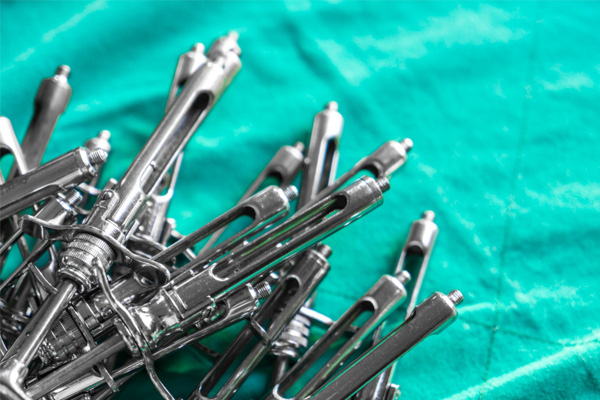
Medical devices range from simple surgical instruments to complex implantable systems. Regardless of complexity, all medical components share common requirements: biocompatibility, sterility, dimensional accuracy, and full traceability. The global medical device industry relies on medical device precision parts China suppliers for cost-effective, high-quality components that meet rigorous regulatory standards.
Medical components fall into several categories:
Surgical instruments: Hand tools, power tool components, cutting instruments
Orthopedic implants: Hip, knee, shoulder, and spine components
Dental components: Implant abutments, surgical guides, prosthetic frameworks
Diagnostic equipment: Instrument chassis, fluid handling components, optical mounts
Drug delivery devices: Pen injectors, auto-injectors, inhaler mechanisms
Cardiovascular components: Catheter hubs, stent crimping tools, heart pump housings
Chinese manufacturers of medical device precision parts China have invested heavily in Swiss-type CNC lathes, 5-axis machining centers, cleanroom assembly areas, and advanced metrology to serve this demanding market.
Surgical instruments must be precise, durable, and capable of repeated sterilization without degradation. Surgical instrument components range from simple forceps to complex powered surgical tool assemblies. The machining of these components requires attention to edge geometry, surface finish, and material selection.
Common surgical instrument components produced by Chinese CNC shops:
Forceps, scissors, and needle holders (jaw and handle components)
Retractor blades and handles
Curettes, elevators, and osteotomes
Surgical saw blades and drill bits
Powered surgical tool housings and gear trains
Endoscopic instrument shafts and articulation joints
Laparoscopic trocars and cannulae
Material selection for surgical instrument components balances corrosion resistance, hardness, and cost:
Stainless steel 316L: Low-carbon, vacuum-melted version for surgical instruments. Excellent corrosion resistance, good hardness after cold working, and compatible with autoclave sterilization.
Stainless steel 17-4PH: Precipitation-hardening grade for components requiring higher strength (e.g., thin forceps jaws). Heat treatable to 40-45 HRC.
Stainless steel 440C: High-carbon, hardenable grade for cutting edges (scissors, osteotomes). Hardness up to 58-60 HRC after heat treatment.
Titanium Grade 5 (Ti-6Al-4V): Lightweight, non-magnetic, excellent biocompatibility. Used for specialized instruments where weight reduction is critical.
Medical-grade plastics (PEEK, Delrin, PTFE): For single-use instruments or components requiring electrical insulation.
Surgical instrument components present unique machining challenges:
Sharp edges: Cutting edges must be sharp but free of burrs. Often requires secondary deburring (vibratory finishing, electrochemical deburring, or manual finishing).
Surface finish: Satin or mirror finishes are common. Satin finish (Ra 0.4-0.8μm) hides scratches from normal use; mirror finish (Ra 0.05-0.1μm) resists biofilm formation but costs more to produce.
Precision jaws: Forceps and needle holder jaws must close perfectly. Requires precision machining of mating surfaces with alignment features.
Cleaning and passivation: After machining, parts must be cleaned of cutting fluids and passivated (nitric or citric acid bath) to remove free iron and maximize corrosion resistance.
Laser marking: UDI (Unique Device Identification) marks are often laser-etched onto instrument surfaces. Requires flat or controlled surfaces for consistent marking.
Chinese precision CNC machined parts OEM suppliers with medical experience will have validated cleaning processes and passivation lines meeting ASTM A967 or ISO 16079 standards. They should also provide passivation validation documentation upon request.
Many surgical instrument components are small-diameter (1-10mm) and long (up to 300mm). Swiss-type CNC lathes are ideal for these parts, offering:
Guide bushing support close to the cutting tool, preventing deflection of long, thin parts
Live tooling for milling cross-holes, flats, and slots without secondary operations
Back-working capabilities for machining both ends in one cycle
High spindle speeds (up to 15,000 RPM) for fine finishing
Typical Swiss-turned surgical instrument components include guide wires, trocar tips, bone drill bits, and endoscopic instrument shafts. Tolerances of ±0.005mm are achievable on diameter and ±0.01mm on length for these applications.
Orthopedic implants replace or support damaged bone and joint structures. These components must remain in the human body for years or decades, requiring exceptional biocompatibility, fatigue strength, and corrosion resistance. Orthopedic implant machining is one of the most demanding applications in medical manufacturing.
Common orthopedic implant components from Chinese CNC shops:
Hip replacement stems (femoral components)
Hip acetabular shells and liners
Knee replacement femoral and tibial components
Spinal screws, rods, and interbody cages
Shoulder and small joint implants
Trauma plates, screws, and nails
Craniofacial mesh and fixation plates
Implant materials must meet ISO 5832 or ASTM F-series standards:
Titanium Grade 23 (Ti-6Al-4V ELI): Extra-low interstitial grade for implants. Excellent osseointegration, high strength-to-weight ratio, modulus similar to bone. The most common material for trauma plates, spinal screws, and hip stems.
Titanium Grade 2 (Commercially Pure): For components requiring formability and corrosion resistance, lower strength than Grade 5.
Cobalt-Chrome Alloy (ASTM F75, F1537): High wear resistance for bearing surfaces (hip and knee articulation). Difficult to machine, requires specialized tooling and rigid setups.
Stainless steel 316L (ASTM F138): Lower cost, used for trauma plates and screws. Not suitable for long-term bearing surfaces due to potential ion release.
PEEK (Polyetheretherketone, ASTM F2026): Radiotransparent, modulus similar to bone. Used for spinal cages and trauma fixation devices where X-ray visibility of the implant is undesirable.
Orthopedic implant machining presents significant challenges:
Difficult materials: Titanium and cobalt-chrome are hard, abrasive, and work-harden quickly. Requires carbide or CBN tooling, high-pressure coolant, and conservative cutting parameters.
Complex geometries: Hip stems have compound curves and variable cross-sections, requiring 5-axis machining with custom fixturing.
Threading: Spinal screws and trauma screws have fine-pitch threads (e.g., M2.5 x 0.45) requiring thread milling or high-quality single-point threading with gauging.
Surface finish: Bearing surfaces require Ra 0.05μm or better, achieved through polishing or fine turning with wiper inserts.
Cleanliness: Implants must be free of cutting fluid residues, metal fines, and contaminants. Requires validated multi-stage cleaning with ultrasonic tanks and final rinsing with WFI (water for injection).
When sourcing orthopedic implant machining from China, require comprehensive documentation:
Material certifications traceable to heat/lot number with actual chemistry and mechanical properties
First article inspection report (FAIR) per ASME Y14.43 or customer-specified format
Dimensional inspection including CMM measurements of all critical features
Surface finish measurement reports (profilometer printouts)
Passivation validation documentation (per ASTM F86 or ASTM A967)
Cleaning validation report (particle count, residue testing per ISO 19227)
Sterilization compatibility validation (if sterile packaging is required)
ISO 13485 certification is mandatory for any serious medical device precision parts China supplier of implant components. Some suppliers also hold FDA registration and have undergone FDA inspections.
Dental components combine precision machining with aesthetic requirements. Dental components include implant abutments, prosthetic frameworks, surgical guides, and instrument components. These parts are typically small, complex, and made from biocompatible materials that can be finished to a smooth, natural-looking surface.
Common dental components from Chinese CNC shops:
Dental implant abutments (stock and custom)
Prosthetic frameworks (bars, bridges, crowns - often milled from titanium or zirconia)
Surgical guides for implant placement (drill guides)
Scan bodies and impression copings
Hand instrument components (scalers, explorers, mirrors)
Dental bur shafts and cutting heads
Orthodontic bracket components
Dental components use specialized materials:
Titanium Grade 23 (Ti-6Al-4V ELI): Standard for dental implants and abutments. Excellent osseointegration.
Zirconia (yttria-stabilized): Tooth-colored, used for aesthetic abutments and crowns. Machined in pre-sintered (soft) state, then sintered to final hardness. Requires specialized dental CAD/CAM milling machines.
Cobalt-chrome: For partial denture frameworks and bars. Lower cost than titanium, good strength.
Surgical stainless steel (303, 304, 17-4PH): For hand instruments and surgical guides.
PEEK: Temporary abutments and surgical guides, radiotransparent.
Dental components require exceptional precision because mismatches of even 0.01mm can lead to bacterial leakage or poor fit:
Abutment-implant interface: Morse taper or hex connection tolerances of ±0.002mm to ±0.005mm
Screw threads: Typically M1.6 to M2.5, class 4G or 5G fit
Abutment emergence profile: Smooth, continuous transition from implant platform to crown
Surface finish on gingival contacting surfaces: Ra 0.2-0.4μm for soft tissue compatibility
Platform switching feature: Precise diameter control within ±0.01mm
Chinese precision CNC machined parts OEM suppliers for dental components typically use Swiss-type lathes with live tooling for small, complex parts. Some offer in-house passivation, electropolishing, and color anodizing (for titanium abutments) to achieve aesthetic gold, pink, or gray finishes.
Diagnostic equipment includes analyzers, imaging systems, and patient monitoring devices. Diagnostic equipment components must be precisely machined to ensure accurate, repeatable test results. While not implanted in the body, these components still require high cleanliness and quality standards because contamination can affect diagnostic accuracy.
Common diagnostic equipment components from Chinese suppliers:
Fluid handling manifolds and valve bodies (for blood analyzers, chemistry analyzers)
Optical mounts and lens holders (for microscopes, imaging systems)
Sample carousels and transport mechanisms
Cuvette holders and incubation chambers
Pump housings and piston assemblies
MRI and CT scanner structural components
Patient monitor housings and brackets
Diagnostic equipment components use a variety of materials:
Aluminum 6061-T6: Lightweight, good machinability, used for chassis and structural parts. Often anodized for surface hardness.
Stainless steel 303, 304, 316: For fluid contact components requiring corrosion resistance and cleanability.
Brass C360: For valve bodies and fittings, good machinability and corrosion resistance.
PTFE, PEEK, and other plastics: For fluid seals, insulating components, and low-friction surfaces.
Acrylic and polycarbonate: For optical components and cuvettes (often machined or laser-cut).
For diagnostic components, surface finish affects fluid flow, optical performance, and cleanability:
Fluid contact surfaces: Ra 0.4-0.8μm to prevent protein adhesion and bacterial growth
Optical mount surfaces: Ra 0.2-0.4μm for stable, vibration-resistant mounting
Sealing surfaces (O-ring grooves, gasket faces): Ra 0.8-1.6μm with specific surface profile (e.g., Rpk, Rvk control)
Overall part cleanliness: Must be free of cutting oils, particles, and residues that could contaminate reagents or samples
Many Chinese medical device precision parts China suppliers offer validated cleaning processes suitable for diagnostic components, including multi-stage ultrasonic cleaning with detergent and DI water rinses, followed by drying in HEPA-filtered ovens.
Drug delivery devices include pen injectors, auto-injectors, inhalers, and wearable infusion pumps. Drug delivery device components must function reliably, dose accurately, and withstand sterilization. Many of these components are high-volume (millions per year) and require automated manufacturing processes.
Common drug delivery device components from Chinese suppliers:
Pen injector bodies and dose dial mechanisms
Auto-injector housings and trigger mechanisms
Cartridge holders and needle shields
Inhaler components (actuators, dose counters, mouthpieces)
Infusion pump housings and gear trains
Luer lock fittings and syringe components
Unlike surgical instruments or implants (which are often low to medium volume), drug delivery device components are frequently produced in high volumes. Chinese CNC shops serving this market use:
Multi-spindle CNC lathes for high-speed production of small turned parts
Rotary transfer machines for complete machining of complex parts in seconds
Automated part handling and inspection (vision systems, weight sorting)
Cleanroom assembly and packaging (Class 7 or Class 8)
Typical tolerances for drug delivery device components range from ±0.02mm to ±0.05mm, with emphasis on consistent part-to-part variation rather than absolute precision. For dosing mechanisms, spring pockets and stop surfaces may require tighter tolerances (±0.01mm) to ensure accurate dose delivery.
ISO 13485 is the baseline quality standard for medical device precision parts China suppliers. This standard includes all ISO 9001 requirements plus specific medical device requirements: risk management (per ISO 14971), regulatory compliance, product traceability, and complaint handling.
Additional quality requirements for medical components:
Cleanroom manufacturing: ISO 14644 Class 7 or Class 8 cleanrooms for assembly and packaging of implantable or sterile components.
Validated processes: Cleaning, passivation, sterilization, and packaging must be validated per industry standards.
Equipment qualification: CNC machines, CMMs, cleaning equipment, and packaging lines require IQ/OQ/PQ (Installation/Operational/Performance Qualification).
Supplier management: Raw material suppliers must be qualified and audited. Material certifications must be maintained.
Change control: Any change to process, material, or equipment requires documented review and customer notification.
CAPA system: Corrective and Preventive Action system for addressing non-conformances and preventing recurrence.
When evaluating potential medical device precision parts China suppliers, request a copy of their ISO 13485 certificate (verify the certification body is accredited). Ask about their FDA registration number (if supplying to the US market). For implant components, consider conducting a quality audit (in person or via third party) focusing on cleaning validation, material traceability, and inspection records.
Finding the right supplier for precision CNC machined parts OEM in medical devices requires careful evaluation:
Step 1: Define your quality and regulatory requirements. Specify ISO 13485 requirement, cleanroom level (if needed), material certifications, documentation package, and any special processes (passivation, electropolishing, anodizing).
Step 2: Screen for relevant certifications and experience. Look for suppliers who list medical devices as a primary served industry. Ask for references from other medical device customers. Request examples of similar parts they have produced.
Step 3: Verify cleanroom and process validation. For implantable or sterile components, ask for cleanroom certification reports and cleaning validation summaries. Ensure they can provide validation documentation to support your regulatory submissions.
Step 4: Assess metrology capabilities. Verify they have CMMs, optical measurement systems, surface testers, and hardness testers appropriate for your part size and tolerance requirements. Ask about calibration procedures and frequency.
Step 5: Conduct a quality agreement and supply contract. Document acceptance criteria, sampling plans (e.g., ANSI/ASQ Z1.4, c=0), documentation requirements, non-conformance handling, change control process, and liability terms. Include a confidentiality agreement (NDA) to protect your design.
Step 6: Start with a validation batch. Order a batch (typically 50-500 pieces) to validate the supplier's process and documentation. Inspect the parts upon receipt and review all documentation. Use this batch to qualify the supplier for production.
Medical components are more expensive than general industrial parts due to regulatory and quality requirements:
Material certification and traceability: Medical-grade materials with full traceability cost 20-50% more than commercial grades.
Cleanroom manufacturing: Operating in cleanrooms adds 10-30% to manufacturing costs due to gowning, air filtration, and cleaning procedures.
Process validation: IQ/OQ/PQ documentation adds upfront cost, amortized over production volume.
Inspection and documentation: Full FAIR, CMM inspection, and documentation packages add 10-25% to part cost.
Material difficulty: Titanium and cobalt-chrome are expensive and difficult to machine, adding 5-20x cost compared to aluminum or mild steel.
Volume: Medical parts are often low to medium volume (100-10,000 units annually), so fixed costs dominate unit price.
Typical cost savings for medical device precision parts China compared to North America or Western Europe range from 20% to 35% for similar quality levels. The savings are most significant for higher-volume components (500+ units annually) and less significant for complex, low-volume implants where engineering oversight and documentation dominate costs.
The medical device machining industry continues to evolve:
Patient-specific implants: Growing demand for custom implants machined from patient CT data. Requires rapid turnaround and 5-axis machining.
Smaller devices: Minimally invasive surgery drives demand for smaller, more complex components, requiring micro-machining (features<0.5mm) and Swiss turning.
Additive hybrid manufacturing: 3D printing of porous implant structures (for bone ingrowth) followed by CNC finishing of mating surfaces.
Smart implants: Implants with embedded sensors require precision-machined pockets and channels for electronics.
Single-use devices: COVID-19 increased demand for disposable instruments, driving high-volume, low-cost machining.
Chinese medical device precision parts China suppliers are investing in these capabilities to remain competitive in the global market.
The medical device industry relies on precision CNC machined parts OEM suppliers to deliver high-quality, biocompatible components. China has developed a specialized group of manufacturers with ISO 13485 certification, cleanroom capabilities, and experience in surgical instrument components, orthopedic implant machining, dental components, diagnostic equipment components, and drug delivery device components. By carefully qualifying suppliers based on certifications, quality systems, and technical capability, medical device companies can benefit from cost-effective precision machining without compromising patient safety or regulatory compliance.
Whether you are developing a new surgical tool, scaling production of an orthopedic implant, or sourcing components for a diagnostic analyzer, qualified Chinese medical device precision parts China suppliers can be valuable partners. Start with clear specifications, verify quality systems, and build long-term relationships based on trust and continuous improvement.
Ready to source precision machined components for your medical device project? Contact our technical team with your drawings, material specifications, and quality requirements. We will help you find qualified ISO 13485-certified suppliers in China and manage the qualification process.
A: ISO 13485 is the minimum requirement. For US market, FDA registration (including device listing if they are a contract manufacturer). For implant components, ask about ISO 14971 risk management compliance. For sterile components, verify cleanroom certification (ISO 14644 Class 7 or Class 8). Always verify certificates directly with the certification body.
A: Yes, many ISO 13485-certified Chinese suppliers have extensive experience with titanium Grade 23 (Ti-6Al-4V ELI). Verify they have appropriate machine tools (rigid, high-torque spindles), high-pressure coolant systems, and documented machining parameters. Request sample parts or process capability studies before committing to production.
A: For implant components: material certifications (with heat/lot traceability), first article inspection report (FAIR), dimensional inspection (CMM report), surface finish report, passivation validation summary, cleaning validation summary, and certificate of conformance (CoC). For non-implant components: reduced package may be acceptable. Specify required documents in your purchase order.
A: Require cleaning validation documentation per ISO 19227 (implants) or customer-specified limits. Typical requirements: visual inspection (no visible residue), particle count (e.g.,<100 particles="">10μm per part), and residue testing (e.g., organic carbon<1mg per part). For critical components, consider requiring bioburden testing.
A: Prototype quantities (10-50 pieces): 3-4 weeks. First article and validation batches (50-500 pieces): 5-8 weeks. Production quantities: 6-10 weeks plus shipping (air 3-7 days, ocean 30-45 days). Lead times longer than general industrial parts due to documentation and validation requirements.
A: Some Chinese medical device precision parts China suppliers offer sterile packaging in Class 7 cleanrooms. Typical packaging: double Tyvek/polyethylene pouches, gamma or EtO sterilization compatible. Require packaging validation documentation (seal strength, integrity testing, sterility assurance level).
A: Provide updated drawings with clear revision letters and a change description. Require supplier to submit a change order impact assessment (cost, lead time, effect on validated processes). For changes affecting safety or performance, you may need to submit a regulatory notification (e.g., FDA 510(k)). Include change control procedures in your quality agreement.
A: MOQs vary by supplier and part complexity. Many suppliers accept orders as small as 10-50 pieces for prototype or low-volume production. For custom implants (patient-specific), MOQ may be 1 piece. For high-volume drug delivery components, MOQs of 5,000-50,000 pieces are common. Discuss MOQ during quoting.
A: Yes, many suppliers offer virtual audits via video (Zoom, Teams, WeChat). Request live video tours of their cleanroom, machine shop, inspection lab, and documentation systems. For critical implants, consider combining virtual audit with third-party on-site inspection (SGS, TÜV, etc.) for initial qualification.
A: For equivalent quality levels (ISO 13485, cleanroom, full documentation), Chinese suppliers typically offer 20-35% cost savings. The gap is smaller for complex, low-volume implants (10-20% savings) and larger for higher-volume surgical instruments and drug delivery components (30-40% savings). Factor in logistics, duty, and qualification costs when comparing.
Need assistance sourcing precision machined components for your medical device? Contact our team with your technical requirements. We provide supplier matching, quality oversight, and logistics coordination for medical device precision parts China from qualified ISO 13485 manufacturers.

Phone&WhatsApp:+86 13410452313
Email:gavinlee@zhuoguanmetal.com
Address: Room 805-1, Building A, Block 1, Xingzhan Plaza, No. 446, Shajing Nanhuan Road, Shatou Community, Shajing Street, Bao'an District, Shenzhen, Guangdong, China 518104