The robotics and automation industry has experienced rapid growth in recent years. From industrial robot arms in automotive assembly lines to collaborative robots in electronics manufacturing and autonomous mobile robots in logistics warehouses, the demand for high-quality mechanical components continues to rise. At the heart of these systems are precision CNC machined parts OEM components that enable smooth motion, accurate positioning, and long-term reliability. China has become a major supplier of robotics components China manufacturers can rely on, offering cost-effective precision machining for a wide range of automation applications. This guide explores the key components used in robotics and automation, the manufacturing processes behind them, and how to source them effectively.
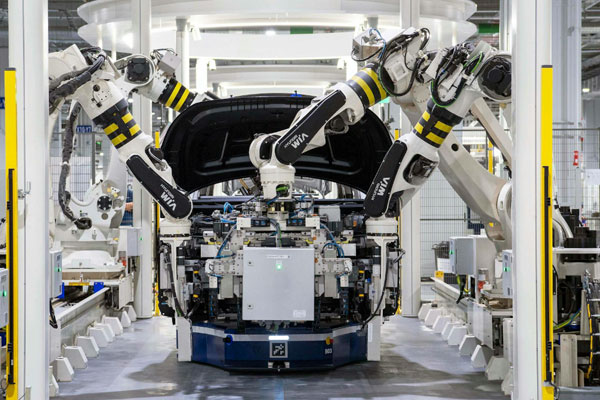
Robotic systems require thousands of individual parts working together with minimal clearance and friction. Unlike structural components in construction or heavy machinery, robotics parts demand high geometric accuracy, consistent surface finishes, and tight assembly tolerances. A typical industrial robot arm contains multiple joints, each requiring precision-machined housings, bearings, shafts, and mounting brackets.
Key characteristics of robotics components China suppliers must deliver include:
High repeatability: Parts must assemble consistently across production batches
Low friction surfaces: Bearing journals and sliding surfaces require fine finishes
Lightweight design: Many robotics applications use aluminum or magnesium alloys
Thermal stability: Components must maintain alignment across operating temperatures
Dimensional accuracy: Typical tolerances range from ±0.01mm to ±0.05mm
Chinese CNC machine shops have invested heavily in 4-axis and 5-axis machining centers, Swiss-type lathes, and automated inspection equipment to meet these demands. Many now specialize in precision CNC machined parts OEM production for robotics OEMs in Europe, North America, and Asia.
Servo motors are the muscles of robotic systems. They convert electrical signals into precise rotational motion. The housing of a servo motor must protect internal components (stator, rotor, bearings, encoder) while dissipating heat and providing precise mounting interfaces. Servo motor housings are typically produced through CNC machining from aluminum extrusions or castings.
Common servo motor housings and related components include:
Motor housings (front, main body, rear covers)
Flange mounts and adapter plates
Rotor shafts and keyways
Encoder housings and covers
Brake mounting brackets
Cooling fins and heat sinks
Cable connector housings
Material choice affects motor performance, weight, cost, and thermal management:
Aluminum 6061-T6: The most common choice for servo housings. Good thermal conductivity, lightweight, excellent machinability, and accepts anodizing for wear and corrosion resistance.
Aluminum 6063-T5: Often used for extruded housing sections. Better surface finish after extrusion, slightly lower strength than 6061.
Aluminum 7075-T6: Higher strength for thin-wall housings or high-shock applications. More difficult to machine and more expensive.
Stainless steel 303 or 304: Used for encoder housings or components requiring magnetic shielding or corrosion resistance in harsh environments.
Mild steel (12L14, 1215): For brake mounting plates or structural brackets where cost is the primary driver and weight is less critical.
Servo motor housings require precise machining to ensure proper bearing fit and rotor alignment:
Bearing bore diameter: H6 or H7 tolerance (typically +0.015mm to +0.025mm for 20-50mm bores)
Bearing bore concentricity: ≤0.02mm total indicated runout (TIR)
Mounting flange flatness: ≤0.05mm per 100mm
Threaded mounting holes: 6H tolerance for metric threads, position tolerance within 0.1mm
Surface finish on bearing fits: Ra 0.8μm or better
Chinese suppliers specializing in precision CNC machined parts OEM for motors typically use CNC lathes for cylindrical features (housings, shafts) and 4-axis or 5-axis machining centers for complex housings with multiple mounting faces and internal features. In-process probing and post-process CMM inspection ensure dimensional compliance.
After machining, servo motor components often receive surface treatments:
Clear or black anodizing (Type II or Type III): Improves surface hardness, corrosion resistance, and appearance. Type III (hard anodizing) provides wear resistance for bearing journals.
Chemical film (Alodine/Chromate): Thin conversion coating for electrical conductivity and mild corrosion protection, often used on internal surfaces.
Powder coating: Thicker, durable finish for exterior surfaces requiring color coding or enhanced corrosion protection.
Passivation (stainless steel): Removes free iron and improves corrosion resistance for encoder housings in washdown environments.
The structural links of a robot arm must be stiff, lightweight, and precisely machined to ensure accurate positioning of the end effector. Robot arm structural parts are typically cast or forged aluminum, then finish-machined on large 5-axis CNC machines. For smaller robots, parts may be machined entirely from solid aluminum billet.
Typical robot arm structural parts include:
Base mounting plates and pedestals
Shoulder and elbow housings
Forearm and wrist housings
Joint housings and bearing carriers
Counterweight brackets
Cable management brackets and conduits
End effector mounting plates (tool flanges)
Manufacturing robot arm structural parts presents several challenges:
Thin-wall sections: To reduce weight, robot links often have walls as thin as 3-5mm. Machining thin walls requires careful workholding, sharp tools, and strategies to avoid chatter and distortion.
Deep pockets and ribs: Internal stiffening ribs add strength without adding weight but require long reach tools and multiple setups.
Precision mounting features: Each joint interface requires accurately machined bearing seats, dowel pin holes, and threaded mounting holes with tight position tolerances (often ±0.02mm).
Cable passages: Robot arms route cables and hoses through internal passages. These may require cross-drilled holes, slots, or machined channels with smooth edges to prevent cable damage.
Chinese CNC shops producing robot arm structural parts typically use:
5-axis simultaneous machining: Allows complete machining of complex link geometries in a single setup, reducing fixturing costs and improving accuracy through reduced re-fixturing errors.
High-speed machining (HSM): Using small stepovers and high feed rates to reduce cutting forces and heat input, critical for thin-wall sections.
Vacuum fixturing: For large, flat parts or thin plates where traditional clamps would cause distortion.
In-process probing: Verifying critical dimensions and compensating for tool wear or thermal growth during the machining cycle.
For prototype or low-volume production of robotics components China suppliers often recommend machining from solid billet to avoid casting tooling costs. For high-volume production (1000+ units annually), cast-then-machined parts become more cost-effective.
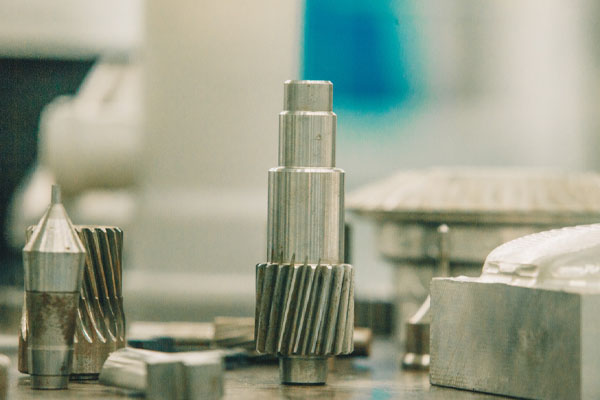
Linear actuators convert rotational motion into linear motion, enabling robots to push, pull, lift, or slide. Linear actuator precision parts include lead screws, nuts, guide rails, carriages, and housing components. These parts require smooth surfaces, accurate threads or ball tracks, and precise alignment features.
Common linear actuator precision parts from Chinese CNC machine shops:
Lead screws and ball screws (threaded shafts)
Screw nuts (bronze, plastic, or recirculating ball type)
Guide rails and linear bearings (often purchased finished, with mounting holes machined)
Carriage plates and bearing housings
End supports and motor mounts
Protective covers and wiper housings
Piston rods for pneumatic or hydraulic linear actuators
Lead screws and ball screws are the most critical linear actuator precision parts. While many robotics OEMs purchase finished ball screws from specialized manufacturers, custom lead screws for lower-cost applications are often machined on CNC lathes with thread-cutting capability.
Key specifications for machined lead screws:
Thread form: Acme (most common), trapezoidal, or square
Lead accuracy: Typically ±0.1mm per 300mm for general positioning, ±0.05mm per 300mm for precision applications
Surface finish on thread flanks: Ra 0.8μm to 1.6μm
Hardness: Case-hardened to 50-55 HRC for wear resistance (carbon steel screws)
Straightness: 0.1mm per meter for supported screws, tighter for unsupported screws
For high-volume lead screw production, Chinese suppliers use thread rolling instead of cutting. Rolling produces stronger threads (work-hardened, no interrupted grain flow) and is faster, but requires thread rolling dies with lead times of 4-6 weeks and minimum quantities of 500+ pieces.
The carriage (or table) of a linear actuator moves along guide rails. Linear actuator precision parts in the carriage assembly include:
Carriage base plate (machined flat with mounting holes for workpieces)
Bearing block housings (precision bored for linear bearings or bushings)
Wiper housings (keep debris away from bearings)
Lubrication ports and fittings
Magnetic or optical encoder mounting brackets (for position feedback)
Tolerance requirements for carriage components:
Base plate flatness: ≤0.05mm per 300mm
Bearing block bore alignment: Parallel within 0.02mm over the length of travel
Mounting hole positions: ±0.05mm for standard applications, ±0.02mm for precision stages
Surface finish on sliding surfaces: Ra 0.4μm to 0.8μm
Chinese precision CNC machined parts OEM suppliers with experience in linear motion components will have dedicated fixturing for machining carriages and can provide assembly services including bearing installation and lubrication.
The end effector is the part of a robot that interacts with the workpiece—a gripper, welding torch, paint sprayer, or vacuum cup. End-effector components are often small, complex, and made from a variety of materials. They must be lightweight (to minimize inertia) yet strong enough to withstand repeated impact and wear.
Common end-effector components machined in China:
Gripper jaws and fingers (custom-shaped for specific parts)
Pneumatic cylinder housings and pistons
Vacuum cup mounting brackets
Tool changers (master and tool sides)
Force-torque sensor housings
Camera and vision system mounting brackets
Compliance devices (remote center compliance, or RCC, components)
End effector materials must balance weight, wear resistance, and cost:
Aluminum 7075-T6: High strength-to-weight ratio for structural components.
Aluminum 6061-T6: Lower cost, good for non-critical brackets.
Stainless steel 17-4PH: High strength and corrosion resistance for gripper fingers that contact sharp or abrasive parts.
Tool steel (O1, A2, D2): For gripper jaws requiring wear resistance and hardness (heat treat to 55-60 HRC).
POM (Delrin) or Nylon: For non-marring gripper pads or electrical insulation components.
PEEK: High-performance plastic for high-temperature or chemically resistant end-effector components.
Gripper jaws must be machined to accurately locate and hold parts without damaging them:
Gripper finger mounting hole positions: ±0.02mm to ensure proper alignment on the gripper body
Part contact surface profile: Often requires 3D contour machining (3-axis or 5-axis) to match part geometry
Surface finish on contact surfaces: Ra 0.8μm to 1.6μm; smoother for delicate parts, rougher for high-friction grip
Hardness: Soft jaws (unhardened aluminum or plastic) for delicate parts; hardened steel jaws (55-60 HRC) for abrasive or high-wear applications
Chinese precision CNC machined parts OEM shops often specialize in low-volume, high-mix production of end-effector components, making them ideal for robotic integrators and automation system builders who need custom grippers for each application.
Beyond the robot itself, automation systems include conveyor frames, safety guarding, sensor mounting brackets, and control cabinets. These automation equipment components are often simpler than robot arm parts but still require precision machining to ensure proper assembly and alignment.
Typical automation equipment components from Chinese suppliers:
Base plates and mounting plates (machined from aluminum or steel plate)
Sensor mounting brackets (custom shapes for proximity sensors, photoelectric sensors)
Cable track brackets and strain relief fittings
Conveyor drive and idler pulleys
Safety guarding frames and hinges
Control cabinet chassis and mounting rails
Pneumatic manifold mounting blocks
For automation equipment components, cost efficiency is often more important than extreme precision. Chinese CNC shops optimize production through:
Waterjet or laser cutting: For plate components (base plates, brackets) followed by CNC drilling and tapping of mounting holes.
Extrusions: For structural framing components that require only cut-to-length and drilling operations.
Sheet metal fabrication: For guarding and enclosures, using laser cutting, CNC punching, and press brake forming.
Turn-mill centers: For small, complex brackets and fittings that combine turned and milled features.
When sourcing automation equipment components from China, provide 3D models (STEP or IGES) and 2D drawings with hole positions, thread specifications, and material callouts. Many Chinese suppliers will offer design for manufacturability (DFM) feedback to reduce cost without compromising function.
Robotics and automation systems require consistent quality across production batches. A slight deviation in a mounting hole position can cause misalignment of a robot joint, affecting accuracy and repeatability. Quality control for robotics components China suppliers typically includes:
First article inspection (FAI): Complete dimensional measurement of the first part from each production run, comparing against all drawing dimensions and tolerances.
In-process inspection: Sampling at defined intervals (e.g., every 10th part) with focus on critical dimensions (bearing fits, mounting hole positions).
CMM inspection: For complex parts with many features, coordinate measuring machines provide accurate, repeatable measurements.
Functional gauging: For high-volume parts, custom go/no-go gauges provide fast pass/fail checking at the machine.
Many robotics components require specific surface finishes for bearing fits or sliding surfaces. Chinese shops use:
Contact profilometers (stylus type) for Ra, Rz, and other parameters
Optical comparators or vision systems for visual surface comparison
Surface finish comparison blocks (visual/tactile) for in-process checks
For critical components, material certification is required:
Mill test reports (MTRs) for raw material, traceable to heat/lot number
Hardness testing (Rockwell, Brinell) for heat-treated components
Positive material identification (PMI) using XRF or OES for alloy verification
ISO 9001:2015 certification is the baseline for most robotics components China suppliers. For higher-risk applications (medical robotics, aerospace automation), look for ISO 13485 or AS9100D certification.
Finding the right supplier for precision CNC machined parts OEM in robotics requires evaluating technical capability, quality systems, and communication.
Step 1: Define your part requirements clearly. Provide 3D CAD models (STEP format preferred), 2D drawings with GD&T (ISO or ASME), material specifications, surface finish requirements, and annual volume estimates. Indicate critical dimensions (those that affect fit or function) so the supplier can focus inspection resources appropriately.
Step 2: Screen for relevant experience. Look for suppliers who list robotics, automation, or precision machinery among their served industries. Ask for sample parts or case studies similar to your application. A supplier who has machined servo motor housings before will understand the tolerance requirements without extensive hand-holding.
Step 3: Verify equipment capabilities. For robotics components, 5-axis machining capability is a strong positive indicator, as many robot arm parts require complex 3D contours. Swiss-type lathes are important for small, precise shafts and pins. Large-format VMCs (vertical machining centers) are needed for robot base plates and structural links.
Step 4: Assess quality systems. Request a copy of their ISO 9001 certificate (verify the certification body is accredited). Ask about their inspection equipment (CMM, surface tester, hardness tester) and sampling plans. For initial orders, require a first article inspection report (FAIR) with actual measurements.
Step 5: Start with a prototype order. Before committing to production volumes, order 5-50 pieces to evaluate part quality, documentation accuracy, packaging, and communication responsiveness. Use the prototype run to identify any drawing ambiguities or manufacturing challenges.
Step 6: Establish a supply agreement. Once quality is proven, document pricing, lead times, payment terms (typically 30% deposit, 70% before shipment), quality acceptance criteria, non-conformance handling, and delivery terms (Incoterms). For ongoing programs, consider blanket purchase orders with release schedules.
Understanding what affects pricing helps you optimize designs for cost:
Material: Aluminum is generally lowest cost. Stainless steel adds 2-4x cost. Titanium or specialty plastics (PEEK) add 10-20x cost.
Complexity and setup count: Parts requiring multiple fixturing setups (e.g., machining from multiple sides) cost more than parts that can be completed in one or two setups.
Tolerance requirements: Standard tolerances (±0.05mm) are most cost-effective. Tighter tolerances (±0.01mm or better) increase machining time and inspection requirements, adding 20-50% to cost.
Volume: Higher volumes amortize fixed costs (programming, fixturing, tooling) over more parts. Typical pricing tiers: prototype (1-10 pcs) highest unit cost; low volume (10-100 pcs) moderate; medium volume (100-1000 pcs) significantly lower; high volume (1000+ pcs) lowest.
Surface finishing: As-machined finish is lowest cost. Anodizing adds 10-20% to part cost. Plating or specialized coatings (e.g., nickel-PTFE) add 30-50%.
Secondary operations: Heat treatment, grinding, or assembly operations add cost and lead time.
Typical cost savings for precision CNC machined parts OEM from China compared to North America or Western Europe range from 20% to 35% for robotics components, depending on part complexity and volume. The savings are most significant for higher-volume production (500+ pieces annually).
The robotics industry continues to evolve, and Chinese CNC shops are adapting to new demands:
Lightweighting: Increased use of magnesium alloys and carbon fiber-reinforced plastics, requiring specialized machining parameters and tooling.
Integrated cooling passages: Robot arms with internal channels for liquid cooling of motors and drives, requiring 5-axis drilling and milling of intersecting passages.
Higher precision: As collaborative robots and surgical robots demand sub-millimeter accuracy, tolerances for critical components are moving toward ±0.005mm, requiring precision grinding and temperature-controlled machining environments.
Smaller batch sizes: The growth of customized automation solutions increases demand for low-volume, high-mix production. Chinese suppliers are investing in quick-change fixturing and agile programming to serve this market.
Near-net shape pre-forms: For high-volume robot arm links, investment casting or forging followed by finish machining reduces material waste and machining time compared to machining from solid billet.
The robotics and automation industry relies on precision CNC machined parts OEM suppliers to deliver high-quality components at competitive prices. China has developed a strong ecosystem of CNC machine shops capable of producing servo motor housings, robot arm structural parts, linear actuator precision parts, end-effector components, and automation equipment components. By carefully qualifying suppliers based on technical capability, quality systems, and communication, robotics OEMs and system integrators can benefit from cost-effective precision machining without compromising quality.
Whether you are designing a new collaborative robot, building a custom automation cell, or scaling production of an existing robot model, Chinese precision CNC machined parts OEM suppliers can be valuable partners. Start with clear specifications, verify capabilities through sample orders, and build long-term relationships based on trust and continuous improvement.
Ready to source precision machined components for your robotics project? Contact our technical team with your drawings and volume requirements. We will help you find qualified Chinese suppliers, manage the quoting process, and ensure quality throughout production.
A: Standard tolerances from reputable Chinese CNC shops range from ±0.01mm to ±0.05mm for most features. For critical features like bearing bores or precision mounting holes, ±0.005mm is achievable with proper equipment and process controls. Always specify required tolerances on your drawings—do not assume tighter tolerances than necessary, as they increase cost significantly.
A: Yes, many Chinese CNC shops have 5-axis machining centers capable of complex 3D contouring. However, verify their CAM software capability and ask to see sample parts with similar complexity before placing an order. For very complex parts, consider providing a 3D model in STEP format and discussing machining strategies with their engineering team.
A: For prototype quantities (1-50 pieces), lead times typically range 10-20 business days including programming, fixturing, machining, and inspection. Rushing (5-7 business days) is possible at higher cost. Production quantities (100-1000 pieces) typically require 4-6 weeks plus shipping time (2-5 weeks depending on method).
A: Specify the required Ra value on your drawing (e.g., Ra 0.8μm). For critical sliding surfaces, also specify the method (e.g., "finish turn with wiper insert" or "grind after heat treatment"). Request surface finish measurement reports (profilometer printouts) as part of your first article inspection. For high-volume production, consider a surface finish sample standard (a physical part representing acceptable finish).
A: Many Chinese precision CNC machined parts OEM suppliers offer assembly services including bearing installation, greasing, subassembly of motor housings with stators/rotors (if you supply the electrical components), and end-effector assembly. Discuss assembly requirements during quoting and specify assembly drawings, torque specifications, and any testing requirements (e.g., runout checks, leak testing).
A: MOQs vary by supplier and part complexity. Many Chinese CNC shops accept orders as small as 10-50 pieces, though unit prices will be higher than for larger volumes. Some suppliers specialize in prototype and low-volume production and have no MOQ. For custom extrusions or castings, MOQs of 500-2000 pieces are typical due to tooling costs.
A: Provide updated 3D models and 2D drawings with revision letters clearly marked. Request a "change order" quote showing the cost impact of the revision. For major changes that affect existing work-in-process or finished inventory, discuss disposition (rework, scrap, or use as-is) with your supplier. Include a change control process in your supply agreement.
A: Most mid-to-large Chinese precision machine shops are familiar with both ISO GPS and ASME Y14.5 GD&T standards. However, communication can be challenging with complex symbols or uncommon modifiers. Use standard symbols and provide a clear legend if using ASME standards. For critical tolerances, add written notes in plain English (e.g., "Position tolerance 0.05mm relative to datum A, B, and C") to avoid misinterpretation.
A: For prototype and low-volume orders, air freight (3-7 days door-to-door) is common, though more expensive. For production volumes, ocean freight (30-45 days to North America/Europe) is standard. Some suppliers offer express shipping (DHL, FedEx, UPS) for small packages (under 100kg). Discuss shipping options and costs during quoting, and specify Incoterms (e.g., EXW, FOB Shanghai, CIF, DDP).
A: Use a third-party inspection company (SGS, TÜV, Bureau Veritas, or smaller specialized firms) to perform source inspection. They can check dimensions, surface finish, material certification, and packaging before shipment. Many Chinese suppliers also offer live video inspection via WeChat or Zoom, allowing you to witness measurements remotely. For critical components, require a first article inspection report (FAIR) with actual measurements and photos.
Need assistance sourcing precision machined components for your robotics or automation project? Contact our team with your technical requirements. We provide supplier matching, engineering support, quality oversight, and logistics coordination for precision CNC machined parts OEM from qualified Chinese manufacturers.

Phone&WhatsApp:+86 13410452313
Email:gavinlee@zhuoguanmetal.com
Address: Room 805-1, Building A, Block 1, Xingzhan Plaza, No. 446, Shajing Nanhuan Road, Shatou Community, Shajing Street, Bao'an District, Shenzhen, Guangdong, China 518104