The global energy and heavy machinery sectors demand components that endure extreme pressures, corrosive environments, and relentless mechanical stress. From the depths of oil wells to the heights of wind turbines, precision CNC machined parts OEM suppliers are critical to operational reliability. China has emerged as a powerhouse for manufacturing these heavy-duty components, combining advanced custom metal forgings manufacturer capabilities with high-precision machining. This comprehensive guide explores the specialized world of machining for energy applications—covering turbines, oil & gas, hydraulics, mining, and power generation—and how to source these mission-critical parts from China.
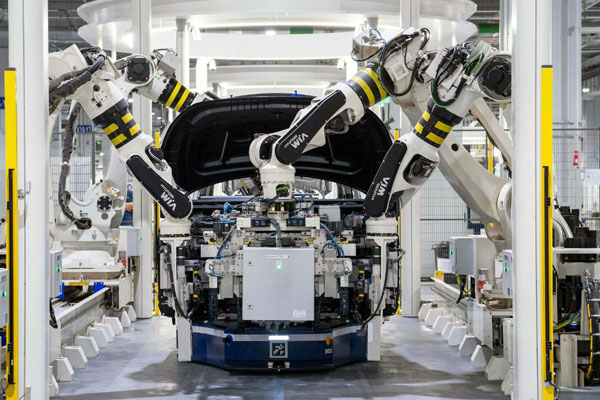
Unlike consumer goods or even automotive parts, components for energy and heavy machinery operate in unforgiving conditions: downhole pressures exceeding 30,000 psi, temperatures ranging from -50°C to +500°C, abrasive slurries, and corrosive hydrogen sulfide (H2S) environments. A single component failure can cause millions in downtime, environmental damage, or safety incidents. Therefore, sourcing precision CNC machined parts OEM for this sector requires exceptional attention to material integrity, dimensional accuracy, and traceability.
Chinese manufacturers have heavily invested in large-format CNC equipment, 5-axis machining centers, and in-house heat treatment and coating facilities to serve this market. Many now hold API (American Petroleum Institute), ASME, and NORSOK certifications, making them qualified suppliers to global energy leaders like Siemens, GE, Schlumberger, Halliburton, and Caterpillar.
For high-stress energy components, starting with a custom metal forgings manufacturer is not optional—it is essential. Forging eliminates internal porosity, refines grain structure, and aligns grain flow with part geometry, dramatically improving fatigue life and impact resistance. After forging, precision CNC machining brings the part to final tolerances.
Key forging processes for energy components include:
Open-Die Forging: For large, simple shapes like turbine shafts, generator rotors, and riser flanges (weights up to 50+ tons).
Closed-Die Forging: For complex, high-volume components like valve bodies, gear blanks, and pump housings.
Seamless Rolled Ring Forging: For bearing races, gear rings, and flanges for wind turbines and large gearboxes.
Mandrel Forging: For long, thick-walled tubular components like drill collars and casing.
A qualified custom metal forgings manufacturer serving the energy sector must work with high-performance alloys:
Carbon and Low-Alloy Steels (AISI 4140, 4340, 8630): For general heavy machinery components requiring good strength and toughness at moderate cost.
Chrome-Moly Steels (F11, F22, F91): For high-temperature applications like steam turbine casings and boiler headers.
Stainless Steels (304, 316, 17-4PH, 410): For corrosion-resistant components in downhole tools and chemical injection systems.
Nickel-Based Superalloys (Inconel 718, 625, 825; Monel K500): For extreme sour gas (H2S) environments, high-temperature turbines, and subsea equipment.
Duplex and Super Duplex Stainless Steels (2205, 2507): For offshore and subsea components requiring exceptional chloride stress corrosion cracking resistance.
Copper-Beryllium and Aluminum Bronze: For non-sparking tools, wear rings, and bushings in hazardous environments.
After forging, parts undergo rigorous NDT: ultrasonic testing (UT) for internal flaws, magnetic particle inspection (MPI) for surface defects, and hardness verification across multiple locations.
The oil and gas industry demands oil and gas precision components that can survive miles underground or under the seabed. These parts face a cocktail of hydrogen sulfide, carbon dioxide, brine, and hydrocarbon fluids at extreme temperatures and pressures. Oil and gas precision components require specialized machining strategies, material certifications (per NACE MR0175/ISO 15156 for sour service), and strict dimensional control.
Typical oil and gas precision components from Chinese CNC machining suppliers include:
Downhole tools (drill bits, stabilizers, jars, fishing tools)
Wellhead components (casing hangers, tubing heads, choke bodies)
Christmas tree valves (gate valves, ball valves, check valves)
Subsea connectors and manifold components
Hydraulic fracturing components (frac plugs, pump plungers, manifold fittings)
Coiled tubing connectors and tools
Pressure vessel components (flanges, fittings, nozzle necks)
Drill collars and heavy-weight drill pipe
When sourcing oil and gas precision components from China, verify these critical certifications:
API Q1 (Quality Management) and API Specs: Specific product standards (e.g., API 6A for wellhead equipment, API 7-2 for rotary drill stem elements).
NACE MR0175/ISO 15156: Materials for sour (H2S) service. Requires strict hardness control (below 22 HRC for carbon steels, 35 HRC for precipitation-hardened alloys) and resistance to sulfide stress cracking (SSC).
NORSOK Standards: Norwegian offshore standard, often referenced for North Sea and international offshore projects.
ASME B31.3 and ASME Section VIII: For pressure-containing components.
ISO 10423: Drilling and production equipment.
Qualified suppliers will provide material test reports (MTRs) with actual chemistry and mechanical properties, hardness test reports for each part (or each heat), and PMI (Positive Material Identification) verification using XRF or OES analyzers.
Machining oil and gas precision components presents unique challenges:
Hard-to-machine materials: Inconel 718 and 625 require slow speeds (15-30 m/min), rigid setups, and constant tool wear monitoring.
Deep hole drilling: Drill collars may require gun drilling with L/D ratios exceeding 50:1, demanding specialized equipment (deep hole drilling machines with high-pressure coolant delivery).
Precision threading: API rotary shoulder connections (e.g., NC, REG, IF) require thread grinding or precision single-point threading with gauging to API standards.
Surface finish requirements: Sealing surfaces (metal-to-metal seals) often require Ra 0.2μm or better, achieved through hard turning or grinding after heat treatment.
Stress relieving: Machining induces residual stresses that can cause distortion or stress corrosion cracking. Many components require post-machining stress relief heat treatment.
Turbine engines—whether for power generation, gas compression, or marine propulsion—operate at extreme rotational speeds (up to 60,000 rpm) and temperatures exceeding 1,200°C. Turbine engine parts must maintain creep resistance, fatigue strength, and oxidation resistance under these conditions. Precision CNC machining of turbine engine parts from forged or investment-cast blanks is a specialized capability.
Common turbine engine parts produced by Chinese precision machine shops:
Compressor disks and spools
Turbine disks and blisks (bladed disks)
Nozzle guide vanes (NGVs) and turbine blades (post-casting machining)
Combustor chambers and liners
Rotor shafts and tie rods
Bearing housings and sumps
Seal rings and labyrinth seals
Casing and diffuser components
Turbine engine parts demand the highest material grades:
Nickel-based superalloys (Inconel 718, Waspaloy, Rene 41): For turbine disks and blades. Maintain strength to 700°C+.
Cobalt-based alloys (HS-25, L-605): For high-temperature wear applications like vane tips.
Titanium alloys (Ti-6Al-4V, Ti-6-2-4-6): For compressor disks and blades (lower temperature section).
Stainless steels (13-8Mo, 17-4PH, A-286): For shafts, housings, and fasteners.
Specialized machining processes for turbine components include:
5-axis simultaneous milling: For complex airfoil shapes and blisks (tool clearance and collision avoidance are critical).
EDM (electrical discharge machining): For cooling holes (film cooling) in turbine blades—thousands of small-diameter holes at compound angles.
ECM (electrochemical machining): For burr-free shaping of difficult-to-machine alloys.
Grinding and polishing: For final airfoil contour and surface finish (Ra 0.2μm or better).
Non-destructive testing: Fluorescent penetrant inspection (FPI) for surface cracks; X-ray or CT scanning for internal defects; eddy current for near-surface flaws.
Chinese suppliers of turbine engine parts typically hold AS9100D certification and may have specific customer approvals from GE, Siemens, Mitsubishi Heavy Industries, or Ansaldo Energia. Expect rigorous first article inspection (FAIR per AS9102) and full material traceability from melt lot to finished part.
Hydraulic systems are the muscles of heavy machinery—excavators, loaders, presses, and wind turbines. Hydraulic system components must withstand high pressures (up to 6,000 psi or higher), rapid pressure cycling, and contamination without leakage or seizure. Precision CNC machining of hydraulic system components requires tight tolerances on bores, pistons, and sealing surfaces.
Typical hydraulic system components from Chinese suppliers:
Cylinder barrels, pistons, and rod glands
Hydraulic valve bodies (directional, pressure, flow control)
Pump housings, gears, and vanes
Manifolds and port blocks
Accumulator shells and pistons
Swivel joints and rotary unions
Piston rods and chrome-plated shafts
Seal grooves and bearing retainers
Hydraulic system components require exceptional surface finish and geometric control to prevent internal leakage and maintain efficiency:
Bore-to-piston clearance: Typically 0.025mm to 0.075mm (25-75 microns) depending on diameter and pressure.
Cylinder bore surface finish: Ra 0.2μm to 0.4μm (achieved through honing or roller burnishing).
Piston rod surface finish: Ra 0.1μm to 0.2μm with hard chrome plating (hardness 60-70 HRC) for wear and corrosion resistance.
Valve spool to bore clearance: 0.005mm to 0.015mm for servo valves; requires matched grinding or lapping.
Roundness and straightness: 0.005mm per 100mm length for critical sealing areas.
Machining processes for hydraulic system components include:
CNC turning and boring (often with live tooling for cross holes and flats).
Gun drilling or BTA drilling for deep cylinder bores (L/D > 10:1).
Honing or roller burnishing to achieve final bore finish and size.
Cylindrical grinding for piston rods and shafts.
Hard chrome plating (with thickness 0.02mm to 0.05mm) followed by grinding/polishing.
Many Chinese precision CNC machined parts OEM suppliers for hydraulics hold ISO 9001 or IATF 16949 certification and offer 100% testing of critical components (leak testing, dimensional inspection, hardness verification).
Mining, construction, and agricultural equipment operates in the most abrasive, high-shock environments imaginable. Heavy equipment parts China manufacturers produce components that must resist wear, impact, and fatigue while maintaining reasonable cost. Many heavy equipment parts China suppliers combine casting or forging with CNC machining, heat treatment, and hard facing to maximize service life.
Common heavy equipment parts China components:
Track chain links, bushings, and pins (excavators, bulldozers)
Undercarriage rollers and idlers
Bucket teeth, adapters, and wear plates
Final drive gears and housings
Differential housings and axle shafts
PTO shafts and yokes
Loader arms and pivot pins
Hammer tool shanks and bits
Heavy equipment parts China suppliers employ specialized materials and treatments to combat wear:
Quenched and tempered steels (QT 400 to QT 700): For structural components requiring high strength and toughness.
Boron steels: For wear parts; heat treatable to high hardness (500-600 HB).
Austempered ductile iron (ADI): Excellent wear resistance and fatigue strength for gears and pins.
Hardox or similar wear plate: Through-hardened steel for bucket liners and wear plates.
Carburizing and case hardening: For pins and shafts—hard outer case (58-62 HRC) with tough core.
Induction hardening: For localized wear surfaces like track link rails.
Hardfacing (tungsten carbide or chromium carbide weld overlay): For extreme abrasion applications (bucket teeth, crusher hammers).
Machining hardened materials (50+ HRC) requires CBN (cubic boron nitride) or ceramic tooling, rigid machines, and often grinding or EDM for final features. Chinese heavy equipment parts China suppliers have invested in hard turning and grinding capabilities to finish heat-treated components in one setup, reducing handling and improving accuracy.
Power generation equipment—whether coal, gas, nuclear, or renewable—relies on massive rotating machinery that operates continuously for years. Power generation components include turbine parts (covered above), generator components, and balance-of-plant equipment. Sourcing power generation components from China requires suppliers with large-part machining capacity and quality systems that satisfy NQA-1 (nuclear) or other sector-specific standards.
Common power generation components from Chinese precision shops:
Generator rotors and shafts (turned and ground)
Stator frames and core support plates
Exciter components
Steam turbine diaphragms and packing rings
Gas turbine combustion liners and transition pieces
Heat exchanger tube sheets and baffles
Cooling tower drive shafts and couplings
Wind turbine main shafts, gearbox housings, and yaw drives
Power generation components are often massive—rotors exceeding 10 meters in length and 2 meters in diameter. Suppliers must have:
Heavy-duty CNC lathes (swing over 2,000mm, center distance over 8,000mm).
Large-bed VTLs (vertical turret lathes) for diameters up to 5,000mm.
Floor-type horizontal boring mills with traveling columns and multiple pallets.
CMMs with measuring envelopes to match part size (or portable CMM arms with laser trackers).
Crane capacity exceeding 30 tons for material handling.
For wind energy, power generation components like main shafts and gearbox housings are typically forged and machined from 42CrMo4 or similar low-alloy steel, with stringent ultrasonic testing (UT) to detect internal flaws. Gearbox components (planet carriers, ring gears) require gear cutting (hobbing, shaping, grinding) to AGMA class 10-12 or better.
(Expanded section focusing on high-pressure reliability and advanced manufacturing techniques)
Modern hydraulic systems in heavy machinery and industrial applications operate at pressures exceeding 4,000 psi (275 bar) and flow rates of hundreds of gallons per minute. Hydraulic system components must maintain precise clearances across wide temperature ranges and resist contamination from particles as small as 5 microns. Chinese manufacturers of hydraulic system components have developed expertise in:
Precision honing and skiving/roller burnishing for cylinder tubes.
Hard chrome plating with micro-cracked or micro-porous finishes to retain oil and reduce friction.
Servo valve spool lapping to clearances below 0.003mm.
Cartridge valve bodies with complex internal porting (drilled intersecting holes at precise angles).
Piston pump cylinder blocks and port plates with matched finishes.
Quality validation for hydraulic system components includes:
Hydrostatic pressure testing (1.5x working pressure, no leakage).
Flow and pressure drop testing for valves.
CMM inspection of critical bore diameters, positions, and form.
Surface finish measurement (Ra, Rz, Rpk/Rvk for sealing surfaces).
Hardness testing (case depth for carburized components).
Cleanliness testing (particle count per ISO 4406).
Leading hydraulic system components suppliers in China maintain ISO 9001 and often ISO 14001, with some achieving IATF 16949 for off-highway vehicle applications. Expect FAI (First Article Inspection) with full dimensional and material documentation for initial production runs.
Sourcing precision CNC machined parts OEM for energy applications requires a higher level of quality assurance than most industries. Beyond ISO 9001, look for these specific certifications and practices:
API Q1 / API Monogram: For oil and gas components. Requires documented quality system, product traceability, and independent audits.
ASME U / S / PP Stamps: For pressure vessel and boiler components.
ISO 17025 (Laboratory Accreditation): For in-house material testing and calibration.
ISO 9712 (NDT Personnel Certification): For technicians performing UT, MT, PT, and RT.
NORSOK M-650 (Special Process Qualification): For casting and forging suppliers to the North Sea.
NQA-1 (Nuclear Quality Assurance): For nuclear power plant components (very few Chinese suppliers hold this; verify carefully).
In addition to certifications, demand documented quality practices:
Full material traceability: Each component traceable to heat/lot number with corresponding MTR.
Positive Material Identification (PMI): XRF or OES verification of alloy chemistry on critical components.
Third-party inspection: Many energy customers require independent inspection by SGS, BV, TÜV, or DNV at various production stages.
Witness points: Critical operations (heat treatment, NDT, pressure testing) witnessed by customer or third-party inspector.
Non-conformance reporting (NCR) and corrective action (CAPA): Robust system for handling deviations.
When evaluating Chinese precision CNC machined parts OEM suppliers for energy applications, conduct a thorough quality audit—either in person or via a qualified third party—reviewing their certification scope, NDT procedures, calibration records, and personnel qualifications.
Energy and heavy machinery projects often have long lead times (months to years) and high costs for component failure. Therefore, sourcing strategy differs from commodity parts:
Long-term partnerships: Many energy OEMs qualify suppliers through extensive audits and sample testing (sometimes lasting 6-12 months). Once qualified, switching suppliers is costly and time-consuming. Prioritize relationship building and technical collaboration over short-term price negotiation.
Raw material sourcing: High-performance alloys for energy components often require mill-direct sourcing with long lead times (12-20 weeks for specialty grades). Your supplier should have established relationships with approved mills (e.g., Timken, Carpenter, Schoeller-Bleckmann, or Chinese mills like Baosteel, TISCO, HBIS) and be willing to place advance orders based on your forecasts.
Special process outsourcing: While many Chinese precision machine shops have in-house heat treatment and coating capabilities, some specialized processes (e.g., plasma spray coatings, superfinishing, specialized NDT) may be outsourced. Verify that subcontractors are also qualified and audited.
Logistics for large components: Heavy and oversized components require specialized freight: flatbed trucks, lowboy trailers, and ocean freight breakbulk or roll-on/roll-off (RoRo) services. Plan for longer transit times and higher shipping costs. Consider consolidating multiple components into a single shipment to optimize freight.
Documentation packages: Energy customers often require extensive documentation with each shipment: MTRs, NDT reports, dimensional reports, heat treatment charts, coating thickness reports, PMI reports, and a certificate of conformance (CoC). Ensure your supplier has the administrative capacity to compile these packages accurately and on time.
Pricing for precision CNC machined parts OEM in the energy sector is driven by factors different from general industrial parts:
Material cost and availability: High-nickel alloys cost 5-20x more than carbon steel. Long lead times for specialty grades may require advance purchasing and inventory holding costs.
Forging or casting cost: Custom dies or tooling for near-net shapes can cost $10,000 to $100,000+, amortized over production volume.
Heat treatment and NDT: Solution annealing, aging, stress relieving, and comprehensive NDT (UT, MT, PT) add 20-40% to part cost.
Machining cycle time: Difficult-to-machine alloys (Inconel, titanium) have cycle times 5-20x longer than aluminum or mild steel. Tool wear is also significantly higher.
Quality documentation and traceability: The cost of maintaining full traceability, generating MTRs, performing PMI, and compiling documentation packages adds 5-15% to administrative costs.
Third-party inspection: Witness testing or independent lab services add direct cost, often billed separately.
Volume: Energy components are often low to medium volume (10-1,000 parts annually), so fixed costs (programming, fixturing, tooling) dominate unit price.
Typical cost savings when sourcing precision CNC machined parts OEM from China for energy applications range from 15% to 35% compared to North America or Western Europe, though savings vary significantly by part complexity, material, and volume. The gap is narrower for highly regulated components (API, NACE, NORSOK) where certification and documentation costs are similar globally.
Given the high stakes of energy and heavy machinery applications, follow this rigorous selection process:
Step 1: Define technical and regulatory requirements. Specify not just dimensions but also material grade (with heat treat condition), NACE/API requirements, NDT methods and acceptance criteria, surface finish, coating specifications, and documentation requirements. Create a detailed technical data sheet.
Step 2: Screen for relevant certifications and experience. Shortlist suppliers with active API, ASME, or ISO 9001 certifications (depending on your sector). Ask for case studies or references from similar energy applications (e.g., downhole tools, turbine components, hydraulic cylinders).
Step 3: Conduct a technical audit. Review their machine capability (size, precision, spindle power), material handling (crane capacity, cleanliness), NDT equipment (UT probes, MPI benches, calibration records), heat treatment furnaces (uniformity surveys, pyrometry), and quality personnel qualifications (ISO 9712 certification for NDT technicians).
Step 4: Request a sample or first article. For critical components, require a sample part machined from the same material grade and with the same processes as production. Perform independent dimensional inspection and NDT (or hire a third party).
Step 5: Establish a quality agreement and supply contract. Define acceptance criteria, sampling plans, documentation requirements, non-conformance handling, and liability terms. For long-term programs, consider a supplier development agreement with continuous improvement targets.
Step 6: Plan for ongoing surveillance. For high-risk components, conduct periodic audits, require submission of statistical process control (SPC) data, or hire local third-party inspectors to witness critical operations.
The energy sector is driving innovation in CNC machining. Chinese suppliers are adopting:
High-pressure coolant (HPC) with through-tool delivery: Critical for Inconel and titanium machining, improving tool life and chip control.
Minimum quantity lubrication (MQL): Reduces fluid consumption and disposal costs for aluminum and steel components.
Ultrasonic-assisted machining (UAM): Reduces cutting forces for hard and brittle materials, improving surface finish and tool life.
Hybrid manufacturing (additive + subtractive): Laser cladding or DED builds up worn or complex features, followed by finish machining. Used for repair and remanufacturing of expensive turbine and hydraulic components.
Automated deburring and finishing: Robotic cells with abrasive brushes, thermal energy, or electrochemical deburring ensure consistency on complex internal passages.
Digital twin and process simulation: Predicts machining forces, vibration, and thermal distortion before cutting metal, reducing first-article risk for expensive forgings.
Avoid these pitfalls specific to the energy and heavy machinery sector:
Assuming standard ISO 9001 is sufficient: Energy applications require API, ASME, or NACE compliance. ISO 9001 alone does not guarantee sour service material control or NDT qualifications.
Overlooking PMI requirements: Material substitution is a real risk. Specify PMI on 100% of critical components and witness the testing.
Failing to specify NDT acceptance criteria: Saying "UT per ASME" is insufficient. Specify UT procedure, calibration standard, sensitivity level, and acceptance criteria (e.g., no linear indications greater than 3mm).
Ignoring hardness testing for sour service: NACE MR0175 limits hardness (typically ≤22 HRC for carbon steel, ≤35 HRC for precipitation-hardened alloys). Demand documented hardness testing on each part or each heat treat batch.
Not verifying third-party certification bodies: Some suppliers claim API or ASME certification from unrecognized bodies. Verify directly with the certification body (e.g., API's online Monogram registry).
Insufficient witness points: For high-risk components, define witness points in the purchase order (e.g., raw material receiving, heat treatment, final NDT). Failure to witness can limit your ability to reject non-conforming parts.
The energy transition—moving from fossil fuels to renewables and low-carbon sources—is reshaping demand for precision CNC machined parts OEM suppliers. Chinese manufacturers are adapting by:
Increasing capacity for wind turbine components (main shafts, gearboxes, yaw drives).
Developing hydrogen economy components (compressors, valves, fittings for high-pressure hydrogen service, requiring specialized hydrogen embrittlement resistance).
Supporting carbon capture, utilization, and storage (CCUS) equipment.
Continuing to serve oil and gas demand, particularly for offshore and deepwater projects where Chinese suppliers have proven capability.
Investing in automation and digitalization to maintain cost competitiveness as labor costs rise.
For international buyers, China remains a strategic sourcing destination for energy and heavy machinery components—provided you invest in supplier qualification, quality assurance, and technical collaboration. The suppliers that survive the current market consolidation will be those with strong technical capabilities, robust quality systems, and a commitment to continuous improvement.
Sourcing precision CNC machined parts OEM for energy and heavy machinery applications from China is not a commodity transaction—it is a strategic partnership. From custom metal forgings manufacturer capabilities to oil and gas precision components, turbine engine parts, hydraulic system components, heavy equipment parts China, and power generation components, the right Chinese supplier can deliver exceptional value. The key is rigorous qualification, clear specifications, documented quality agreements, and ongoing oversight. By following the guidelines in this comprehensive guide, you can leverage Chinese precision machining to improve your energy components' reliability, reduce costs, and strengthen your supply chain for mission-critical applications.
Ready to discuss your next energy or heavy machinery component project? Contact our engineering team with your drawings, material specifications, and quality requirements. We specialize in qualifying Chinese precision machine shops for demanding applications—providing technical oversight, quality assurance, and supply chain management from prototype to production.
A: For a custom-forged and machined component (e.g., a turbine shaft or drill collar), total lead time typically ranges 20-40 weeks: forging die development (8-12 weeks), raw material sourcing (8-16 weeks), forging and heat treatment (4-8 weeks), CNC machining (4-8 weeks), NDT and final inspection (1-2 weeks), and ocean freight (4-6 weeks). Plan accordingly and provide rolling forecasts to your supplier to secure mill slots.
A: Yes, many API-certified Chinese suppliers are fully qualified for NACE MR0175/ISO 15156 sour service. They must demonstrate hardness control (e.g., carbon steel<22 HRC), use of certified materials with appropriate chemistry (e.g., low sulfur, phosphorus), and proper heat treatment (quenched and tempered). Always request hardness test reports and material certifications showing NACE compliance. For critical applications, witness hardness testing yourself or through a third party.
A: Do not rely on certificates provided by the supplier—they can be forged. For API: Search the API Composite List (online database) by supplier name or Monogram number. For ASME: Search the ASME Certificate Holders list. For ISO 9001: Check the certification body's online directory (e.g., IAF CertSearch). If a supplier is not listed, they are not certified, regardless of what their website claims.
A: Requirements vary by component and application. Common combinations: Ultrasonic testing (UT) for internal flaws in forgings and castings. Magnetic particle inspection (MPI) for surface and near-surface defects in ferromagnetic materials. Liquid penetrant inspection (LPI) for non-ferrous or non-magnetic materials. Eddy current testing (ECT) for crack detection in conductive materials, especially near threads or holes. Radiographic testing (RT or X-ray) for castings and weldments. Your engineering specifications should define which NDT methods, acceptance criteria, and inspector qualifications are required.
A: Yes, many AS9100-certified Chinese suppliers have extensive experience with Inconel 718, Waspaloy, and similar superalloys. However, verify they have: rigid machine tools (cast iron or polymer concrete base), high-pressure coolant systems (minimum 1000 psi), appropriate tooling (CBN or ceramic inserts), and documented cutting parameters. Request process capability studies or sample parts before committing to production. Expect long cycle times (tens of hours per part) and high costs (5-20x aluminum).
A: Typical cylinder bore surface finish requirements are Ra 0.2μm to 0.4μm. This is achieved by: Boring or turning to within 0.1-0.2mm of final size, followed by honing (abrasive stones) or roller burnishing (plastic deformation). Honing produces a cross-hatch pattern that retains oil; roller burnishing work-hardens the surface and improves wear resistance. Chinese suppliers specializing in hydraulics will have dedicated honing machines or roller burnishing tools. Always specify the required finish and method in your drawing.
A: NACE MR0175 requires hardness testing on each heat treat batch (or each component for critical applications) using a calibrated tester (Rockwell, Brinell, or Vickers). Maximum allowable hardness depends on material: Carbon and low-alloy steels: ≤22 HRC (or 237 HB). Precipitation-hardened stainless steels (e.g., 17-4PH): ≤35 HRC (or 327 HB). Nickel-based alloys: ≤40 HRC (or 375 HB) depending on grade. The supplier must provide a hardness test report with actual values, test location, and reference to NACE MR0175. Do not accept "typical" or "certificate of conformance" without actual hardness data.
A: Yes, many Chinese heavy machinery shops have overhead cranes rated 20-50 tons, large-bed CNC lathes (swing over 2,000mm), and floor-type boring mills. Confirm the supplier's maximum part weight, dimensions (length, width, height), and crane coverage before quoting. Also verify their shipping capabilities—can they load a 10+ ton component onto a truck or into a container? Oversized components may require flatbed trucks, breakbulk ocean freight, or RoRo shipping, which adds complexity and cost.
A: Minimum documentation package: Commercial invoice, packing list, bill of lading/airway bill. Quality package: Certificate of conformance (CoC) referencing purchase order and drawing revision. Material test reports (MTRs) with actual chemistry and mechanical properties, traceable to heat/lot number. Dimensional inspection report (CMM or attribute gauging) per your sampling plan. NDT reports (UT, MT, PT, RT) with procedure references, acceptance criteria, and results. Heat treatment charts (time-temperature recordings) if applicable. Coating thickness report (if plated or coated). PMI report (if required). Hardness test report (NACE applications). All documents should be in English or bilingual, signed by authorized quality personnel.
A: Your purchase order and quality agreement should define the process. Typically: Notify supplier in writing within a specified period (e.g., 14 days of receipt) with photos, measurements, and a non-conformance report (NCR). Supplier investigates root cause and issues corrective action plan (CAPA). For major non-conformances (e.g., material mix-up, out-of-tolerance critical dimension), you may require replacement parts at supplier's cost, credit, or rework. For energy components, scrap rates should be near zero—any non-conformance is serious. Consider including a quality holdback (e.g., 10% of payment released after successful field installation) for critical applications.
A: Yes, upon signing a non-disclosure agreement (NDA), we can provide case studies and contact information for reference customers in the oil and gas, power generation, and heavy equipment sectors. These references can speak to quality, lead time, documentation accuracy, and responsiveness of our partner suppliers. We encourage you to contact references as part of your supplier qualification process.
Need a reliable partner for energy or heavy machinery precision components? Contact our technical sourcing team with your drawings and specifications. We provide supplier qualification, quality oversight, and project management for mission-critical parts—from prototypes to production volumes. Let us help you source precision CNC machined parts OEM that survive the harshest conditions.

Phone&WhatsApp:+86 13410452313
Email:gavinlee@zhuoguanmetal.com
Address: Room 805-1, Building A, Block 1, Xingzhan Plaza, No. 446, Shajing Nanhuan Road, Shatou Community, Shajing Street, Bao'an District, Shenzhen, Guangdong, China 518104