Every time a package arrives at your doorstep, it has traveled through a complex web of conveyor belts, forklifts, and automated guided vehicles (AGVs). These material handling systems operate 24/7, moving millions of tons of goods annually. The material handling equipment parts that make up these systems must be durable, precise, and maintenance-friendly. China is the world's largest producer of logistics and warehousing equipment, supplying components to global brands like Dematic, Daifuku, Honeywell Intelligrated, Toyota Material Handling, and KION Group. This guide explores the critical CNC machined parts for conveyors, forklifts, AGVs, and warehouse automation: conveyor rollers and pulleys, drive sprockets, forklift mast sections and forks, AGV chassis and wheel hubs, sensor and camera brackets, and transfer unit components. It covers material selection for wear and impact (carbon steel, stainless steel, aluminum, polyurethane, nylon), large-part machining (conveyor frames up to 6m), tolerance strategies for smooth rolling and precise positioning, surface protection (zinc plating, powder coating, hard anodizing), and sourcing from Chinese manufacturers certified to ISO 9001 for high-volume, medium-precision production.
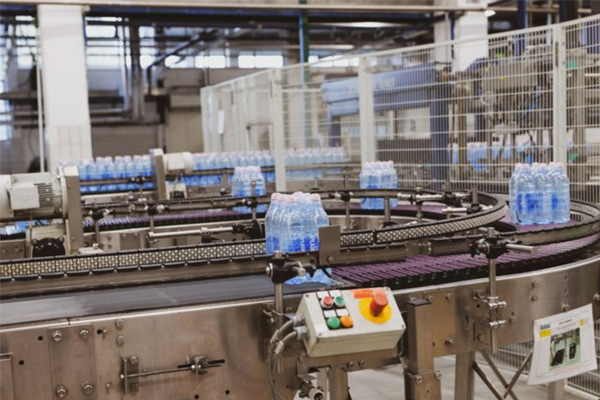
Material handling equipment operates in demanding environments: dust, impact, continuous motion, and varying loads. Components must resist wear, maintain alignment, and allow smooth product flow.
Roller and pulley durability. Conveyor rollers and pulleys are subjected to abrasion from packages and belts. Roller tubes are often made from steel or aluminum, with machined bearing journals. Polyurethane or rubber coatings are applied for grip and noise reduction. Tolerances for bearing seats are H7, and surface finish on journals is Ra 1.6μm.
Precision for AGV navigation. AGVs rely on precise wheel alignment and sensor mounting. Chassis frames must have accurate mounting holes for motors, encoders, and batteries (position tolerance ±0.1mm). Wheel hubs require concentricity to avoid wobble.
Forklift mast and carriage. Forklift masts are welded steel structures with machined guide rails and bearing seats. The carriage (fork mounting) must slide smoothly on rollers. Tolerances for roller guide slots are ±0.2mm over 2m length.
High-volume production. Conveyor rollers are produced in millions per year. Chinese shops use automated lathes with bar feeders and in-line gauging for high-volume, low-cost production.
Corrosion protection. Warehouse environments may be humid or contain chemicals. Zinc plating, powder coating, or stainless steel is used for corrosion resistance.
Chinese CNC shops serving this sector typically have ISO 9001, high-volume CNC lathes and mills, automated welding for frames, powder coating or plating lines, and assembly areas. Major clusters: Zhejiang (Huzhou, Ningbo), Jiangsu (Suzhou, Nantong), Guangdong (Dongguan, Guangzhou).
Conveyor systems use rollers to support and move products. Conveyor components are among the highest-volume machined parts in material handling.
Conveyor rollers – typically steel or aluminum tubes with machined ends for bearings and snap rings. Steps:
Cut tube to length (e.g., 600-2,000mm).
Turn the ends for bearing journals (diameter tolerance h7, Ra 0.8μm).
Machine snap ring grooves or threads for end caps.
Press in bearings (often 6202, 6204).
Optional: apply polyurethane or rubber coating (molded or spray).
Tolerances for a typical conveyor roller (50mm diameter x 800mm length):
Bearing journal diameter: h7 (e.g., 20mm -0.013/-0.022).
Concentricity of journals: 0.05mm TIR.
Tube straightness: 0.5mm over length.
Surface finish (journal): Ra 0.8μm.
After machining, rollers are assembled with bearings, and some are covered with polyurethane (molded or glued). Chinese roller manufacturers supply to conveyor system integrators worldwide.
Conveyor pulleys – drive pulleys have larger diameters (200-600mm) and are often crowned to keep belts centered. They are machined from steel or cast iron. Features: keyed shafts, bearing housings, and lagging (rubber or ceramic). Tolerances: face runout<0.5mm, bore H7.
Sprockets and chain guides – for chain-driven conveyors, sprockets are machined from steel plate with hobbed teeth. Tooth profiles per ANSI or ISO standards. Chinese sprocket manufacturers produce both standard and custom profiles.
Drive shafts – turned from 4140 or 1045 steel, with keyways and bearing seats (h6). Heat-treated to 28-35 HRC and zinc-plated.
Forklifts lift heavy loads using a mast assembly. Forklift parts include mast channels (I-beams or C-channels), carriage plates, roller guides, and hydraulic cylinder mounts.
Mast sections – hot-rolled steel profiles (C-channel or I-beam) that are machined on the ends for mounting and guide roller tracks. Machining involves milling slots, drilling bolt holes, and sometimes broaching. Tolerances: slot width ±0.1mm, hole positions ±0.2mm.
Carriage plates – large steel plates with cutouts and machined bearing seats. They are milled on large VMCs. The fork mounting slots (for fork positioning) are milled or broached.
Roller guides and side thrust rollers – steel or nylon rollers with precision bearings. Machined similarly to conveyor rollers but with higher precision (runout<0.1mm).
Hydraulic cylinder mounts – steel brackets with precision bores for cylinder pins (H7).
Chinese forklift component suppliers often supply to OEMs like Hangcha, Heli, and many European brands.
Automated guided vehicles (AGVs) are the backbone of smart warehouses. AGV machining involves lightweight yet rigid components.
Chassis frames – welded aluminum or steel structures, machined on large 3- or 5-axis mills. Features: motor mounting holes (position ±0.05mm), battery tray recesses, sensor mount bosses.
Wheel hubs – aluminum or steel, turned to precise diameter for tire mounting (polyurethane or rubber). Bearing journals h7. Concentricity<0.05mm.
Navigation sensor brackets – for LiDAR, cameras, and ultrasonic sensors. These are small aluminum or stainless parts with multiple threaded holes and adjustment slots. Tolerances: hole positions ±0.02mm, slot parallelism 0.05mm.
Encoder and motor mounts – precision aluminum brackets with dowel pin holes for motor alignment.
Chinese AGV component suppliers often work with robotics companies and offer full assembly of chassis with motors and batteries.
Specialized material handling systems include transfer units (cross-conveyors), turntables, and scissor lifts. Machined components:
Turntable rings – large steel rings with precision gear teeth and bearing seats. Milled on VTLs.
Scissor lift arms – steel beams with precision pivot bores (H7).
Chain transfer decks – aluminum or steel plates with machined slots for chains.
These parts require medium precision (±0.1mm) but high strength.
Carbon steel (Q235, 1045, 4140): Conveyor rollers, shafts, pulleys. Cost-effective, can be zinc-plated or painted.
Stainless steel (304, 316): For food-grade or washdown conveyors (hygienic applications).
Aluminum (6061, 6063): Lightweight rollers, AGV chassis, sensor brackets. Anodized for corrosion resistance.
Cast iron (HT250): For large pulleys and gear housings.
Polyurethane (PU) and rubber: Roller coatings for grip and noise reduction.
Nylon (PA6, PA66): Guide rollers, wear strips, and chain guides.
Surface treatments:
Zinc plating (clear or yellow): For steel rollers, brackets (72-240 hours salt spray).
Powder coating: For frames, chassis, and large structures (thickness 60-120μm).
Anodizing (Type II): For aluminum parts (AGV chassis, sensor brackets).
Hard chrome plating: For hydraulic piston rods (optional).
Specify: 'Conveyor roller: steel tube, zinc plated 8μm min, bearing journals ground to h7, final assembly with 6202 bearings.'
Material handling parts require dimensional accuracy and assembly testing:
CMM for complex AGV frames and sensor brackets.
Air gauges for high-volume conveyor roller bearing journals.
Runout and balance for pulleys and rollers.
Coating thickness and adhesion (XRF for zinc, cross-cut for powder).
Material certifications (MTRs for steel, alloys).
Assembly tests (roller spin test, torque for bearings).
Chinese suppliers provide FAIR and assembly reports.
Step 1: Verify logistics or automation experience. Ask for references from conveyor or AGV OEMs.
Step 2: Check high-volume capability. Do they have automated lathes with bar feeders for rollers? Large mills for AGV chassis?
Step 3: Evaluate coating and assembly. In-house plating or powder coating? Can they assemble rollers with bearings?
Step 4: Assess quality systems. ISO 9001 is typical; for automotive logistics, IATF may be required.
Step 5: Order a trial – e.g., 100 conveyor rollers or a sensor bracket. Inspect dimensions, bearing fit, and finish.
Major clusters: Zhejiang (Huzhou) – conveyor hub; Jiangsu (Suzhou) – automation; Guangdong – AGV and robotics.
High volumes drive low costs. Pricing benchmarks (10,000+ pieces/year):
Conveyor roller (50mm x 800mm, steel, zinc plated, with bearings): $2-5
Conveyor pulley (300mm dia, steel, crowned): $15-30
AGV chassis (aluminum welded, machined): $80-200
Forklift carriage plate (steel, machined): $50-100
Sensor bracket (aluminum, anodized): $2-4
Lead times: For existing designs, 3-4 weeks first article, 2-4 weeks production. New tooling (fixtures) adds 2-3 weeks. Coating adds 1 week. Shipping: sea 30-45 days, air 3-7 days.
MOQ: For rollers, 1,000-5,000 pieces; for AGV chassis, 50-200 pieces.
Roller bearing seat out-of-round – noise and vibration. Prevention: specify roundness 0.005mm and use CMM inspection.
Powder coating on sensor bracket holes – assembly issues. Prevention: mask holes or ream after coating.
AGV chassis warpage after welding. Prevention: stress-relieve before machining; use jig welding.
Incorrect sprocket pitch causing chain jump. Prevention: use standard tooth profile and gauge inspection.
Zinc plating thickness too thin – rust quickly. Prevention: specify 8-12μm and require salt spray test.
Autonomous mobile robots (AMRs) – requiring lightweight, modular chassis with integrated sensor mounts.
Smart sensor integration – more machined recesses for LiDAR, cameras, and RFID readers.
High-speed sortation – precision rollers and belts for parcel handling at higher speeds.
Additive manufacturing for custom grippers – 3D printed end effectors for robotic picking, with machined mounting interfaces.
Green coatings – zinc-nickel replacing hexavalent chrome.
Material handling and logistics automation rely on durable, precision-machined material handling equipment parts – from simple conveyor rollers to complex AGV chassis. China's high-volume CNC machining industry produces components for conveyors, forklifts, and AGVs, meeting the demands of global e-commerce and warehouse automation. By selecting suppliers with automated production lines, robust plating/painting, and assembly capabilities, you can source cost-effective parts for the systems that move the world's goods.
Ready to source precision CNC machined material handling components from China? Send us your drawings and volume estimates. We'll connect you with manufacturers experienced in conveyor rollers, AGV parts, and forklift components. Free DFM feedback and quoting available.
A: Stainless steel 304 or 316L is required for washdown applications. Bearings should be food-grade (sealed). Polyurethane coatings must be FDA-approved.
A: Yes, many suppliers offer roller coating (molding or spray) as a value-added service. Specify Shore hardness (e.g., 75 Shore A) and color.
A: H7 (e.g., 20mm +0.021/+0.000) with surface finish Ra 0.8μm. Concentricity with the tire mounting surface should be<0.05mm.
A: Yes, many large suppliers assemble mast sections with rollers, chains, and hydraulic cylinders. They also provide painted or powder-coated finished masts.
A: For welded aluminum frames, 4-6 weeks for first article, then 3-4 weeks for the batch. Machining, welding, and painting included.
A: Yes, they can turn the shaft ends, mill keyways, and press-fit bearings. Some rollers are built with axles passing through.
A: For optical sensors (LiDAR, cameras), flatness<0.05mm and surface finish Ra 1.6μm to ensure proper alignment. Anodizing does not add significant thickness if masked.
A: Most larger suppliers are ISO 9001; some also hold ISO 14001. For automotive logistics, IATF 16949 may be available.
Ready to automate your warehouse or distribution center with precision-machined material handling components? Contact our engineering team with your CAD files. We'll match you with qualified Chinese suppliers that have proven experience in conveyor rollers, AGV chassis, and forklift parts. Free consultation and sample support.

Phone&WhatsApp:+86 13410452313
Email:gavinlee@zhuoguanmetal.com
Address: Room 805-1, Building A, Block 1, Xingzhan Plaza, No. 446, Shajing Nanhuan Road, Shatou Community, Shajing Street, Bao'an District, Shenzhen, Guangdong, China 518104