Whether it's a superbike tearing down the racetrack at 300 km/h or a mountain bike descending a rocky trail, the performance and safety of two-wheeled vehicles depend on precision-machined components. A motorcycle engine's pistons move up and down 10,000 times per minute. A bicycle’s hydraulic disc brake caliper must clamp with consistent force. A set of triple clamps must hold the fork tubes perfectly parallel. China has become a leading source of motorcycle components and high-end bicycle parts, supplying global brands like Harley-Davidson, BMW, Ducati, Yamaha, Honda, Trek, Specialized, and Giant, as well as the massive aftermarket. From engine cylinders and transmission gears to brake calipers and wheel hubs, precision CNC machined parts OEM from China offer a blend of quality, performance, and cost-effectiveness. This guide explores the critical machined components for motorcycles and performance bicycles, covering engine parts (cylinders, cylinder heads, crankshafts, connecting rods), chassis parts (triple clamps, swingarms, fork components), brake system components (calipers, master cylinders, discs), and bicycle drivetrain parts (derailleur components, crank arms, hubs). It includes material selection (aluminum alloys, steel, titanium), surface finishing (anodizing, plating, painting), and practical sourcing advice from Chinese manufacturers.
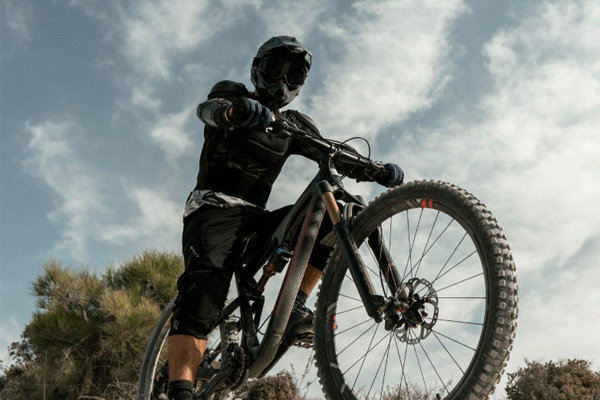
Motorcycles and bicycles have unique requirements: they must be lightweight for agility and fuel efficiency, yet strong enough to handle high stresses and vibration. Parts are often made from aluminum alloys, steel, titanium, or magnesium.
Weight-to-strength ratio. Unsprung weight (wheels, brakes, suspension) affects handling dramatically. Many components are machined from billet aluminum (6061, 7075) or forged aluminum then CNC-finished.
High fatigue resistance. Engine and transmission components see millions of stress cycles. Crankshafts, connecting rods, and gears are typically forged steel or billet, heat-treated to increase fatigue life.
Tight tolerances for fit and function. Brake calipers require precise piston bores (H7) and sealing surfaces (Ra 0.4μm). Triple clamps must have fork leg bores concentric within 0.01mm to prevent stiction.
Aesthetic finishes. Many visible parts (triple clamps, levers, rearsets) are anodized in colors (black, gold, red) to match branding. Surface finish must be flawless.
High-volume production for OEM and aftermarket. A popular commuter motorcycle sells 100,000+ units per year. Brake calipers and wheels are produced in high volumes on specialized lines.
Chinese CNC shops serving the two-wheeler industry typically hold IATF 16949 (for motorcycle OEMs) or ISO 9001, have 4- and 5-axis machining centers, CNC lathes, honing machines, and in-house anodizing or coating. Key clusters: Chongqing (motorcycle manufacturing hub), Guangdong (Jiangmen, Guangzhou), Zhejiang (Taizhou, Hangzhou) (bicycle and motorcycle parts), Tianjin (bicycles).
The engine is the heart of a motorcycle. Many of its most critical parts are precision machined.
Engine cylinders (barrels) are often cast iron or aluminum with a cast-in iron liner or nickel-silicon carbide (Nikasil) coating. Cylinder machining involves boring and honing the bore to a precise size with a cross-hatch pattern to retain oil. For a typical 300cc single cylinder:
Bore diameter: H7 (e.g., 78.00 +0.030/+0.000)
Roundness: 0.005mm
Straightness: 0.005mm over length
Surface finish: Ra 0.2-0.4μm (cross-hatch at 45±10°)
Nikasil coating thickness: 0.05-0.08mm (not machined, applied after honing)
Cylinder heads are cast aluminum and then CNC-machined to create the combustion chamber, valve seats, valve guides, ports, and mounting surfaces. Valve seat angles (e.g., 45°, 60°) are cut with precision cutters and must be concentric to the valve guide bore within 0.02mm. Chinese cylinder head specialists use CNC machining centers with custom tooling and air gauge testing for valve guide bores.
Crankshaft machining starts from a forged steel blank (e.g., 4340, 4140). Steps include turning the main and pin journals, drilling oil passages, heat treatment (induction hardening of journals), and finish grinding (journals to h5/h6 tolerance, Ra 0.2μm). Then dynamic balancing is performed. Chinese shops with CNC crankshaft grinders and balancing machines can produce OEM-quality crankshafts.
Connecting rods are forged steel or billet aluminum. They are machined on both ends: the big end bore (for the crankpin) and small end bore (for the piston pin). Big end bores are often split (cap and rod) and require precision boring after assembly. H7 tolerance, surface finish Ra 0.4μm.
These are cast aluminum parts that are machined on the mating faces, bearing bores, and threaded holes. Tight tolerances are needed for oil sealing (gasket surfaces flatness 0.05mm). Many shops offer painting or powder coating after machining.
The chassis components connect the engine, wheels, and rider. They are often machined from billet or forged aluminum for strength and appearance.
Triple clamps hold the fork tubes and connect to the steering stem. They are machined from 6061 or 7075 aluminum billet on 3- or 4-axis CNC mills. Critical features:
Fork leg bores: H7 or H8 (e.g., 54.00 +0.030/+0.000)
Concentricity between left and right bores: 0.05mm TIR parallel
Steering stem bore: h7
Clamping slots and pinch bolt holes: precise to avoid distorting tubes
After machining, triple clamps are deburred and anodized (clear, black, or custom colors). Chinese billet parts suppliers are very competitive, often producing aftermarket triple clamps for Harley, Ducati, and sportbikes at a fraction of US/European prices.
Swingarms are large welded aluminum assemblies (extrusions and castings). The pivot bore and axle adjustment slots are machined on large CNC mills. Tolerances: pivot bore H7, flatness of axle plates 0.1mm. Some aftermarket swingarms are fully machined from billet (very expensive but high bling factor).
Fork inner and outer tubes are long, precision components. Outer tubes are often machined from aluminum extrusion; inner chrome-plated steel tubes are ground and polished. Chinese shops produce fork legs for many Chinese domestic bikes, and aftermarket upgrades for KTM, Honda, etc. Critical tolerances: bore ID H7, surface finish Ra 0.2μm for seal and bushing areas.
Disc brakes are standard on both motorcycles and high-end bicycles. Key machined parts include calipers, master cylinders, and brake discs (rotors).
Brake calipers are typically machined from forged or billet aluminum (6061, 7075). The caliper body contains piston bores (usually 2, 4, or 6 pistons). Piston bore machining requires:
Bore diameter: H7 (e.g., 30mm +0.021/+0.000)
Surface finish: Ra 0.4μm (honed or roller burnished)
Cross-drilled fluid passages: deburred and testable
Threads for banjo bolts and bleed screws: M10x1.0 or similar
After machining, calipers are anodized (often hard anodized for wear) and assembled with pistons, seals, and pads. Chinese brake manufacturers supply calipers to many Chinese motorcycle and e-bike brands, and also to aftermarket custom builders worldwide.
The master cylinder body is machined from aluminum, with a precision bore (H7, Ra 0.2μm) for the piston. It also has fluid ports and a reservoir mounting area. Tolerances are similar to calipers. After machining, master cylinders are anodized.
Brake rotors are made from stainless steel (e.g., 420 stainless) or cast iron. They are laser-cut or stamped from sheet, then ground flat (<0.05mm) and sometimes drilled or slotted. The center carrier (if floating) is machined from aluminum. Chinese rotor manufacturers are major OE suppliers for many motorcycle brands.
Wheels are critical for safety and aesthetics. Most motorcycle wheels are cast aluminum, then CNC-machined on the hub, bead seat, and bolt holes. Hub machining includes bearing bores (H7) and brake disc mounting surfaces. For bicycles, wheels use aluminum hubs machined from billet or forged blanks. Precision hubs with sealed bearings are common. Chinese hub manufacturers produce millions of units yearly for bicycles, e-bikes, and motorcycles.
Tolerances for a bicycle hub: bearing bore H7 (e.g., 15mm +0.018/+0.000), disc mount face runout<0.05mm, freehub body spline pattern accurate to fit cassettes.
Performance bicycles (road, mountain, gravel) use advanced drivetrains. Many components are precision machined from aluminum or steel.
Bicycle crankarms are forged or machined from aluminum 6061 or 7075. The bottom bracket bore is machined to precise dimensions (e.g., 24mm or 30mm diameter, H7 tolerance). Crankarm lengths require accuracy ±1mm. Spider interface (for chainrings) is machined with low runout. Chainrings are often machined from 7075 aluminum plate, with tooth profiles CNC-milled and then anodized. Chinese shops produce aftermarket chainrings for Shimano, SRAM, and Campagnolo systems, offering excellent value.
Derailleur parts (cage plates, pulleys, pivots) are machined from aluminum or composite with CF inserts. Precision is key for smooth shifting. Chinese factories supply derailleur components to many mid-range bike brands, and aftermarket pulleys and cages are popular.
Cassettes are made from stamped or machined steel and aluminum. The freehub body (ratchet mechanism) is precision-machined from steel or aluminum, with splines to accept the cassette. Tolerances on spline profile are ±0.05mm. Chinese component manufacturers (e.g., ZTTO, Sunshine) have gained a reputation for quality affordable drivetrains.
Aluminum 6061-T6: General structural components (triple clamps, levers, hubs). Easy to machine and anodize.
Aluminum 7075-T6: High-stress parts (crankarms, brake calipers, suspension components). Stronger but more expensive and slightly harder to anodize evenly.
Steel 4140, 4340, 4130: For crankshafts, connecting rods, and transmission gears. Heat-treated to 30-45 HRC, sometimes case-hardened.
Stainless steel (303, 304, 316L): Brake discs, fasteners, axles. 303 for machined fittings.
Titanium (Grade 5, Ti-6Al-4V): For high-end bolts, axles, and exhaust components. Light and strong, but expensive and difficult to machine.
Magnesium (AZ91D): Used for lightweight wheels and engine covers, but flammable and requires special machining care. Rare.
Surface finishes:
Anodizing (Type II or Type III): Most common for aluminum parts. Type III hard anodizing for wear surfaces (fork bores). Colors: clear, black, gold, red, blue.
Powder coating: For frames, swingarms, and some covers. Thick, durable, but masks fine details.
Zinc or nickel plating: For steel parts (bolts, axles).
Polishing: For chrome-like finish on aluminum (then clear anodized or clearcoated).
Quality assurance includes:
Dimensional inspection: CMM for complex parts (calipers, triple clamps, cylinder heads). Air gauges for small bores (master cylinder, brake caliper pistons).
Surface finish measurement: Profilometer for sealing surfaces and bearing journals.
Hardness testing: Rockwell or Brinell for steel parts; Brinell for aluminum castings.
Leak testing: For brake calipers and master cylinders (air under water or pressure decay).
Coating thickness and adhesion: For anodizing (eddy current) and powder coating (cross-hatch test).
Dynamic balancing: For crankshafts and wheels.
Chinese suppliers should provide FAIR (First Article Inspection Report) including CMM data, surface finish, and material certifications. For safety-critical components (brake calipers, master cylinders), ask for 100% pressure testing and DOT or TUV certification if needed.
Step 1: Check relevant experience. Look for shops that list motorcycle or bicycle components in their portfolio. Ask for references to OEMs or aftermarket brands.
Step 2: Evaluate equipment for precision and volume. For brake calipers: 4-axis VMC with high-pressure coolant and tool probes. For engine cylinders: honing machines. For triple clamps: 3-axis mills with large work envelope.
Step 3: Assess finishing capabilities. In-house anodizing or powder coating? They offer Type III hard anodizing? For brake parts, hard anodizing is essential.
Step 4: Verify quality systems. IATF 16949 is preferred for motorcycle OEM components; ISO 9001 acceptable for aftermarket. Ask for testing equipment (CMM, air gauges, pressure tester).
Step 5: Order a trial part. Start with a non-critical component like a lever or a bracket. Then move to a caliper or triple clamp.
Major clusters: Chongqing (motorcycle manufacturing capital of China), Zhejiang (Taizhou, Wenling, Hangzhou) (brake parts, bicycle components), Guangdong (Jiangmen, Guangzhou, Dongguan) (aftermarket accessories, billet parts).
Pricing for medium volumes (500-5,000 pieces/year):
Brake caliper (4-piston, billet 6061, machined + anodized): $12-20 each
Triple clamp set (upper + lower, 7075, machined, black anodized): $30-60/set
Motorcycle engine cylinder (single, cast iron liner, bored and honed): $15-30
Bicycle crankarm (pair, 7075, machined, anodized): $10-20
Front wheel hub (aluminum, sealed bearing type): $5-10
Lead times: For existing designs, 4-6 weeks for first article, 3-5 weeks for production. For new forging/casting tooling, add 6-10 weeks. Anodizing and painting add 5-10 days.
MOQ: For aftermarket parts, MOQ often 50-200 pieces; for OEM, 500-2,000 pieces. Some shops accept small batch (10-50 pieces) at higher price.
Leaking brake calipers. Piston bore surface finish too rough. Prevention: specify Ra 0.4μm max, and require 100% leak testing (150 psi air under water).
Anodizing color mismatch. Anodized parts from different batches have different shades. Prevention: require single batch for matching sets, and provide a color sample (RAL number).
Piston bore wear (brake caliper). Soft anodizing wears quickly. Prevention: specify Type III hard anodizing (thickness 50μm min, hardness >400 HV).
Triple clamp fork bore distortion after clamping. Bore becomes non-round when pinch bolts are tightened. Prevention: specify that bore should be machined with clamping pressure simulated, or use split clamp design.
Incorrect thread fit for banjo bolts. Leaks or cross-threading. Prevention: specify class 6H/6g and use thread gauges. Require that bolts are tested in the part.
E-bikes and electric motorcycles. Battery housings, motor casings, and controller boxes require precision aluminum machining. Lightweighting is critical.
Wireless shifting components. Derailleurs and shifters with integrated electronics need machined pockets for circuit boards and battery holders.
3D printed titanium components. For high-end custom bicycle parts (stems, seat clamps) and motorcycle exhaust hangers, additive manufacturing is emerging.
Smart production lines. Chinese factories are implementing automated pallet systems and robotic deburring for higher consistency.
From engine cylinders to brake calipers to bicycle crankarms, China's CNC machining industry produces a vast range of motorcycle components and bicycle parts for global OEMs and aftermarket enthusiasts. With competitive pricing, advanced 4/5-axis CNC equipment, and finishing capabilities like hard anodizing, Chinese manufacturers are a reliable source for precision two-wheeler components. The key is selecting a shop with relevant experience, robust quality control (especially for brake parts), and clear communication about tolerances and finishes. Start with a trial, inspect thoroughly, and build a partnership.
Ready to source precision CNC machined motorcycle or bicycle parts from China? Contact us with your drawings and specifications. We'll match you with qualified manufacturers specializing in engine parts, chassis components, brake systems, wheels, and bicycle drivetrains. Free DFM feedback and quoting available.
A: 7075-T6 is ideal for its strength and hardness, but it's more expensive. 6061-T6 is commonly used and acceptable for most applications. Both must be hard anodized (Type III) for wear resistance. 6061 is easier to anodize uniformly, while 7075 can sometimes produce color variations.
A: Yes, some specialize in titanium. Ti-6Al-4V Grade 5 is common. It requires rigid CNC lathes, low speeds, high feed rates, and carbide tooling. Ask for samples and surface finish measurements (Ra 0.8μm typical for bolts).
A: After chrome plating and polishing, Ra 0.1μm or better. The tube must be straight within 0.05mm/m and round within 0.005mm. Chinese platers can achieve this but ask for sample inspection.
A: Some do. Larger manufacturers for export have DOT (FMVSS 106) or ECE R78 certification for brake hoses and master cylinders. Ask to see certificates. For aftermarket calipers and master cylinders, it's less common; you may need to self-certify.
A: For machining from billet (no casting), 3-4 weeks for first article, then 2-3 weeks for the batch. Anodizing adds 3-5 days. Plus shipping (air 3-7 days).
A: Yes, several manufacturers produce forged wheels (e.g., for CFMoto, and aftermarket brands). The forging is done by a forging house, then CNC machined to final shape and drilled for spokes/valve stems. Ask for forging partner details.
A: Specify a color standard (e.g., RAL number or a physical sample). Require that all parts in a set come from the same anodizing batch. For large volume, the supplier can perform a pre-production color sample and hold that standard.
A: For a press-fit BB (e.g., BB86), bore diameter is typically 41.00 +0.025/+0.000 mm (H7). For threaded BSA, the thread is 1.37" x 24 TPI (class 2A/2B). Chinese frame machinists can achieve these tolerances, but request measurement reports.
Ready to upgrade your two-wheeler project with precision CNC machined components from China? Send your part files to our engineering team. We'll connect you with vetted manufacturers specializing in motorcycle and bicycle parts, and provide full quality support. Free consultation and quote.

Phone&WhatsApp:+86 13410452313
Email:gavinlee@zhuoguanmetal.com
Address: Room 805-1, Building A, Block 1, Xingzhan Plaza, No. 446, Shajing Nanhuan Road, Shatou Community, Shajing Street, Bao'an District, Shenzhen, Guangdong, China 518104